

2025 Lamborghini Urus SE Is So Sick You Won't Care That It's A Hopped-Up Audi
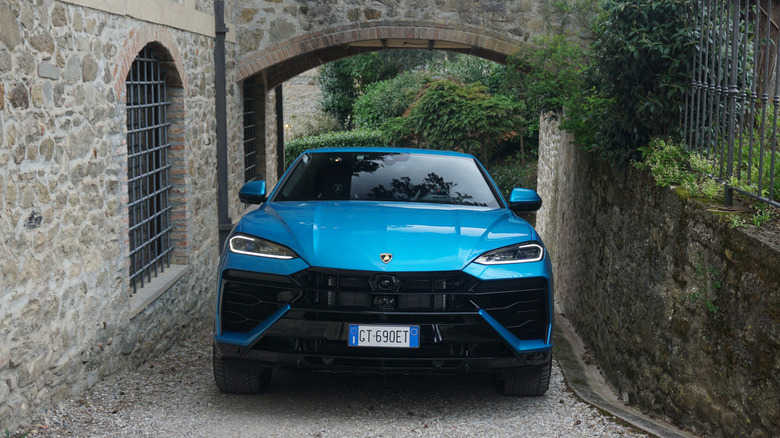
When the Lamborghini Urus was unveiled to the world for the 2018 model year, it permanently changed the brand and the high-end supercar market as a whole. It was the first time a supercar maker like Lamborghini went out on a limb to give customers what they really want: a big, fast crossover. Lamborghini clearly made the right choice. I mean, the Italian automaker sells more than 5,000 of these beasts a year, and now nearly every other supercar maker has their own SUV competitor.
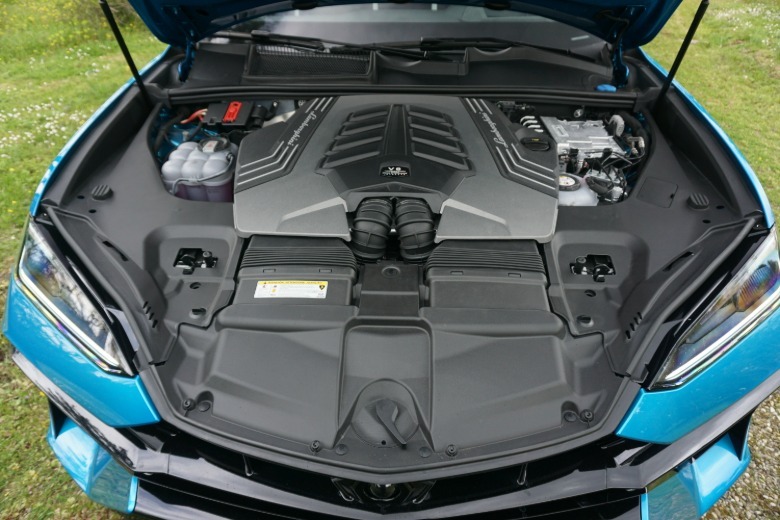
For the 2025 model year, Lambo refreshed the Urus, tweaking the looks slightly and giving it a completely reworked drivetrain. Now, paired up with the twin-turbocharged 4.0-liter V8 is a plug-in-hybrid system that takes this 5,500-pound beast from being an incredibly fast vehicle to something that feels like it's bending the laws of physics to its will.
Honestly, the Urus SE is so fast and so fun to drive, whether it's cruising down a U.S. highway or on a tight backroad in Northern Italy, I didn't really give a crap that it's basically a really, really nice Audi.
Full Disclosure: Lamborghini flew me to Italy, put me up in some beautiful hotels and fed me all sorts of decadent food, all so I could drive the Urus SE. If that wasn't eno
Power Up
In 2025, the only Urus anyone can buy is the new Urus SE. Its aforementioned PHEV V8 system, which it shares with cars like the Bentley Continental GT Speed and Porsche Cayenne Turbo S E-Hybrid, gives the buyer an absolutely gnarly 789 horsepower and 701 lb-ft of torque. That power, routed through an eight-speed automatic transmission to all four wheels, is enough to rocket you from 0-60 mph in just 3.1 seconds, according to Lamborghini. Yeah, I think that's enough to make anyone happy. It's not like the Urus was ever down on power, though. Before Lamborghini hybridized it, the big SUV put out 641 hp and 627 lb-ft of torque, and its 0-60 was only a half-second behind the new car.
 Andy Kalmowitz / Jalopnik
Because it's a plug-in hybrid, drivers get the benefit of being able to switch off that gas-guzzling V8 and cruise around in silence thanks to the 25.9-kWh battery pack located under the trunk. It provides enough juice for an EPA-rated 35 miles of driving if you take it easy, and when you need to add more electrons, Lambo says it can charge from 20% to 100% in about 4 hours.
 Andy Kalmowitz / Jalopnik
The combination of the plug-in hybrid and V8 means there are roughly 728 different drive mode combinations to choose from that range from all-electric mode and racy Corsa mode to a recharge-specific program and a Strada mode for everyday driving. The Urus SE has enough split personalities that M. Night Shyamalan is going to make a movie about it, starring James McAvoy.
Riding the bull
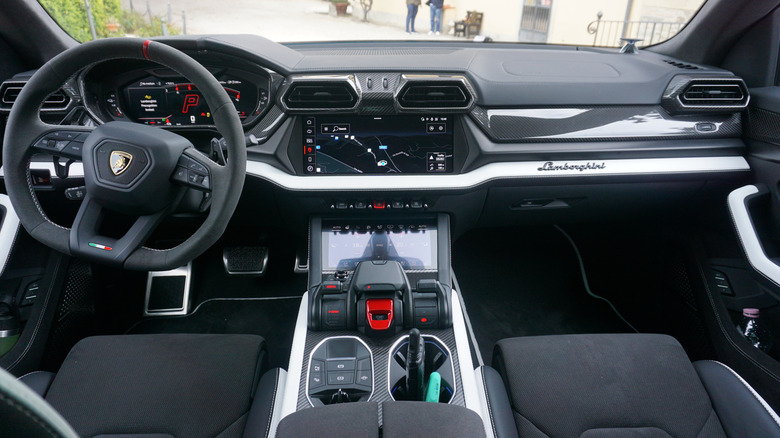
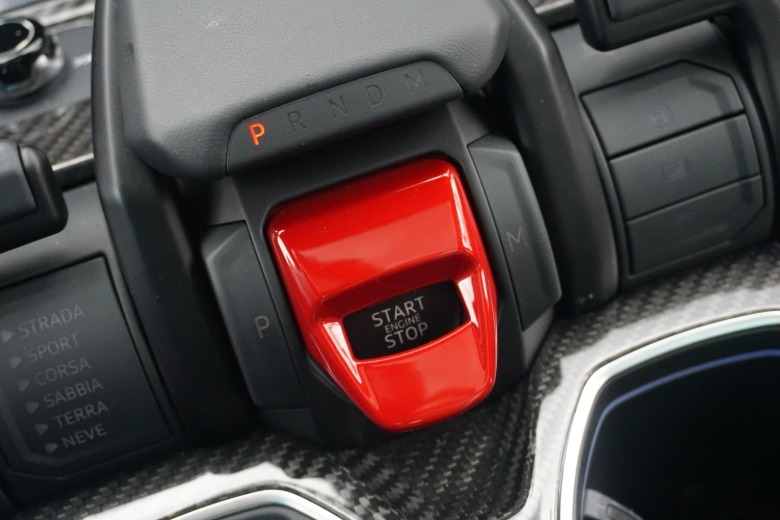
When I got in the Urus SE, flipped up the red starter cover and pushed that button, the first thing I heard was nothing. The truck always starts in EV mode. A few clicks of the Anima lever got me into the go-fast modes you want to be in, and the V8 roared to life, greeting me with the familiar, bass-y burble that can be found in other VW Group products using this V8.
At first, the Urus was pretty serene, almost relaxing to drive. I mean, I had the massaging seats going and the climate control set just right. The air suspension was soaking up every bump as I cruised down the road. It's a pleasant and relaxing place to be — far more so than any other vehicle Lamborghini has made thus far.
 Andy Kalmowitz / Jalopnik
However, the second I clicked that little Anima lever again and stepped on the gas pedal, I had to hold on. The Urus SE does a mind-bogglingly good job at pushing the guts of everyone in the car further back into their bodies. The launch is ferocious, but so is the speed it carries past 60 mph. It's a freight train put on this earth to eat miles and embarrass other purpose-built supercars. If I were braver and dumber, I could have gotten all the way to a top speed of 194 mph, but unfortunately for my haters, I'm not that brave or dumb.
The Urus SE is equally fast in corners, far more nimble than something this big that is meant to take the kids to school has any right to be. Body roll is kept to a minimum as the aforementioned air suspension stiffens up when the car is in its more aggressive modes.
 Andy Kalmowitz / Jalopnik
My one qualm with how this car drove — and what reminded me most that it is indeed an Audi underneath — was how light the steering is. It's an aggressive rack, for sure, and the rear-wheel steering system helps with tight corners and highway stability, but it is so astonishingly light that I constantly found myself steering too much and having to back off in the middle of a corner. Even in the Urus SE's most aggressive Corsa mode, I was able to steer it with just one finger with very little resistance. That lightness also meant I didn't feel a lot coming through the wheel, making the driving experience more isolated. I knew the front wheels were doing something. They were traveling over something. I just could not tell you exactly what that was, and neither could the car.
In reality, it's not that big of a deal. The Urus SE is far better suited as a miles-eating Grand Tourer, and it's perfect for the U.S. because of that. As I drove through the tight streets in and around Florence, Italy, I was abundantly aware that this thing was massive and very expensive. However, when I landed back in New Jersey and was able to test the car out on some bigger roads and highways, it all made a hell of a lot more sense and felt more at home. The Urus SE is far more "Sopranos" than The Godfather Part II."
What's new (besides the powerplant)
The Urus has been a runaway success for the Italian automaker since it first hit showroom floors for the 2018 model year, and that's despite its controversial-at-best looks. In any case, Lamborghini knows not to mess with a good thing, and that's why not too much of the styling was changed for the car's first major update.
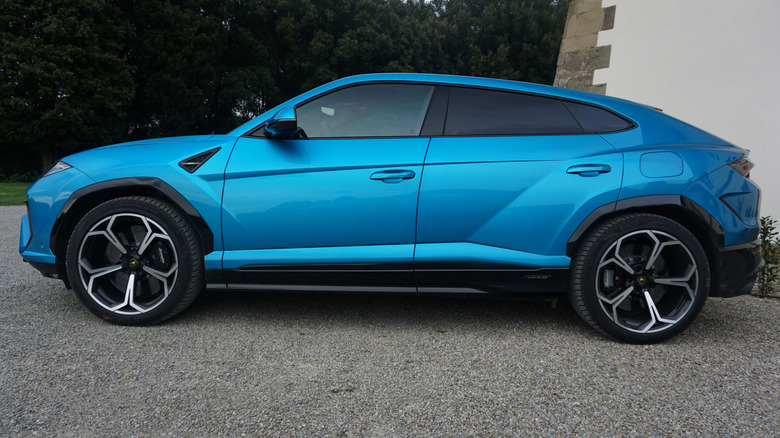
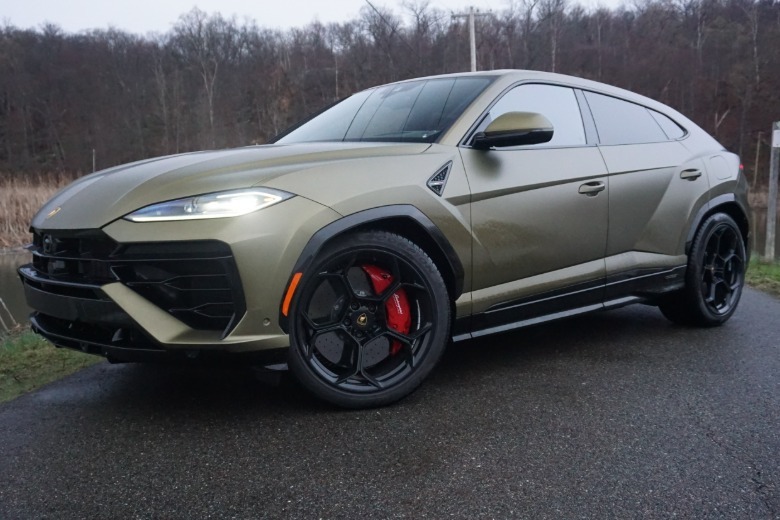
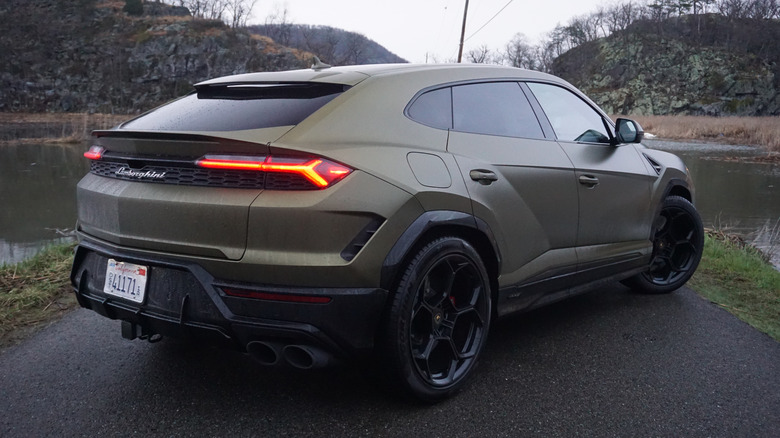
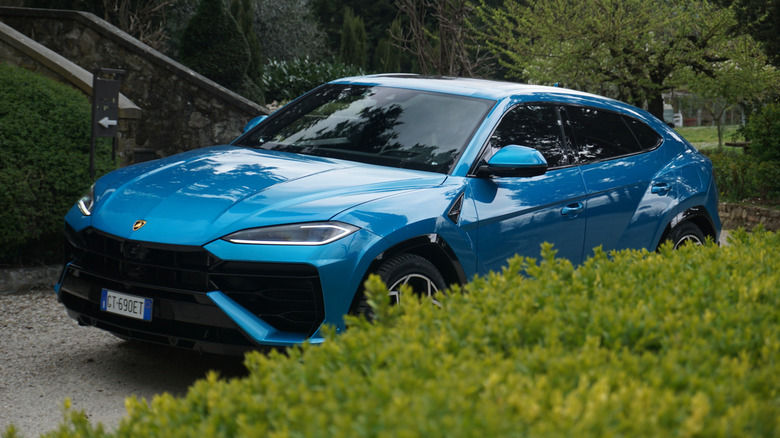
The easiest way to tell a Urus SE apart from an older Urus is the slightly more rounded front end. It's a bit less aggressive looking, and it ditches those weird March Madness-style design cues on the lower bumper. The headlights have also been reworked, and so has the hood. Around the side, no one is going to notice very much of a difference between this car and the one it replaces, save for the addition of a charging port door on the left rear quarterpanel. In my opinion, this is a good thing. The side view has always been the strongest part of the Urus' design. Around back, you'll notice a new mesh panel between the taillights, a redesigned diffuser, and the license plate holder has been moved from the tailgate to the bumper.
 Andy Kalmowitz / Jalopnik
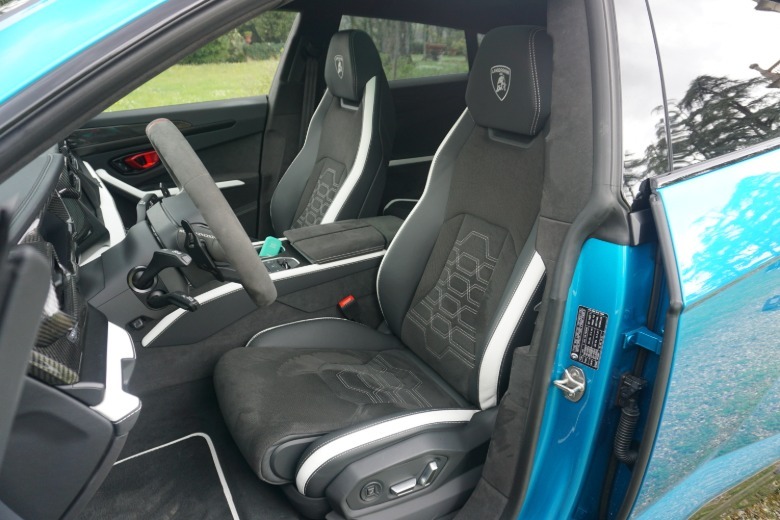
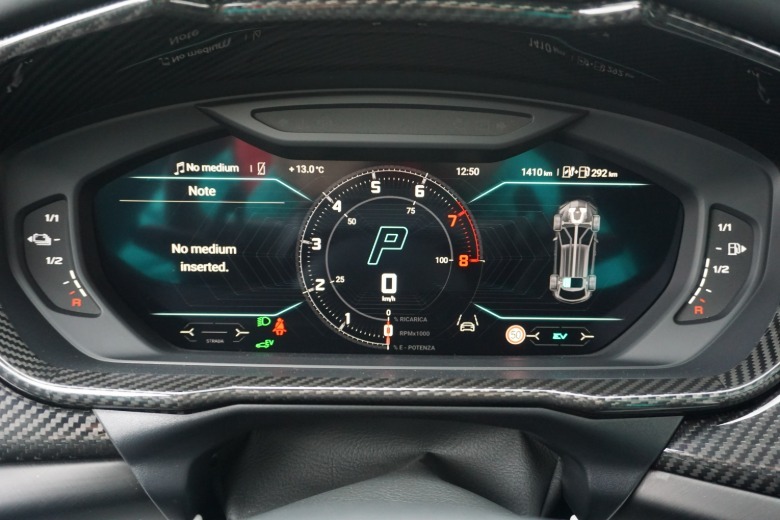
It's a similar story inside, where all of the old Urus' basic shapes and design cues are still there. Drivers still get a trio of Audi-sourced 12.3-inch screens that work as your gauge cluster (which gets a light, handsome reskin), infotainment screen and climate/vehicle function control center. They all work just as well as they did in the old car and are quite easy to use and get the hang of, especially if you've spent any time near a Volkswagen Group product.
The interior remains a very nice place to spend your time, with plenty of room for four adults and plenty of their luggage. Hell, I can even fit behind the driver's seat position, and I'm 6-foot-1. There aren't any other Lambos that can say the same, that's for damn sure.
Be ready to pay
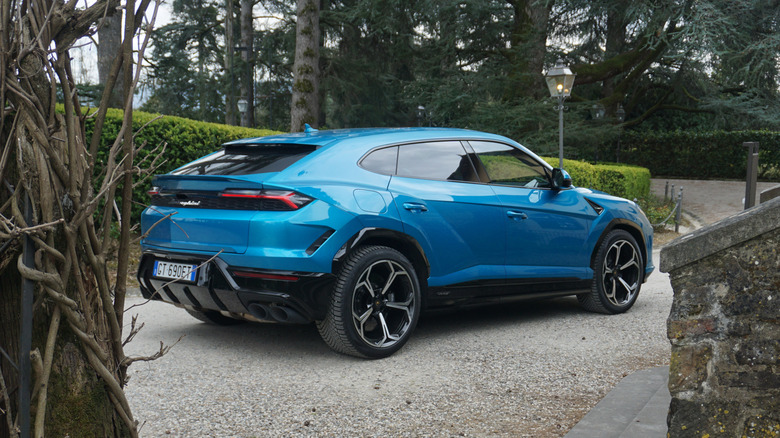
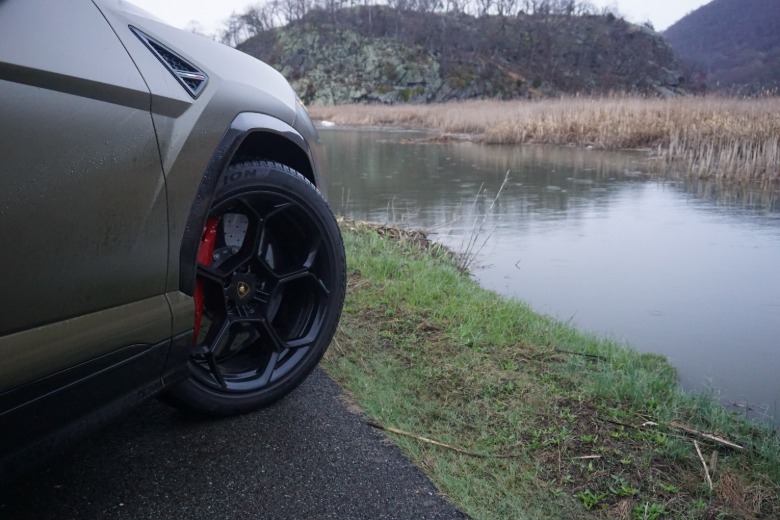
There's no two ways about it, the 2025 Urus SE is one hell of a pricey SUV. At its most basic level, a Urus SE starts at a rather gnarly $262,631, including destination. When adding in a bunch of fancy options like an upgraded sound system, different wheels, bigger brakes, upgraded interior materials and special paint, you get the astronomical as-tested prices of the two vehicles I drove. The blue car that I drove in Italy is going to set a buyer back about $315,600, and somehow that's the cheaper of the two. The green car I drove in New Jersey had a very healthy sticker price of $344,996. While that is a lot of cash, the Urus SE is a lot of car.
To be fair, Lamborghini could probably get away with selling these things for a lot more. Right now, there's a trillion-month waiting list just to get a Urus SE. We took a tour of its factory in Bologna, and the cars we saw being built back in April were probably ordered sometime at the end of 2023. Business is good in the Lambo world right now.
Not your father's Lamborghini
The Urus SE isn't the first car you're going to think of when you think of a Lamborghini, but that doesn't mean it's any less good than those cars or doesn't deserve the raging bull crest. In a lot of ways, it's the car that powers Lambo, and it allows the relatively small automaker to keep pumping out insane supercars like the Revuelto and Temerario. Without the Urus, we probably wouldn't be getting those.
 Andy Kalmowitz / Jalopnik
Still, the Urus SE is an expensive proposition, especially when you consider its platform mates have similar power and performance. But one of the biggest things this truck has going for it versus its siblings like the Porsche Cayenne and Audi RS Q8 is that it's a bit silly. Both of those platform-mates are very German and very serious. The Urus SE — while also being serious when you want — can work in a level of silliness, excitement and flamboyance most other cars could only dream of having. Are there cheaper options? Maybe, but are there better options? I'm not sure.