

Jumper Cables Or Portable Jump Starter: Which One Should You Have In Your Trunk?
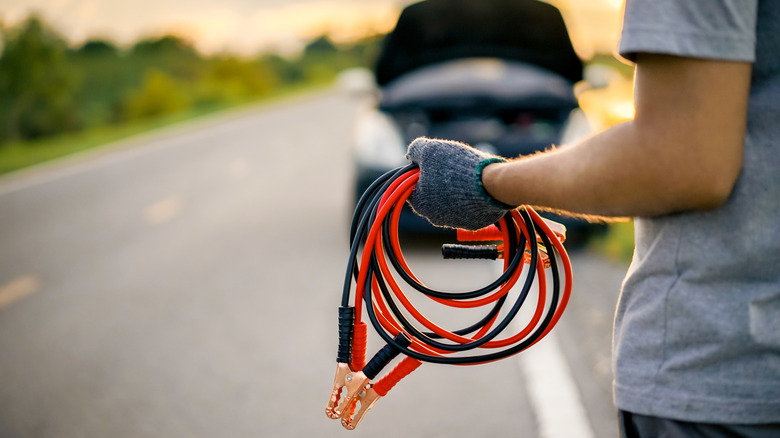
You get back to your car after a "quick" errand, turn the key, and the battery gives you nothing but a lonely click. You look around for help, but the parking lot is empty already. Now it's just you, your dead battery, and the realization that jumper cables require other humans with their own vehicles.
The OG car-starters are jumper cables, the old-school copper snakes you keep "just in case." They work by pulling power from another running vehicle when your car battery fails. Traditional cables are cheap, accessible, and durable, but they still wear out after prolonged use. They're very effective when there's a donor car nearby, but that last part is the catch. No other car means no starting your own. Not everyone will be so willing to help, either, as incorrectly connecting the clamps can fry electronics.
Portable jump starters came along to fix exactly that problem. They're compact lithium battery packs with their own clamps and safety circuitry. Manufacturers of these devices say they reduce the chance of voltage spikes or reverse polarity accidents. You don't need another car, which instantly makes them appealing — especially to introverts. They can also double as power banks or emergency flashlights, which is an advantage over basic cables.
The downside is cost and upkeep. You need to keep portable jump starters charged, and their battery capacity declines with age. But in terms of sheer independence, practicality, and safety tech, portable jump starters are the modern solution to a timeless roadside mishap.
Which one actually wins in real-world situations?
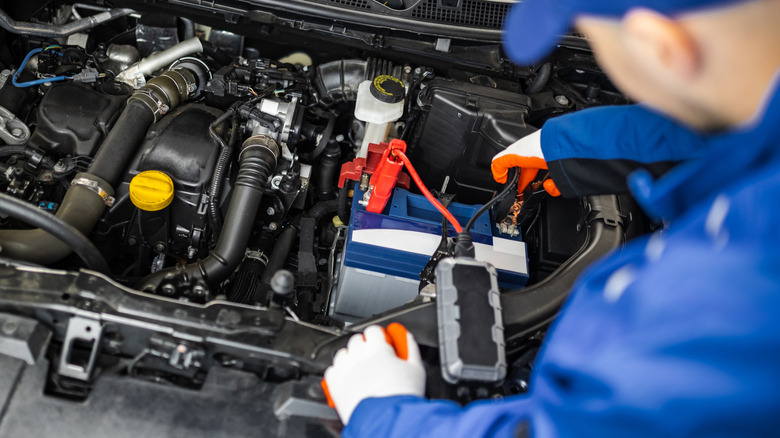
Jumper cables make perfect sense in a dense urban environment. With huge parking lots, office parks, and gas stations, there's always someone around who might offer a jump. So in a populous area, cables can absolutely get the job done. But step outside the city, and they start looking less heroic.
Long highway stretches, mountain roads, remote work sites, late-night convenience store stops — those are the places where portable jump starters come out ahead. You don't have to hope and pray for another driver pulling over. Unlike cables, you don't have to position two cars nose-to-nose in a ditch. You just hook up the clamps, press a button, and try the ignition. The simple connections and built-in safety electronics of portable jump starters also mean you're less likely to cook your car's computer with their use. And if your phone is dying while you wait for help, the power-bank function suddenly feels like a small miracle.
So which one wins? Jumper cables are fine. But if you drive long distances or travel odd hours, the portable jump starter is the better choice. If you can carry only one tool, pick the one that doesn't rely on luck. And don't forget: If you needed to jump start your car, you'll probably need to get a new car battery afterwards. You just resuscitated a dying one; in time, it'll die again.