

Are LED Headlights Really Better Than HID?
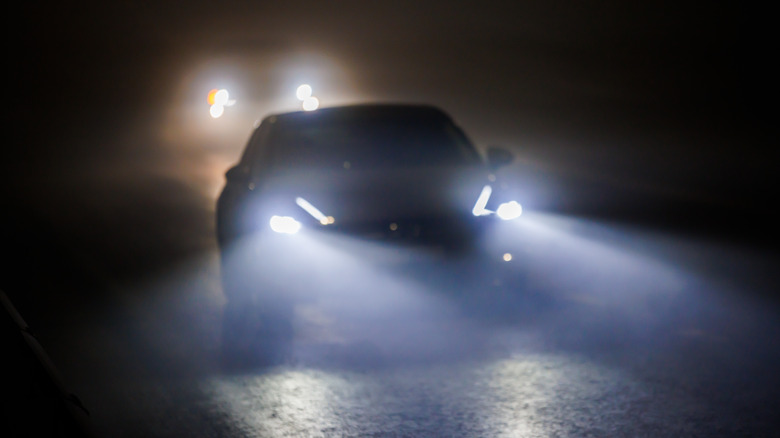
Cars' headlights have come a long way since charming yet potentially dangerous acetylene headlamps debuted in vintage automobiles. The later halogen headlights are still around, but the world has since moved on to high-intensity discharge (HID or xenon) and light-emitting diode (LED) headlights, both of which possess advantages over the old-school halogen bulb.
Modern LED lighting technology is better in almost any aspect than HID, but there are variables to consider. LEDs sip less energy to produce a brighter light output and, in most cases, they last tens of thousands of hours and may never need replacing during the car's life. Moreover, LEDs are bright the moment you turn them on, while HIDs need a few seconds of warming up to deliver their full potential.
But are LEDs really better than HIDs? Considering that 75% of 2023 car models have standard LED headlights, why on earth did only 51% of new cars tested by the Insurance Institute for Highway Safety (IIHS) in 2025 have highest-level Good ratings in headlight tests? IIHS didn't consider whether the cars had halogen, HID, or LED lights in its testing, but it should have, if only to find a definitive answer to whether LEDs are indeed better.
In our book, LEDs are better than HIDs, but we're referring to original-equipment or stock LED headlights with dedicated housings and electricals, since aftermarket LED upgrades are shoddy at best when fitted inside reflectorized headlight housings not designed to accommodate new-age LED bulbs.
Think twice before upgrading to aftermarket LED headlight bulbs
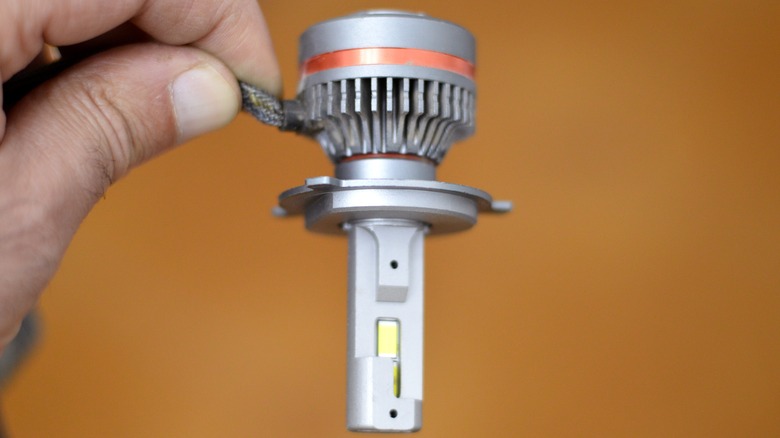
And why, you might ask, are we stopping you from slapping on those Amazon-bought LED headlight bulbs you got cheap? First, they may be illegal to use on public roads, since "no LED light source is currently permitted to be used in a replaceable bulb headlamp," says the National Highway Traffic Safety Administration. (If you insist on going the LED route, note that the Department of Transportation doesn't regulate fog lights and fog lamp bulbs, so they could be legal when in compliance with state and local laws.)
Secondly, there's some science to back up an aftermarket-LED ban, since reflector headlights are designed to focus light from a 360-degree light source like halogens or HID bulbs. Aftermarket LED bulbs only have chips on specific points of the assembly, and this creates glare or dark spots when illuminated in a reflectorized housing. Unless manufacturers come up with LED bulb designs that resemble HID and halogen bulbs' omnidirectional capabilities, retrofitting them inside a reflector housing just won't work.
The storyline changes if your car has projector headlights, since LEDs are more suitable in a projector housing to distribute light evenly without unsightly glare. However, conversion could prove tricky since aftermarket LED bulbs have large heat sinks at the bottom, which might interfere with installation. Those light-emitting chips in an LED bulb may emit less heat than halogens or HIDs, but their electronics produce a lot of heat, necessitating heat sinks or fans.
HIDs have few, yet distinct, advantages over LEDs
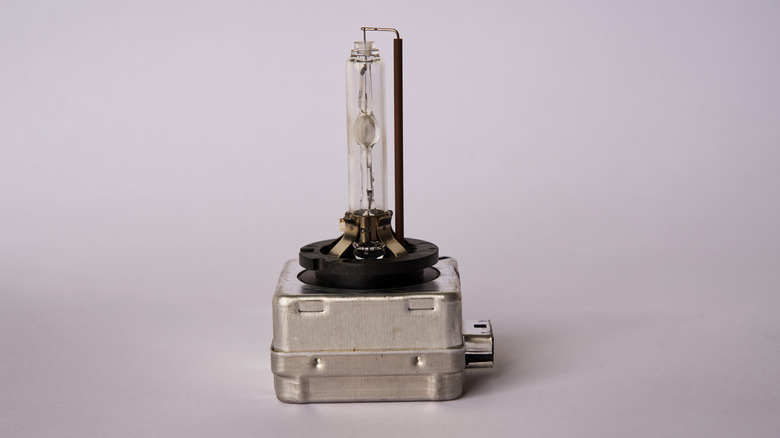
Yeah, LEDs are stomping all over HIDs for all the right reasons, but HIDs do have stellar points to consider. HID headlights outperform other bulbs in brightness and range, and they come in many color temperatures from candlelight yellow to white to blue and even purple. Then again, the only road-legal headlight colors for cars in the U.S. are white and yellow, so keep that in mind.
Nevertheless, HIDS are more energy-efficient than halogens, and they're not as hot as glowing halogen bulbs. They also last longer than halogens, with some reaching up to 5,000 hours before burning out. HIDs don't last as long as LEDs, but they have a longer lifespan than halogens.
The other question here is the cost. Halogen bulbs are the cheapest, typically costing $10 each. LED headlight assemblies on most new cars are the most expensive, and the cost can reach thousands if there's damage and replacing the entire headlight is necessary. However, aftermarket LED bulbs are not that expensive and typically cost around $27 to $50 per pair. HID headlight bulbs are the middle ground, typically going for $50 to $200 per pair before labor costs but not needing that big price bump if repairs are required.