

Is It Safe To Use A Tonneau Cover When It's Snowing?

We may receive a commission on purchases made from links.
It's perfectly fine to use a tonneau cover on your truck's bed when it's snowing. You paid precious money for a bed cover to make your truck look cool — we get that. The practical and real-world benefits are hard to ignore, too, since a tonneau cover can keep prying eyes (and hands) away from your stuff, and can even help save gas on the highway.
Tonneau covers are primarily for protecting the truck bed and its contents from changing weather conditions, and this includes rain, hail, or even snow. In other words, you should keep the tonneau cover on when it's snowing, because it sure beats shoveling all that snow from the bed afterward.
However, not all bed covers are adept at handling snowfall, because some require extra care to survive the winter onslaught. Soft covers made from industrial canvas or vinyl that either roll up or fold are not as sturdy as plastic, composite, aluminum, or fiberglass hard covers. The more elastic materials of soft covers could stretch and strain under the weight of all that snow, and leaving them unattended will surely flex or damage the material permanently.
Soft tonneau covers need frequent clearing of snow

Since roll-up or foldable soft tonneau covers could tear or break down with the weight of a weekend's worth of snow, ice, and precipitation, you'll need to be mindful of clearing the snow from the cover to prevent multiple and heavier layers of snow from stressing the material.
This could be easier said than done when dealing with a nasty blizzard or snowstorm, but making an effort to somehow brush away accumulated snowfall before more comes piling down will help greatly in helping your soft cover deal with harsh winter settings. When clearing snow, avoid using metal tools with harsh, sharp, or pointed edges to prevent turning the cover into hole-filled Swiss cheese. Instead, get your hands on a proper snow brush or push broom with softer bristles.
Of course, you won't have to deal with all this nonsense if your truck has garage parking, but it'll still be exposed to snow, rain, and ice when you drive it. Hence, winterizing your truck — including its tonneau cover — is the best solution to keep it protected when it really matters.
Tips for winterizing your truck's bed cover
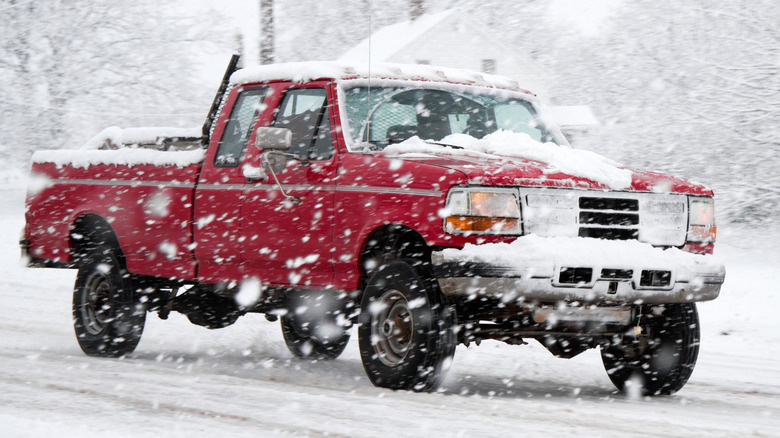
When we say "winterizing," we're not referring to silly things like adding weights or heavy things to the bed to improve traction. We're talking about things like upgrading to a decent set of winter tires. And tonneau covers need frequent cleaning and detailing like the rest of the truck — more so, since the bed cover spans a wide area and is consistently exposed to ultraviolet rays, dirt, moisture, and bird dropppings.
It's a stellar idea to clean the cover and treat it with a protectant afterward. Products like the 303 Protectant or RealTruck TruXedo Pro-TeX are great for soft tonneau covers, leaving a moisturizing shield to prevent ice and snow from sticking so they're easier to brush away. Regular cleaning also lets you inspect the material and check for cracks, tears, or worn seams — things you don't want to find when it's already snowing. Any cuts or perforations will make the material more susceptible to tearing under snow load. If you do find damage, replace the cover or repair it immediately.
Meanwhile, it's necessary to lubricate hinges, latches, and other moving parts with WD-40 or any type of penetrating spray to prevent them from freezing or seizing up in the winter. As a final word, check the weather seals and replace them if necessary to ensure the bed stays bone dry in either rain or snow.