

How To Remove A Stuck Brake Piston
Sometimes, it's the small car parts we think about the least that can cause the biggest problems. Take spark plugs, for example, as failing to remove seized spark plugs can threaten the engine. Similarly, brake pistons are tucked away inside brake calipers and often go ignored — until they present pressing issues. If you notice a burning smell, your car tugging to one side, and brakes that feel hard or spongy, you probably have a stuck brake piston, which does not bode well for your ability to stop your car at will.
Brake pistons are essential components of your car's braking system. When they become stuck or seized, they pose a safety risk to you and your vehicle – and probably a risk to your wallet, too. They reside within brake calipers, and there's a pretty straightforward method you can use to "un-stick" a seized or stuck brake piston yourself. You'll likely already know the steps if you've looked into changing your car's brakes all by yourself.
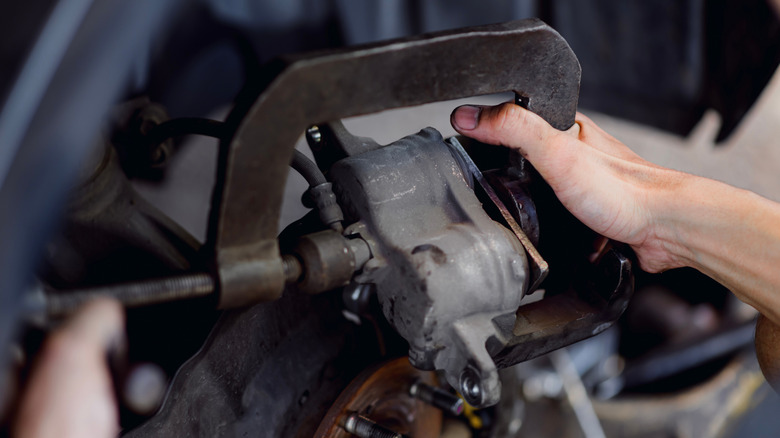
After removing a brake caliper from its brake disc, place the caliper in the jaws of a C-clamp with its brake piston facing upwards and fully in view. Ensure that the caliper is securely held in the clamp, and then you can begin the work of extracting the piston with additional tools. You can create an artificial socket by inserting tools you have laying around to fill the open space in the piston. Be sure to include an Allen wrench in your selection of utensils, which — once secured within the opening — can be rotated to provide enough force to un-stick the piston.
What can cause a stuck brake piston?
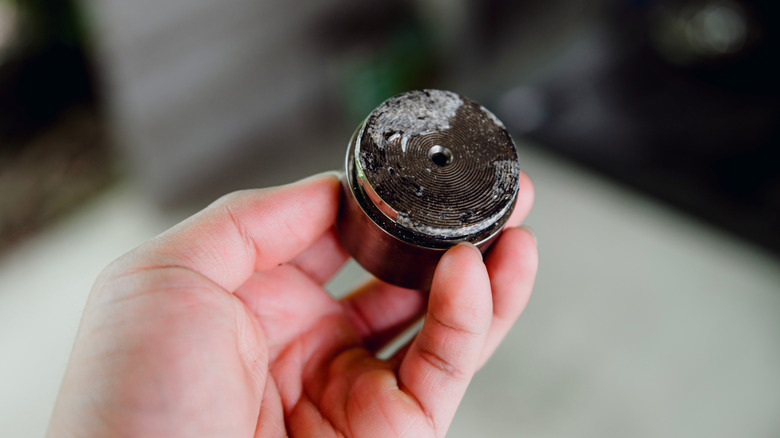
Brake caliper pistons aid in the braking process by pushing the brake pads onto the brake rotors, creating friction that slows the rotor's spin. Your car's brake fluid provides the pressure that causes your brake pistons to move.
Unfortunately, your brake pistons can become seized or stuck due to wear or environmental factors, limiting your braking system's ability to perform properly. Rust and corrosion on the piston or within the brake caliper can prevent the piston from being able to move properly. Additionally, if the protective seals around the piston tear, or if your brake fluid becomes contaminated (which can naturally occur over time), your brake piston could be more susceptible to getting stuck.
If you suspect you have a seized or stuck brake piston, it's wise to address it immediately. Otherwise, you'll have to endure further brake damage, grapple with brake failure on the highway, or suffer the emotional and financial headache of replacing your whole braking system.