

5 Driving Rules In The US That Could Get You A Ticket In Canada
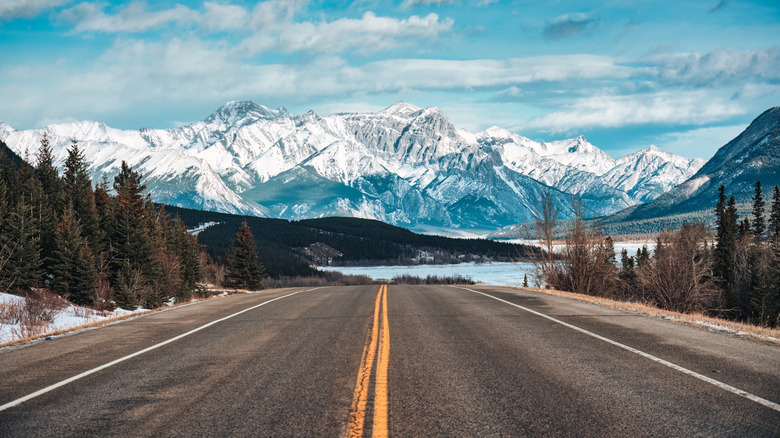
With its expansive 3.8 million square miles (9.98 million sq km), Canada ranks as the second largest country, putting it just behind Russia. With natural wonders like the Canadian Rockies and the 149 million acres of forest in just British Columbia alone, it's an outdoor-lovers paradise. But Canada is notoriously cold – which is why it was tragically comical when a December cruise to the Bahamas was rerouted there, angering many passengers.
Of course, Canada's urban centers like Vancouver, Toronto, and Montreal also offer plenty of history and unique culture for visitors to soak up. There are plenty of good reasons for Americans to drive north for a visit. But while many road rules are similar to the U.S., there are a few to look out for when traversing the provinces.
Unfortunately, this situation is further complicated by a few quirks. Just like states, provinces can have different rules depending on where you're traveling. That's why it's important to be familiar with local laws on your trip to avoid any trouble.
Right turn on red
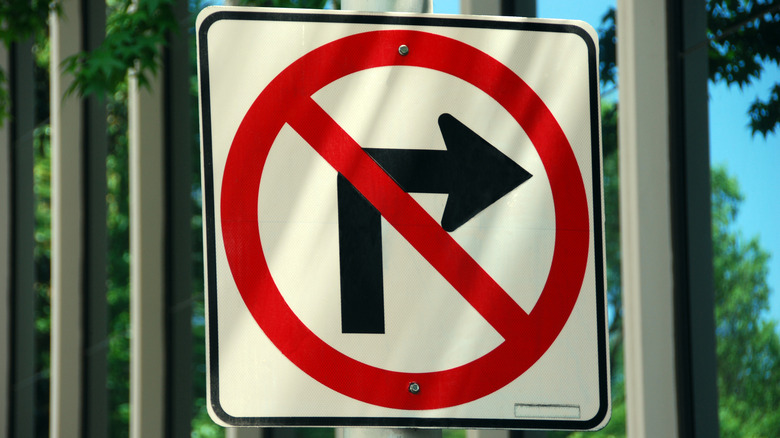
Across the U.S., it's generally legal to make a right turn at a red light unless a traffic sign advises otherwise. There are exceptions to this, like New York City, where it's illegal unless there's a posted sign stating its permitted at certain intersections. In many areas of Canada, you can legally turn right on red — provided you come to a complete stop. However, Montreal takes a much different stance and goes even further than New York City, with no right turns on red lights allowed anywhere on the island.
This can be confusing for visitors who have driven in from the states, as this rule is for Montreal only. Nearly everywhere else in Quebec, it's perfectly legal unless a sign is visible prohibiting the move. Apparently, a few decades ago, a city commission was organized to investigate legalizing right turns on red, but it was rejected due to safety concerns for cyclists and pedestrians. Some in the U.S. are calling for something similar, expressing its past time to ban right-on-red, as people have been struck by vehicles while using the crosswalk.
Smoking in the car when a minor is present
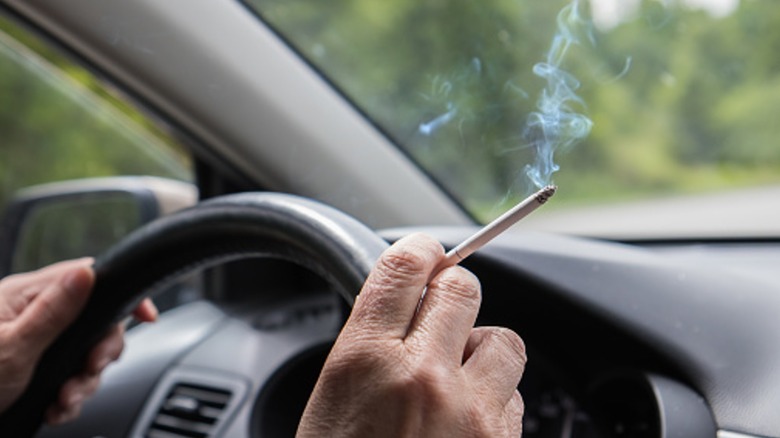
Many areas across Canada have put a ban on lighting up a cigarette if you're driving with a minor. Not every part of the country considers this illegal, but authorities in the areas that do won't hesitate to stop and ticket you. There are only 12 U.S. states that prohibit this action. According to data by the CDC, which tracks legislation surrounding this matter, 21 states have no restrictions whatsoever for smoking in vehicles. So, this may be a Canadian rule to look out for if you still smoke while driving and plan to make a trek up north.
While some might see these laws are akin to freedom infringement, the concern for minors stems from several studies showing highly elevated levels of dangerous airborne particles when smoking in a car. In the U.S., the Environmental Protection Agency has a limit to how many harmful toxins are safe to breathe. When smoking in a car with the windows rolled up, that limit is surpassed 100 times over.
Coasting downhill in neutral
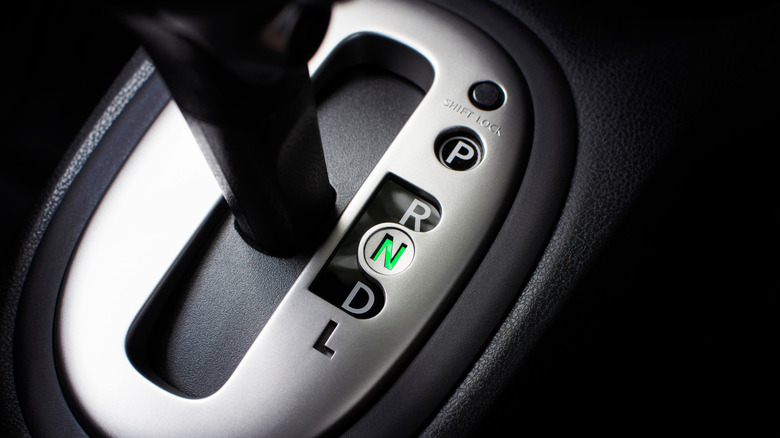
This is another rule where it's illegal in both Canada and the U.S., but only in certain places. There's an idea that's been floated around for years about whether coasting in neutral really saves gas. Regardless of the answer, coasting like this causes safety concerns, as you'll give up some control over the car while putting a greater burden on the brakes. British Columbia has made this practice illegal, which isn't surprising since its highly mountainous terrain provides ample opportunity for driving down hills.
While many states in the U.S. have also made laws against this, there are still some that haven't. For instance, although Minnesota used to have this rule on its books at one time, it's since been dropped, allowing drivers to legally roll down inclines out of gear. Depending on where you live in the U.S., if you're used to coasting in your vehicle and decide to drive through British Columbia, you could have a brush with law enforcement.
Acceptable blood alcohol concentration levels
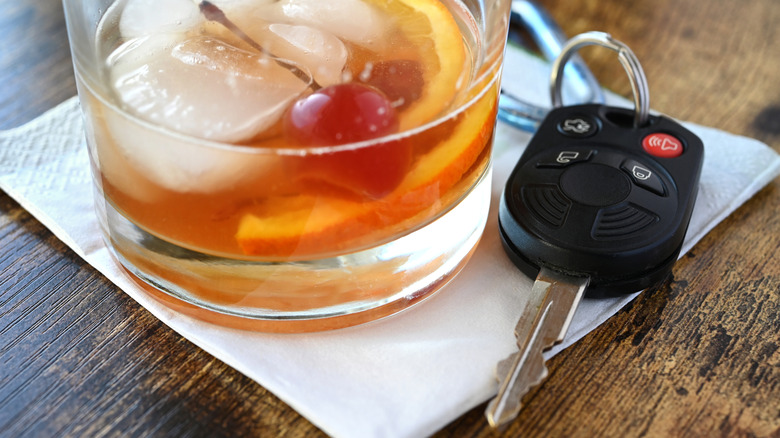
In America, the states used to stipulate what the legal standard was in determining a drivers intoxication level. This made things a bit complicated, and so in the late '90s, President Clinton set a national standard. Anyone at a blood alcohol concentration (BAC) of 0.08% or higher was illegally operating a vehicle. This has been the law of the land for nearly three decades, so those visiting Canada might be surprised to learn that — in most provinces — you'll get in trouble with a BAC of 0.05%.
It's a bit confusing, because Canada as a country also sets the federal limit at 0.08%. But individual provinces can still enact their own more strict measures too, and perhaps for good reason. One study published by the National Library of Medicine placed participants at varying levels of intoxication behind the wheel of driving simulators. Despite a simple 0.03% difference, those at a BAC of 0.08% showed a noticeably more unsafe approach to traffic congestion than those at 0.05%.
Car idling for more than one minute
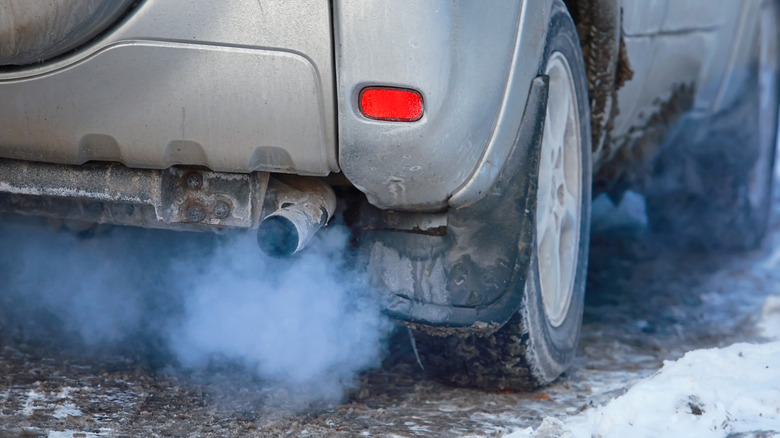
If you live in certain American cities, you've likely heard of laws against excessive idling of your car. In fact, Washington D.C. has one of the strictest rules in place, where a parked vehicle left running for longer than three minutes could result in a $5,000 fine. Other places are more lenient, like the state of Pennsylvania, which allows idling for up to 20 minutes if the weather is under 40 degrees. However, Vancouver in British Columbia takes an even harder stance on the subject than Washington, D.C., making it illegal to idle your vehicle for more than one minute. This has led the providence's residents to almost universally avoid running their parked cars at all, which is something an American visitor would certainly notice.
While many drivers in the U.S. allow their car to run, especially in the winter, it does pose one question: Is warming up your engine still a smart habit or just a thing of the past? It might only matter during extreme wintry conditions as technology under the hood has continued to advance over the years. That being said, British Columbia isn't enforcing an idle rule for the sake of your car, but because of emissions. According to the U.S. Department of Energy, idling personal vehicles generate "around 30 million tons of CO2 every year."