

Three Wheels Vs. Two: Are Trikes Actually Safer Than Motorcycles?
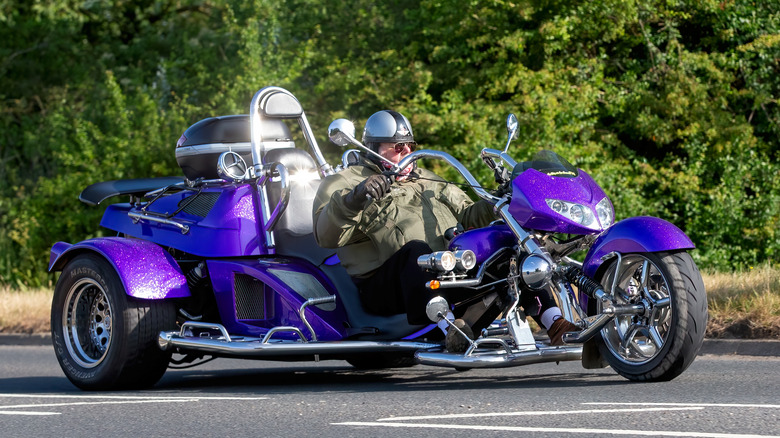
We love everything with wheels at Jalopnik, including motorcycles and the occasional three-wheeled trike. There's something about three-wheelers like the Can-Am Spyder and Ryker that strikes the fancy of riders both young and old. They do happen to offer some practical merits over your typical two-wheeled motorcycle. Since they have three wheels, trikes are more stable and offer better riding comfort on those cross-country road trips thanks to their natural, upright seating position. And since trikes are wider than a motorcycle, there's more space for cargo via the saddlebags or a bespoke trunk. Their inherent car-like stability, more balanced traction, and less demanding riding position make trikes ideal for riders with health issues, disabilities, or mobility concerns. But are three-wheelers really safer than your typical two-wheel motorbike?
From a visual standpoint, trikes are bigger, wider, and easier to spot while driving. They also have a full complement of front and rear lights to make them more visible to cars. Being bigger and wider also means trikes are less likely to be involved in blind spot accidents with four-wheeled vehicles. This is because you can't weave through traffic or split lanes in a trike like you can in a two-wheeled motorcycle. Although lane filtering is legal in many states, you're sure to get some bad attention if you try attempting it with a trike.
Trikes are not as quick or agile as motorcycles. This is a good thing, since the NHTSA claims almost a third of on-road fatalities in 2023 had something to do with the need for speed. Moreover, driving or riding trikes doesn't require a steep learning curve; they don't need you to lean your body into turns, which also means you'll have more stamina for extended jaunts.
Then again, trikes can be as dangerous as motorcycles
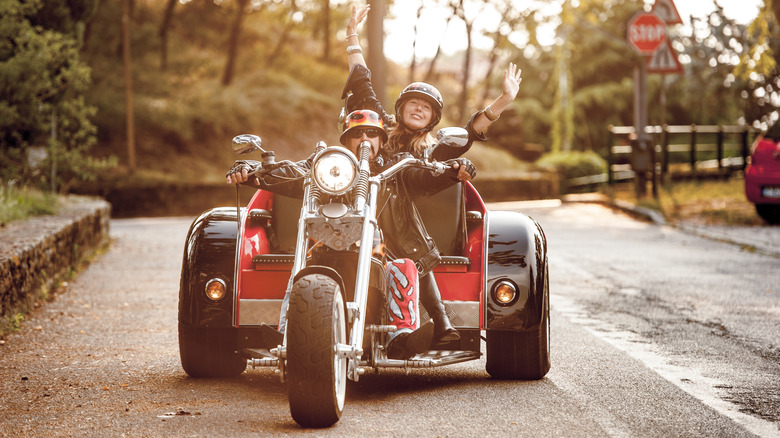
Trikes won't suddenly appear on blind spots and are inherently more stable, but they can be just as dangerous as two-wheel motorbikes. They both have no doors, roof, safety bumpers, or crumple zones like a car. The rider and passenger can still succumb to fatal injuries in a crash, especially when a trike meets large sedans, pickup trucks, or SUVs on the wrong end of the road.
They may be wider and have more road presence than a motorcycle, but the size of trikes makes them less fuel-efficient. Since they have more of everything, they're also costlier to purchase and maintain. Plus, it's trickier to park or store a three-wheeler, and they can be a bit cumbersome to maneuver in traffic and narrow lanes. Trikes may be more stable at slow speeds and easier to drive overall, but the inability to lean into corners still requires mastery to prevent them from tipping over on high-speed corners. Tadpole or reverse trike models are better at high-speed stability with two wheels in the front and a single drive wheel at the rear, but their wider turning radius still carries some risk.
And then we get to licensing and the legality of it all. It's road-legal to ride a trike with a standard driver's license in California, Nevada, and South Carolina. There's a market for them, too; there are still more Pontiac Firebird trikes out there than there should be. But most states require a Class M license with a three-wheel motorcycle endorsement, similar to a two-wheel motorcycle license. To obtain three-wheel approval, the applicant must still pass a written or riding test pertaining specifically to trikes.