

5 Must-Have Items For Your Car Emergency Kit, According To Preppers
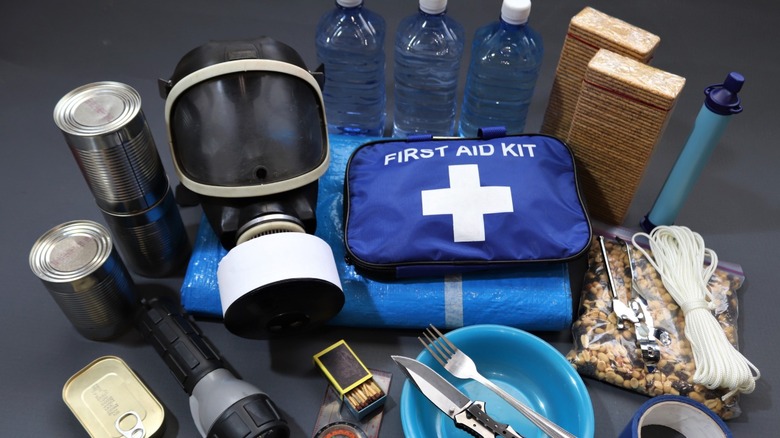
Are you fully prepared for the effects that an EMP could have on the power grid and your personal electronics? What about the widespread civil unrest that could result from the total collapse of the global economy? More importantly, is your car ready for these events?
Maybe, like most people, you have more pressing matters to worry about than the remote possibility that the dollar collapses and we suddenly find ourselves in a "Mad Max" movie. Preppers, however, worry about this stuff all the time, and not just those scenarios. They're also worried about solar flares, nuclear fallout, the Yellowstone super volcano, and devastating natural disasters, just to name a few.
While it sounds extreme, it doesn't mean that preppers don't sometimes have good ideas. After all, natural disasters are a real thing that happens every day around the world. It's good to be prepared in the event that something catastrophic occurs. These folks can be especially practical about what should be kept in one's car in case of emergencies. There are, of course, the basics — a first aid kit, jumper cables, tools, a spare tire (or items to repair a tire without a spare), a flashlight, etc.
However, preppers make sure that their cars are extra ready with food and water that will last days, first aid kits with advanced medical equipment, hidden cash, paper maps, and a compass, as well as backup smart phones stored in Faraday cages. Some will also stash fully stocked get-home bags stuffed with everything they need in case they have to abandon their vehicles and hike to a safe location.
Plenty of food and water
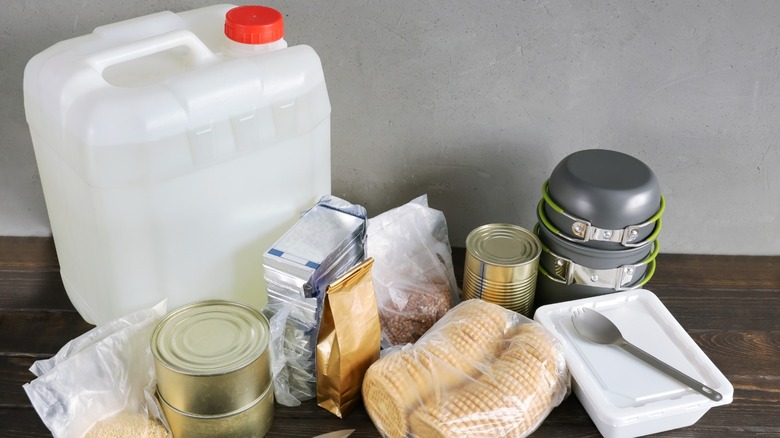
Oh, so you think you're prepared for an emergency because you have a couple bottles of water and some year-old granola bars in your trunk? Did you know that preppers recommend keeping a gallon of water per person per day stored in your car? That's a lot of water, and it can add up quickly if you plan to fit the whole family in the vehicle for days. Trying to find the space to store all of that water in your Honda Civic could be a challenge. That's why portable water filters and purification tablets may be something to consider putting in your glove box. All you need to do is find a source of water, clean it, and you're good.
Food is important, too. You'll want non-perishable items like protein bars, beef jerky, dried fruit, or military rations. If you're storing canned goods, don't forget to stash a can opener. Of course, after consuming all of that food and water, you're going to need a place to use the bathroom if you're stranded. Preppers have thought of that, too, and some bring along buckets and trash bags for this purpose. Fun!
Why do we think this prepper suggestion is worth thinking about? It's not unheard of for people to get stranded for days on remote mountain roads in the winter. That's why food and water are essential items for your winter emergency kit. Or, maybe you're soft-roading somewhere really isolated and get stuck miles away from the nearest real road and/or cell tower. Extra water and food rations are going to come in handy.
An extreme first-aid kit
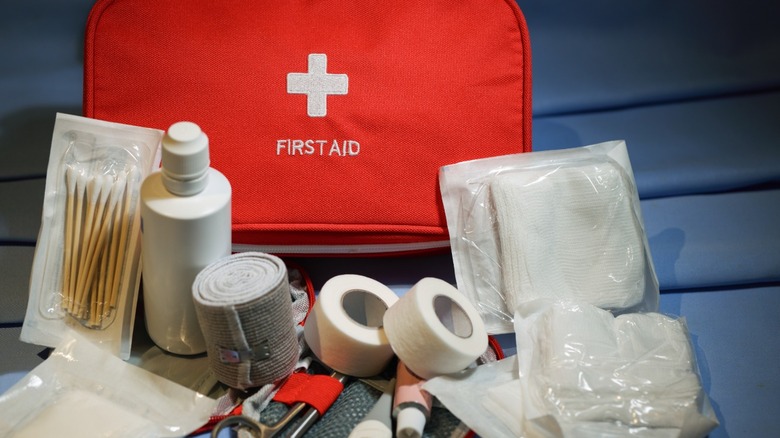
Let's face it, a good first-aid kit is one of those essential accessories to keep in your car. However, while many people carry basic first-aid kits in their vehicles, a handful of Band-Aids probably won't be much help in an extreme situation. Preppers don't play when it comes to their first-aid kits. Recommendations include pain relievers, gloves, trauma pads, tourniquets, CPR pocket masks, burn treatments, splints, and hemostatic gauze to start clotting, as well as other products that stop serious bleeding.
Why do we think this prepper recommendation is worthy of consideration? We hope that none of us ever have to use any of this stuff, but car accidents happen. Sometimes, they happen on remote stretches of road where it can take a while for EMTs to arrive. It's better to have some of this stuff and never need it than to need it and not have it. However, if you do decide to put some advanced items in your first-aid kits, you may want to take some first-aid classes so that you know how to use the supplies.
Stashes of cash
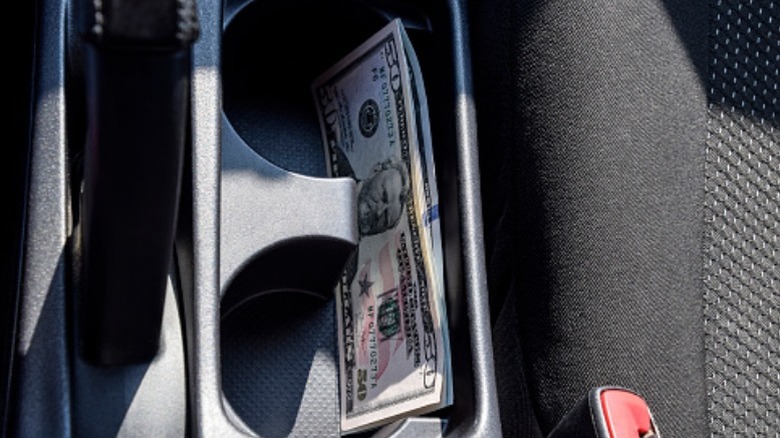
There is a school of thought that holds that money isn't real. That's easy to believe if you pay for everything by tapping your phone to the card machine at the register. However, the U.S. Bureau of Engraving and Printing might like a word. They print 38 million bills, to the tune of $541 million, every single day. That's a lot of non-existent money.
That cash may come in handy if the power grid and the internet go down. In that case, stores and gas stations wouldn't be able to perform debit or credit card transactions. Cash would be the only way to pay for anything. Okay, so you'll just go the bank to withdraw some money. But how will the teller know if you have enough funds in your account if the power is down? Don't forget about the roving bands of marauders that are ready to start plundering banks and everything else. That won't be a problem if you hide cash in various places in your automobile.
So, why do we think this prepper suggestion is worth considering? We admit, while the U.S. electric power grid is not the most modern or up-to-date grid in the world, the likelihood that the entire thing fails at once is probably pretty slim, and even a nationwide outage would likely be temporary. However, the power does go out during natural disasters, rendering places of business unable to process card transactions. Having some cash on hand can't hurt. Though, if you happen to be stopped for a search when crossing the Canadian or Mexican border and customs officials find stacks of Benjamins behind your wheel, well, let's just say there may be questions.
Paper maps and compass
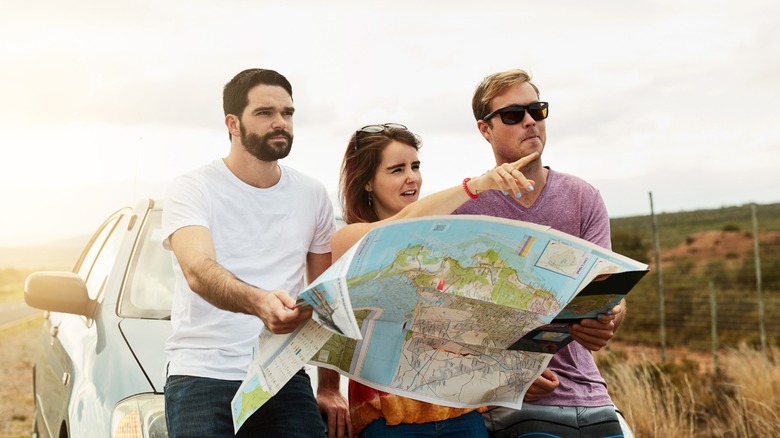
We're convinced that Google Maps has made us lose certain skills, especially when it comes to directions. We turn the thing on just to find our way to the houses of long-time friends, even when we've been there multiple times.
In fact, we think that technology has made reading a paper map a lost art, like basket weaving and balancing a checkbook. We don't mean to come off like we're complaining about modern tech. However, if the grid goes down and you've got no data, how are you going to find your way back home, especially if you're stranded miles away? That's why preppers recommend carrying some paper maps in your car.
Why do we think this prepper recommendation is worthy of consideration? Think about what it might be like to evacuate your area during a natural disaster. If you live in a crowded city, evacuation routes could easily become clogged, and you might need to find alternate routes. Cell networks can go down, meaning your GPS app might lose connection. A book of street maps for your city could come in handy. A good highway almanac wouldn't hurt, either, depending on your location. If you never learned how to read printed maps, now may be a great time to start.
Backup electronics and EMP protection
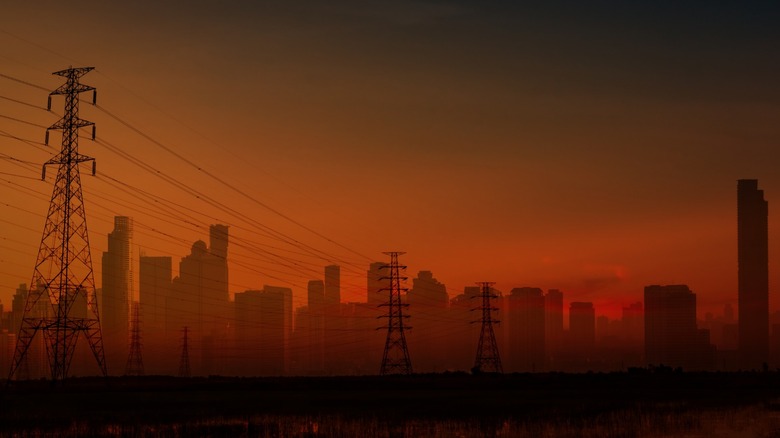
What's an EMP? It stands for electro-magnetic pulse and refers to an event that could disable all electronic devices for miles around, including computers, smartphones, modern cars, and even the power grid. It could be caused by a solar flare or a nuclear bomb exploding high in the atmosphere. And you've probably been going about your day, not even thinking about EMPs. It's a good thing preppers are here to give us more stuff to worry about. But preppers aren't worried, they're prepared. Many of them have backup devices stored in Faraday cages or bags, which are covered in continuous conductive material that blocks electro-magnetic waves and, in theory, can protect devices from an EMP.
Why do we think this prepper recommendation is worthy of consideration? We're not sure we do. The U.S. Cybersecurity and Infrastructure Security Agency calls an EMP a "low probability" event, but it's working on contingency plans. Still, we could apply this principle to carrying a power bank in your car in case you get stranded and need to charge your phone.
You may not load your car up with all of these recommended items, and we probably won't, either. We'd have to tow a trailer to carry it all around, which seems like a lot of trouble for a trip to Kroger. But, hopefully, we've given you some ideas to help prepare your car a little better for an emergency.