

The Downsides Of Using Thicker Oil In Your Engine
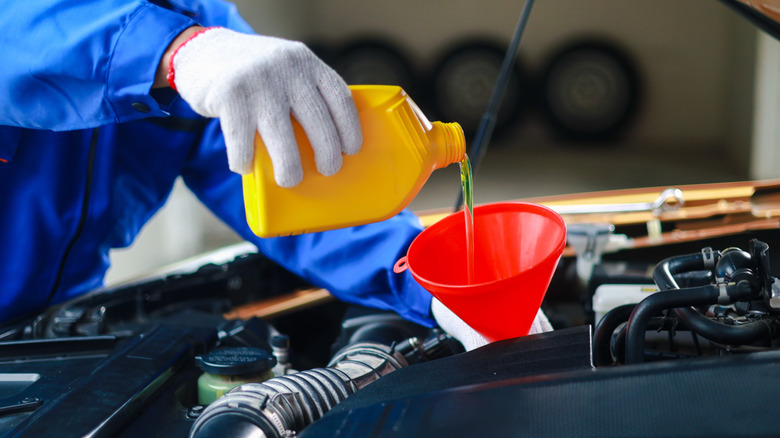
The downsides of using thicker oil are inversely related to the effects of using thinner oil. One of the most notorious motor oil myths is that thicker oil offers better protection than lower viscosity oil. This couldn't be further from the truth, though, since it all depends on the type of engine and the ambient temperature.
You won't harm your engine immediately if you decide to pour in slightly thicker or thinner oil, but we always recommend sticking to the prescribed oil viscosity in the owner's manual. Why? Because the potential downsides outweigh the supposed benefits, and not all engines are built the same.
For instance, let's say your car requires 0W-20 full synthetic oil, but you insisted on pouring in 10W-30. As you probably know, the "W" stands for winter, and the numbers refer to the oil's viscosity, with a lower number meaning thinner oil. In this example, the fluid is zero-weight oil when cold and 20-weight oil when the engine reaches its normal operating temperature, usually around 212°F (100°C).
In this case, the 0W-20 oil will flow more quickly in the winter than 10W-30, which means it can lubricate faster upon startup and protects better against intense friction from cold starts. Switching to 10W-30, especially in the winter, may cause more harm than good, and the downsides include more wear and tear and possible hard starting when the mercury drops.
The undesired effects grow exponentially if you skip two grades or more, like going from the recommended 0W-20 to 15W-30, for instance. Modern engines typically require thinner oils due to tighter manufacturing tolerances in the main bearings and crankshaft journals. Thicker oil may not flow quickly enough to protect these engines, and the pumping losses will ultimately mean higher engine temperatures, premature sludge formation, and lower MPGs.
Thinner oil is not without disadvantages, too
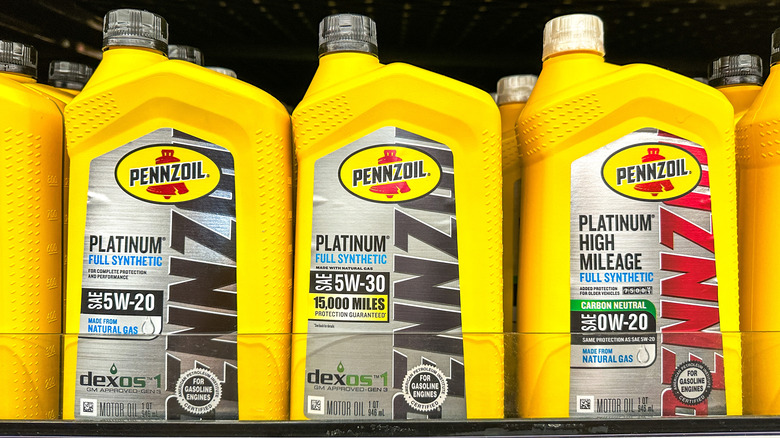
Remember when we said in the beginning that the downsides of thicker or thinner oil are inversely related? As an example, an engine that requires 5W-30 oil may not benefit fully from 0W-20 oil. The thinner oil may help it crank faster in cold weather, but it may not offer sufficient lubrication when things get hot, as oil gets thinner the hotter it gets.
It might flow more readily, but that oil won't be able to keep up with lubrication if it gets too thin. This could result in devastating wear of bearings and internal parts due to oil breakdown. Meanwhile, thinner oil also loses out on pressure, which could cause problems by affecting the engine's variable valve timing, igniting the oil warning light, or causing valvetrain noises. Some car engines can operate on different oils depending on the climate, like, for instance, 0W-20 or 5W-30. Choose 0W-20 if you drive in colder areas, but go for 5W-30 in warmer climates. Doing so raises the level of protection when the engine needs it most.
To sum it up, thicker oil is not necessarily better, but switching can be beneficial if the owner's manual says so. Otherwise, stick with the recommended oil viscosity at every oil change.