

What Actually Happens If You Shift Into Reverse While Driving
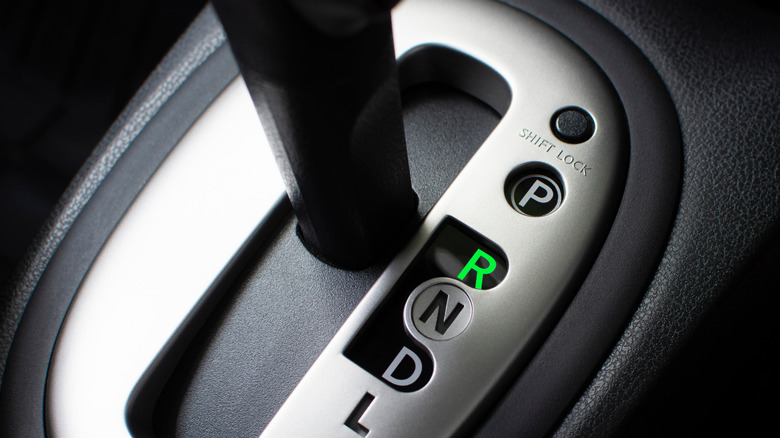
A common fear among drivers is accidentally shifting to reverse while on the move, which many assume could be catastrophic for the vehicle. But can you really hurt your gearbox if you — or some nosey passenger with a death wish — decide to move from drive to reverse while moving?
If you're driving an automatic car that was built in the '90s or later, you will likely not cause any damage to the gearbox, as the powertrain control module (PCM) in most modern cars will simply not shift into reverse when you're on the move. A mechanism called a reverse inhibitor stops the gearbox from engaging reverse, even at speeds of around 5 mph. This function is controlled electronically by the PCM in modern cars, while older vehicles used a hydraulic system to achieve the same effect. Putting your car in reverse while driving may cause the reverse camera to turn on (provided your car has one) and the transmission to shift into neutral, all while giving the drivers behind you a scare as your reverse lights come on.
But if your vehicle's reverse inhibitor isn't functioning or your car doesn't have one, the engine will likely stall. Overall, putting your automatic transmission in reverse while driving isn't a good idea, as it can place extra strain on the transmission and potentially lead to substantial damage.
What happens if you shift a manual into reverse while driving?
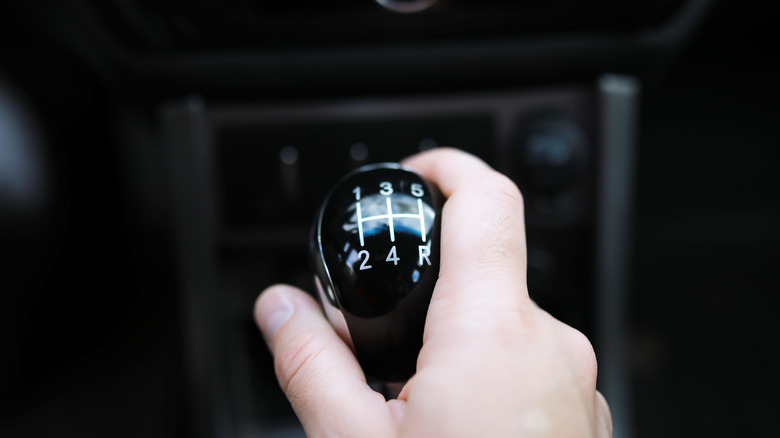
While automatic gearboxes have some safeguards to protect your transmission from eating itself from the inside if you accidentally shift to reverse, manual gearboxes don't offer the same protection — though putting your manual transmission in reverse at speed is nearly impossible, due to the shift lockout that's baked into manual gearboxes to protect them from such abuse. You would have to exert a lot of physical effort and force to shift into reverse while the car is moving, as the reverse gear spins in the opposite direction of the forward gears.
Putting the car in reverse will likely produce a harsh, grinding noise, and if you're successful in engaging reverse, the engine will likely stall. Synchronizers in manual gearboxes allow smooth and precise shifts between forward gears, but reverse usually lacks a dedicated synchronizer. Moving to reverse from a forward gear at speed will cause the gears to clash, potentially damaging the reverse gear teeth and wearing other transmission components. So, it's simple — if you drive a stick, you'll have to use some muscle to get it into reverse while moving, and if you manage to do it, you'll probably end up with a massive hole in your wallet.