

These Car Brands Make More Than Just Cars
When you think of brand names like BMW, Tesla, and Toyota, what's the first thing that pops into your head? For most of it, it's cars and more cars. We equate BMW with performance, Tesla with Elon Musk, and Toyota with reliability. Yet, each of those companies makes far more products than the four-wheeled variety. BMW has a financial services division, Tesla makes a belt buckle, and Toyota builds houses. The truth is stranger than fiction: if Tesla actually releases a humanoid robot in the next few years and we all buy one, the company might be known more for their AI than anything else. Beyond a random piece of trivia, several companies are so diversified that their car manufacturing is just one piece of a much larger puzzle.
For someone like me who owns a BMW 3, it's helpful to know the other product lines from an automaker, at least as some assurance about their size, commitment to sustainability, or even the simple fact that the company is much larger than we can imagine.
The following powerhouse companies make more than cars — as one example, Honda is an automotive, motorcycle, and power generator company that also happens to make a jet. Porsche might be the first name you think of when it comes to luxury cars like the Panamera, but they also happen to make a smartwatch that costs $1,250. These automakers are iconic automotive brands, but they also know how to attract radically diverse customers.
Toyota
For a company known for their cars, Toyota is also a powerhouse in other areas. Chief among them is house and condominium construction through the Toyota Home company. They build something called a Net Zero Energy House that features a connected home app, LED lighting, and high-efficiency AC units. Toyota Marine is another company that makes boats and boat engines. There's also a financial services company and a venture capital firm called Be Creation that helps Toyota employees start companies. That's a lot already, but Toyota Group (the umbrella company behind all of the other firms) is much bigger than that.
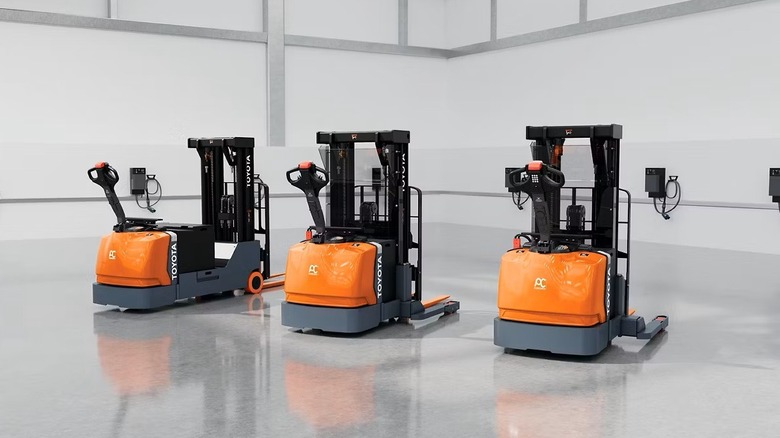
For starters, there's a company called Toyota Industries Corporation that happens to be the world's largest manufacturer of forklifts by revenue. They also make engines, stamping dies, and textile and weaving equipment. That last product line is an important throwback, since Toyota started out as the Toyoda Spinning and Weaving Company. The founder, Sakichi Toyoda, invented a loom that reduced the number of defects in the fabric. You could say that was a precursor to the Toyota Way, which is all about reducing imperfections.
Then there's Hino Motors that makes heavy-duty trucks and buses. Toyota Tsusho is a massive conglomerate that's involved in everything from logistics to drone deliveries. That's just the tip of the iceberg for a company that is mostly known for making reliable cars.
Tesla
To say that Tesla is a battery company that makes cars might be less of an overstatement than you might think. To compete in the electric vehicle space, car companies know the battery is essentially the replacement for a combustion engine, determining the range of the vehicle but also the power to propel the car or truck forward. Tesla makes not just the popular Model S sedan and several other cars in their lineup, but also the battery tech that powers them.
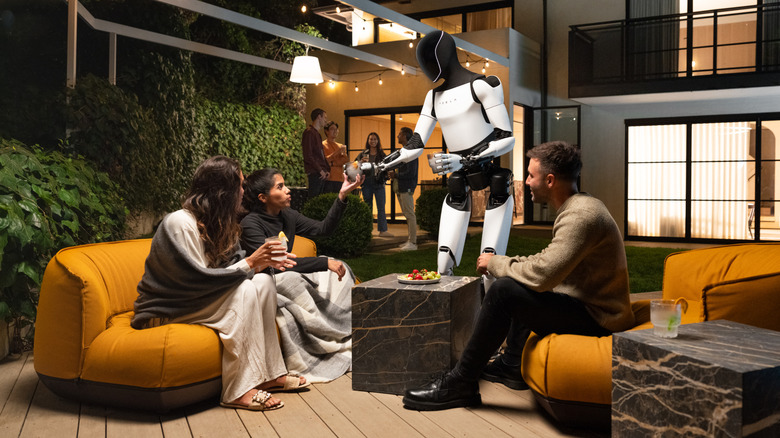
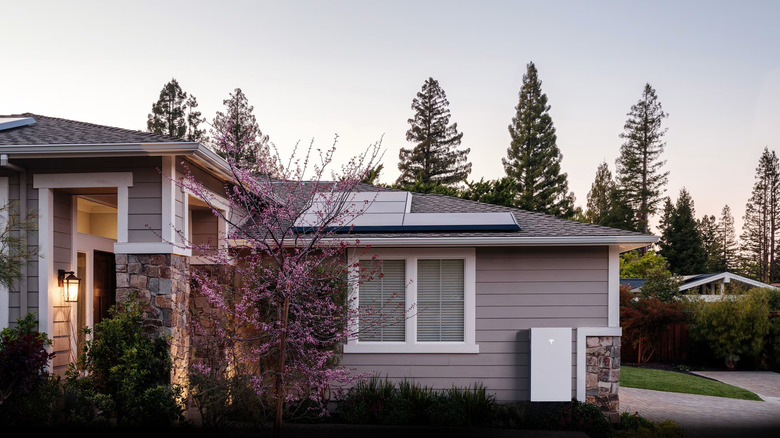
The company led by Elon Musk is perhaps the most varied of any automaker in terms of other product lines. This includes both the Powerwall (for home power storage) and Megapack (large-scale storage), as well as an entire solar roof. There's also a long list of AI products, including the Tesla Optimus humanoid robot. That's all in addition to the charging network they own and operate that stretches across the country — there are around 70,000 of them.
And yet, it doesn't stop there. Tesla also makes an ATV for kids, a mug, a belt buckle, and several other items that go so far beyond cars that you'd be forgiven for thinking the Tesla brand is stretched a bit thin. Somehow, it all works. If the company ends up making a Tesla restaurant where you can charge your car, we might be the first to pull up and grab a burger.
Peugeot

The one thing to know about Peugeot is that the family name is famous for making multiple products beyond just cars, but technically is now split into two different firms. Peugeot is part of Stellantis, the massive umbrella company that also owns Chrysler, Ram, Jeep, and many other automotive companies. Stellantis formed when PSA Group (which also owns Citroën, DS, Opel, and Vauxhall) merged with Fiat Chrysler Automobiles (FCA).
Peugeot Saveurs is the name of the Peugeot family-owned business that makes salt and pepper mills, coffee mills, saws, wine accessories, and other kitchenware products. The original company started as a grain mill operated by the brothers Jean-Pierre and Jean-Frédéric Peugeot in 1810. In 1891, the company made the first Italian passenger car.
Another fun fact about Peugeot is that the brand is also known for making bicycles and has recently transitioned to making electric bikes. As an automaker, Peugeot once made both cars and bikes. At one time, the current Peugeot Cycles brand was not connected to Stellantis directly but was owned by a European bicycle company called Cycleurope. Stellantis is now the parent company and sometimes issues press releases about Peugeot Cycles.
BMW
BMW is one of those companies that makes so many products that it's hard to pin down exactly what they do besides vehicles, but we can start with motorcycles since those are so iconic. Actually, we should start with airplane engines, since that's what BMW made before anything else — way back in 1917. (Another fun fact about BMW beyond that origin story is that their logo has stayed roughly the same since the company started with the distinctive blue and white pie shapes.) BMW released their first single-cylinder motorcycle, the R 32, which had an 8.5 horsepower engine, in 1925, and their first car — licensed from Austin Motors — in 1928.
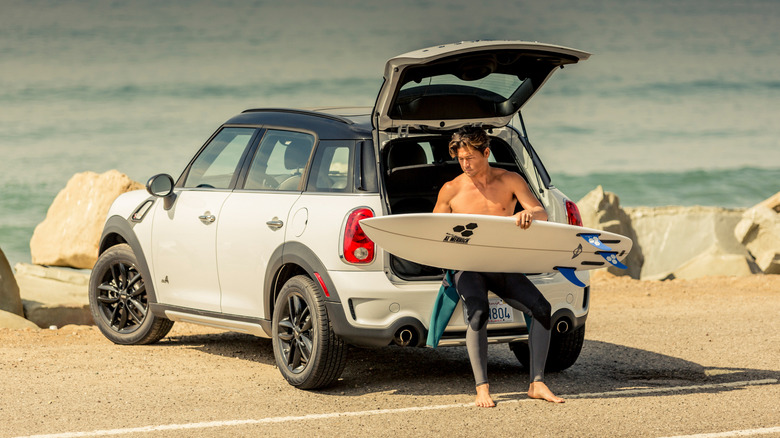
BMW goes well beyond cars and motorcycles, though. The company operates a fleet management service, a financial services division, and a design company. There's also a BMW venture capital firm called iVentures. Like Tesla, there are several other products that carry the BMW logo that might be surprising. For example, the company has a lifestyle brand that makes a bike, a surfboard, sunglasses, apparel, fragrances, and much more.
Honda
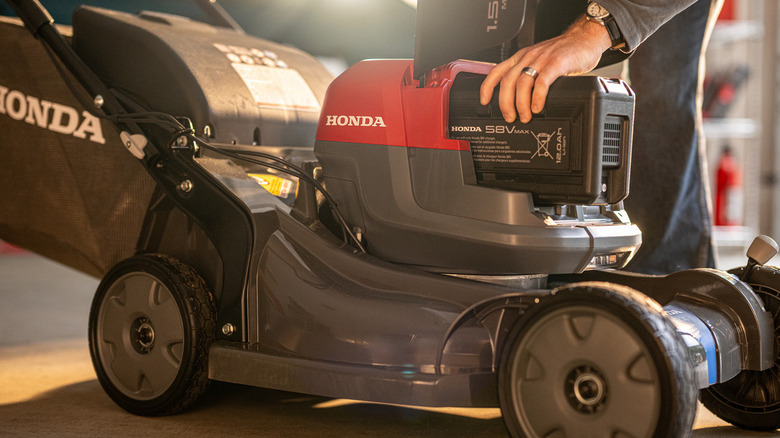
Honda likes to remind everyone they make more than cars, with commercials that highlight their various businesses and even champion what it means to succeed in business and life. It's a lot to keep track of, but the two main product lines they offer besides cars include power equipment like generators and then motorcycles like this history-making model. Throw in a financial services division as well.
The Power Equipment division is quite extensive. Honda makes lawnmowers, weed trimmers, tillers, and snowblowers. The power generators are available as both gas-powered and electric. The Powersports division is also extremely well known and includes motorcycles, ATVs, and side-by-sides (also called UTVs). A common theme running between the cars, power equipment, and off-road vehicles like dirt bikes is they all involve power at some level.
That's why the financial service division is a bit peculiar. In case you're wondering, yes — you can get a Honda credit card. But it all ties together in the end. This division helps you finance that new Honda Passport or home generator. Of course, there's also the HondaJet, which has been available for several years. A new model coming out in 2028 is called the Echelon.
Porsche

Porsche is known for their iconic cars, including the 911 and this fantastic new Panamera. It makes sense that there's another division that is all about design and aesthetics, but the story of how that all came to be is worth telling. Ferdinand Alexander Porsche (or F.A. for short) was the eldest son of the founder, Ferry Porsche, who launched the car company in the late 1940s. Later, during the 1960s, F.A. Porsche left design school and went to work for his father's namesake company. Yet, in 1972, the design company Studio F. A. Porsche started, using a name to help distinguish itself from the car brand. The first product was a distinctive chronograph watch.
The design firm has made an impressive array of products, from ski goggles to sunglasses and kitchen appliances to running shoes and refrigerators. Porsche has also partnered with companies like Garmin to make a sports watch. The biggest surprise is that Porsche has also branched out into many other areas, offering engineering services, finance and leasing, insurance, and even a finance app. There's also an investment firm called Porsche SE.
Why branch out with so many divisions? It might have something to do with how many cars Porsche actually sells per year. In early 2025, the company announced it had sold 310,718 vehicles in 2024, a low number compared to how many F-150 trucks Ford sold in the same year (almost 500,000). Expanding the Porsche name to watches and running shoes makes more sense from a revenue standpoint if the main business only appeals to a certain type of buyer.
Subaru

When you think of Subaru, you might know them as the automaker famous for stability on the roads thanks to their Boxer engine, which has a low center of gravity. Whether it's the Ascent, Outback, or Forester, the AWD drivetrain is always a standard feature. Subaru of America likes to emphasize their reliability and safety features as well. It's an iconic brand, but the history of Subaru is more varied than you might think — and has more to do with airplanes than cars.
The parent company called Subaru Corporation is well known for their aerospace business and started out as an airplane manufacturer. Once known as Fuji Heavy Industries, they make airplane parts for Boeing, planes for the Japan military, and aircraft engines. One claim to fame is that Subaru Corporation also makes the Subaru Bell 412EPX helicopter that costs around $16 million, a workhorse aircraft meant for emergency rescue missions and much more.
The 412EPX has specs that might overshadow the EyeSight safety system in an Outback. The avionics systems include a pre-approach profile and hover hold capabilities (like a cargo hook that is capable of holding about 5,000 pounds), and can comfortably seat up to 14 passengers.
Mitsubishi
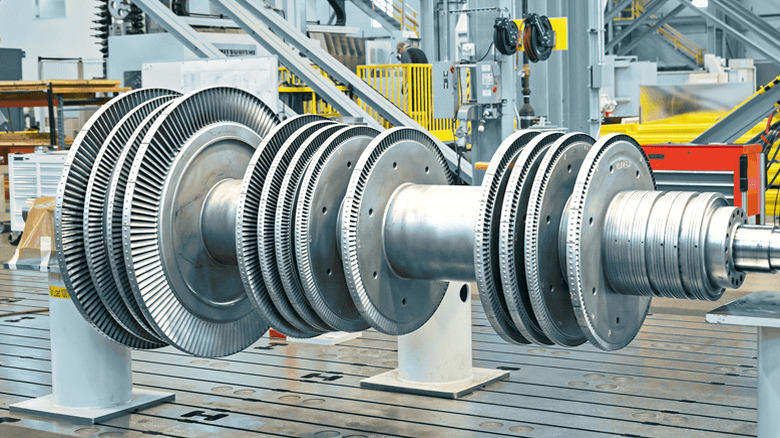
Mitsubishi is similar to Peugeot in that there are separate and distinct companies that originated from the same original corporation. In the case of Peugeot, it was originally a family affair (started by two brothers), but the car company is now part of Stellantis, and Peugeot Saveurs is a separate kitchenware company that actually started it all many decades ago. Similarly, Mitsubishi started out as a shipping company in 1870, and it wasn't until 1917 that they produced their first vehicle. It's even more confusing than that, though. Mitsubishi Heavy Industries (MHI) is now the firm that makes ships, compressors, and power systems, and works in the aerospace industry, similar to Subaru Corporation. The main product Mitsubishi Heavy Industries makes is the fuselage panels for the Boeing 777.
Meanwhile, Mitsubishi Electric makes air conditioners, electronics, and home appliances, among other things. And then Mitsubishi Motors is the company that makes cars — mostly crossovers and SUVs. You would be forgiven for being confused since all three companies share the same name and logo, which looks like three diamonds; Mitsubishi means "diamond" in Japanese.
Hyundai
What most Americans recognize as an automotive brand that emerged in the shadow of Honda and Toyota decades ago was once a powerhouse South Korean conglomerate. These days several companies share the Hyundai name, but they are not under the same umbrella. There's a Hyundai department store, a marine and fire insurance company, and an engineering firm that all share the same name but are independently owned.
However, Hyundai Motor Group has a wide range of products beyond cars, like this performance model we're salivating over. The company dabbles in robotics, software development, and sustainability. Hyundai Mobis makes parts and modules for the automotive industry, and Hyundai Rotem makes railway and defense systems.
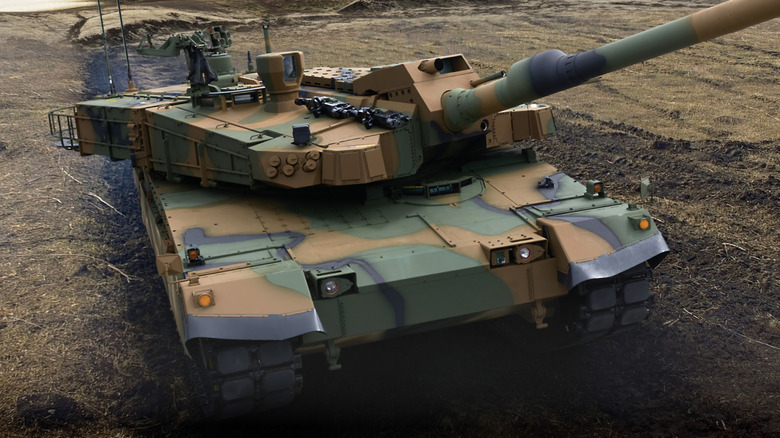
That last firm — which Hyundai owns an interest in — is the most interesting of all. The K3 battle tank is their latest offering. It's powered by hydrogen and is stealthy and silent. The tank won't be available until 2040. The specs are a little more intense than what you'll find on an Elantra. It has AI-guided weapons systems that can target objectives autonomously.