

What Are The Rarest Cars Featured On Jay Leno's Garage?
Jay Leno is one of the most prolific car collectors in the world. He owns over 180 cars and counting, with a combined value of over $50 million on the low end of estimates. His collection ranges from some of the fastest concepts ever designed to historical relics from the budding days of the automobile industry. He has made tremendous use of his collection, leveraging his cars into the successful television series Jay Leno's Garage, which ran for 89 episodes between 2015 and 2022. Following the show's cancellation, he kept it alive on YouTube and continues to produce new episodes to this day, featuring vehicles from his own collection, those from around the world, and even those owned by individuals.
Jay Leno's garage is as much a museum as it is a treasure trove of classic and modern cars. Let's take a look at some of the rarest featured on his show. Some of these vehicles are irreplaceable pieces of automobile history, others are one-of-a-kind, high-tech concept cars, and still more are obscure, forgotten, and highly prized among hardcore automobile enthusiasts. Read on to learn more about some of the rarest cars featured on Jay Leno's Garage.
1957 Mercedes-Benz 300SL
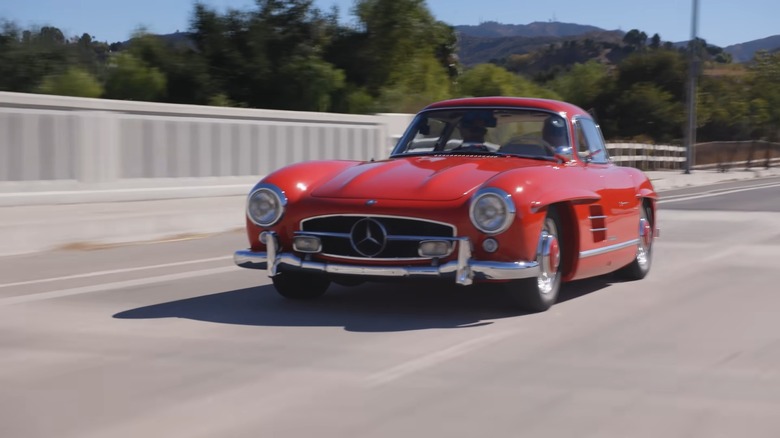
This episode of Jay Leno's Garage featured the 1957 Mercedes-Benz 300SL, nicknamed the "Gullwing," due to its vertically opening doors. When viewed head-on with both doors open, it looks like a seagull in flight. And fly it does. Jay himself even calls it "The first supercar because there was nothing like it in the '50s," pointing out the presence of Bosch fuel injection and other performance-first features.
This particular unit was the last-ever to roll off the production line, giving it extra value as the literal last of its kind. As Jay says in the episode of his show featuring the Gullwing, there's a particular quality to a unit that was the first or last to come off the assembly line, since it represents either the beginning or the end of a chapter in automotive history. And that perceived value was self-evident when the car was sold at a charity auction for $2.4 million during the 2024 Las Vegas Grand Prix.
1992 Lotus Carlton
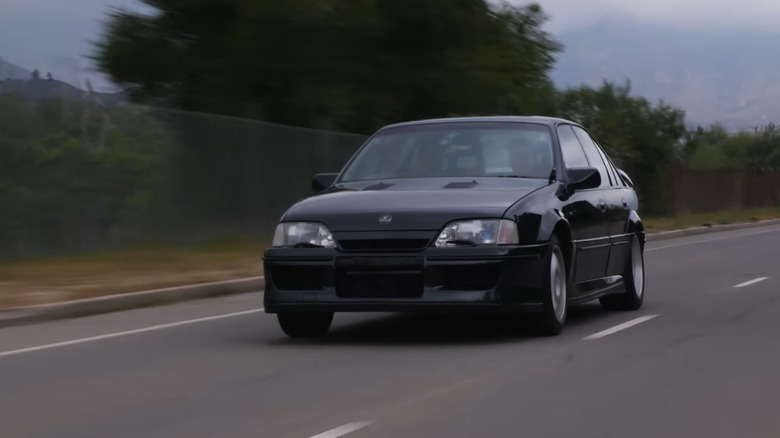
The 1992 Lotus Carlton is famous for being too good for this cruel world. It might have looked like a plain ol' sedan on the outside, but inside this unremarkable British shell lay the engine of a raging beast. That's because the car started out as the Opel Omega, a nondescript but aerodynamic design. The engine, however, was converted into a twin-turbo, 3.6-liter mill with a whopping 377 horsepower, capable of reaching speeds in excess of 170 mph.
The car proved controversial, and it's easy to see why. It embodies the Han Solo philosophy of, "She may not look like much, but she's got it where it counts." While only a thousand or so were produced between 1990 and 1992, they became a favorite of joyriders and getaway drivers since British police cars didn't stand a chance in a high-octane chase, which is basically the only situation where the Carlton's sixth gear would actually be valuable. This resulted in bad press from The Daily Mail and the British government, both of which viewed the Carlton as something of a dream car for a criminal wheelman, given its high speed and low visual profile. Combined with a high price and poor sales, Lotus decided it was more trouble than it was worth to keep the controversial car around, so it was quietly cancelled, making it a collector's item today.
1963 Chrysler Turbine Car
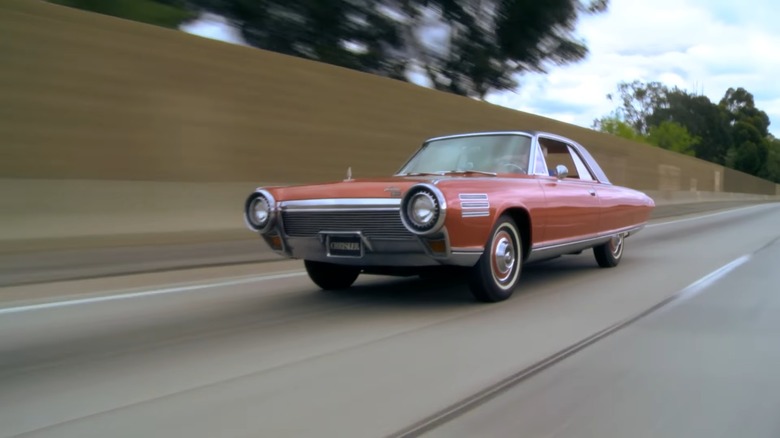
Jay Leno talked about the 1963 Chrysler Turbine Car like a kid talking about their dream car, and there's good reason for that: He had been dreaming about it since he was 14 years old. Every once in a while, a vehicle comes around that is not destined for mass production but inspires the imagination in a distinctly American way. The Chrysler Turbine Car not only asks "What If?" But answers the question with style, class, and speed.
The Turbine's signature trait is, unsurprisingly, its turbine engine, which is basically jet-age technology repurposed for an automobile. It was durable, reliable, versatile, and could run on different types of fuel, from unleaded gasoline to tequila (no, really), but quality came at a cost (and an unfortunate deficiency in terms of smog emissions and fuel efficiency), and the Turbine Car was so premium, it was doomed to never see mass production. It was more of a proof of concept for the potential of the automobile industry than a viable product itself. Though only 55 units were ever produced, it sparked the imaginations of millions of American car enthusiasts, including a young Leno. Today, despite Chrysler's policy of destroying them, nine Turbine Cars remain, with one of them in Jay's private collection. Based on the episode of Jay Leno's Garage featuring the car, it runs as smoothly as it did back in 1964.
1931 Duesenberg Model J LaGrande Coupe
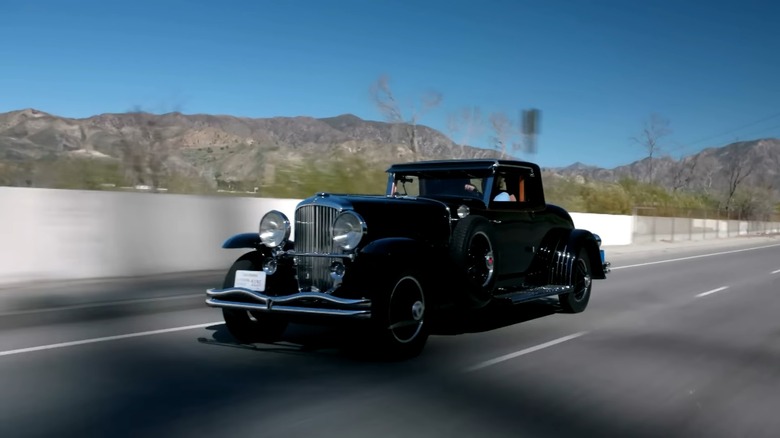
The episode on the 1931 Duesenberg Model J LaGrande Coupe opens with Jay saying, "This is a car that no longer exists." Well, color us intrigued. From there, he goes on to explain that only two of this particular model were ever built, and neither example survived to the present day. However, he had it completely restored from the original plans, essentially rebuilt as it originally was, nearly 100 years ago. Randy Ema, the Duesenberg whisperer, if you will, was in charge of the restoration, and the results speak for themselves. The Duesenberg looks absolutely beautiful, a loving tribute to the early days of the genuine luxury automobiles, which it helped to pioneer in the first place.
This isn't the only Duesenberg Leno owns. We'll get to his 1934 Walker Coupe later on in this story, but it's clear that the Duesenberg brand holds a special place in Jay's heart. It's a luxury vehicle, but it remains a very drivable car to this day. In the episode, Jay reflects a common theme in his collecting when he says, "these cars are meant to be driven." Duesenbergs might be the oldest cars that still have a dedicated community of mechanics that keep them in service, a testament to the timeless yet classic sensibilities of the design, which is rapidly approaching 100 years old as of this writing.
1940 Lagonda V12
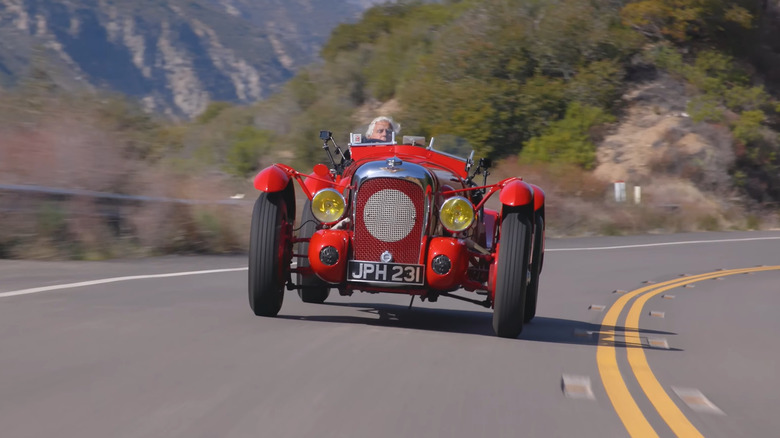
After being forced to sell his company to Rolls-Royce during the Great Depression, Walter Owen Bentley (yeah, that Bentley) was hired by Lagonda to develop their next-generation luxury car. Jay Leno described the 1940 Lagonda V12 as "overlooked," and it's a genuine shame. Only 189 Lagonda V12s were produced between 1938 and 1940, and not all were specified for high performance. However, the one in Jay's personal collection is of the same type as the one that finished third in the 1939 24 Hours of Le Mans.
Perhaps the car would have been more popular if production hadn't been sidelined due to the escalation of World War II, during which luxury automobile assembly lines, along with much of the rest of the free world's industrial machine production facilities, were repurposed to aid in the war effort. By the time the war was over, technology had advanced, with V12 engines giving way to the more modern straight-six engine configuration, and the vintage motoring of the 1940s would eventually give way to the era of the supercar in the 1960s. The Lagonda V12 never had the opportunity to truly grow into itself, but for those who know the scene like Leno does, it's a downright legendary vehicle.
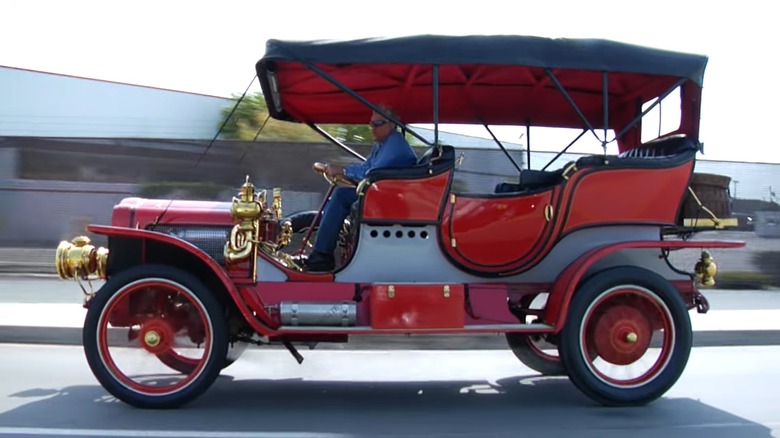
1907 White Steam Car
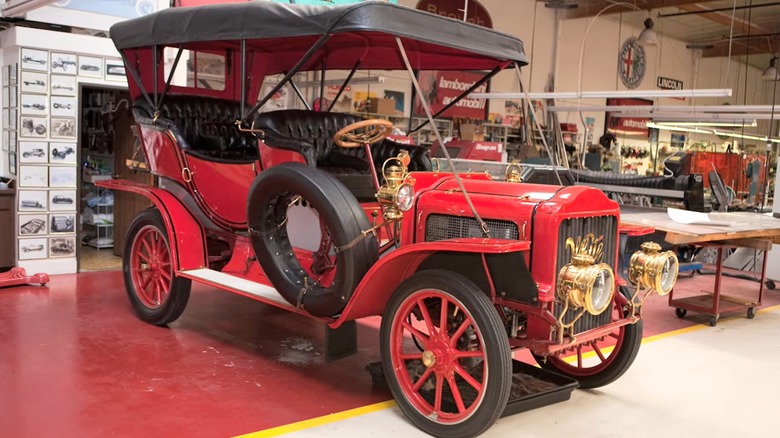
This car, which actually belongs to Jay, might be most famous for nearly ending his life in 2022 when he accidentally set his face on fire after a mishap with a clogged fuel line. Nine days in the hospital (and multiple skin graft surgeries) later, he successfully recovered, but things could have gone much worse. Not many people get a face full of literal fire and live to tell about it, but Jay is just lucky that way.
The 1907 White Steam Car, with its 30 HP engine, is a historical piece of equipment, but it's also extremely high-maintenance, which makes it the perfect vehicle for a wrench monkey like Jay. Being well over 100 years old, the White Steam Car hails from an era when cars weren't expected to simply work, but required plenty of TLC to keep in operational condition. Jay's 1907 model predates the 1909 version, which was one of the first-ever Presidential automobiles, used by President Taft. The legend goes that Taft used the vehicle's powerplant to unleash bursts of steam, blasting photographers who got too close. I don't think The Beast, the current Presidential limousine, can do that!
1913 Mercer Raceabout
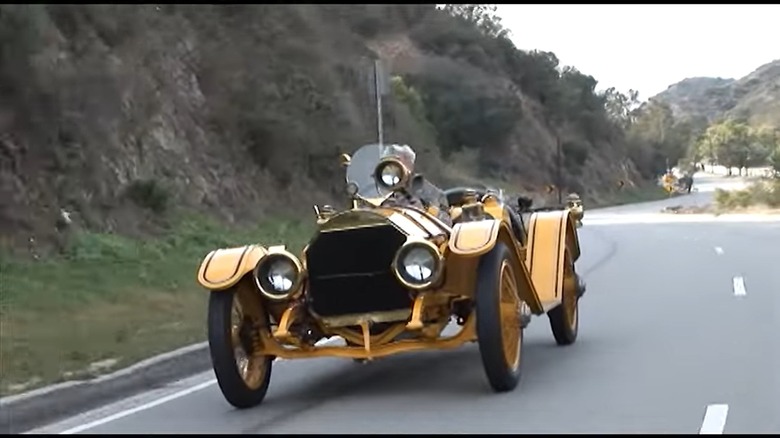
When examining the history of the automobile, it dates back to around 1900. Yes, there were earlier examples, such as the Benz Patent-Motorwagen from 1885, but something like that is decidedly not road-legal by today's standards. But move forward just a few years, and you have vintage museum pieces that are still allowed to operate out on the streets, like the aforementioned White Steam Car and this vehicle, the 1913 Mercer Raceabout, which Jay calls "one of the greatest American cars of all time."
As of the 2015 episode of his show featuring the Raceabout, Leno estimated there were maybe 20 or 25 units still in existence. The story of the Mercer automobile company was cut short when one of its key founders, Washington August Roebling II, an industrialist and accomplished racecar driver, perished in the 1912 Titanic disaster. He died a hero after helping women and children get to the safety of the sinking ship's lifeboats. The Mercer company was kept alive by outside investors, but ultimately folded in 1925.
1989 Ford Shogun
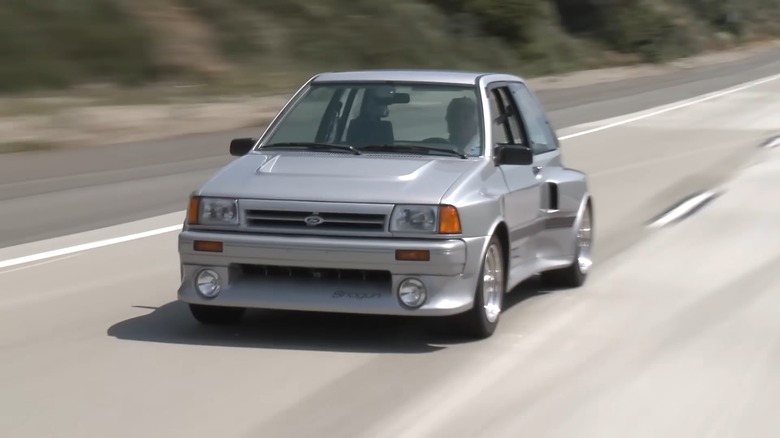
Jay Leno's 1989 Ford Shogun started out as a Ford Festiva, but when engineers Chuck Beck and Nick Titus converted Ford Festivas using Taurus SHO engines, they created something completely new and, of course, totally rare. Only seven conversions exist, and you can bet that Jay owns one of them. Unlike the aforementioned Lotus Carlton, the 1989 Ford Shogun was never commercially available to the general consumer, so there was no controversy about its powerful engine being attached to such an unassuming frame.
The 1989 Ford Festiva "boasted" a paltry 58 horsepower, but the Shogun variation boosted that all the way up to 220 HP, enough to basically turn the Ford shoebox into a veritable rocket ship. There's something special about an inconspicuous looking car that's secretly packing major heat, and the Ford Shogun, despite its extremely limited numbers, is held in high regard by car enthusiasts who respect its status as a discreet speedster.
Koenigsegg Trevita CCXR
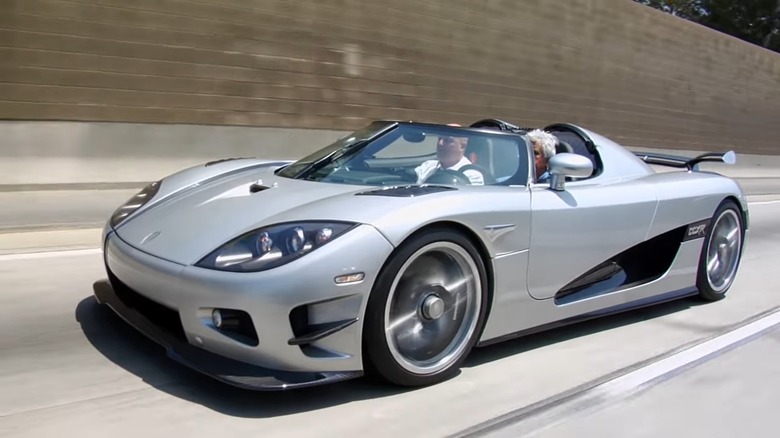
Cars are generally produced on an assembly line, but there are still some vehicles that are assembled by hand. They are exceedingly rare and accordingly expensive, like the Koenigsegg Trevita CCXR, of which only three were built in the world. Trevita translates to "Three White" in Swedish, denoting the rarity of the build. The carbon fiber frame conceals a custom 4.8L V8 engine with 1018 HP, which is arguably overkill, considering the carbon fiber body is significantly lighter than fiberglass or any other material from which most car bodies are made.
Its appearance on Leno's show marked the beginning of a relationship between him and founder Christian von Koenigsegg, and Leno was clearly impressed with what the Swedish automaker had accomplished. With only three in the world, the Trevita CCXR is a bespoke, hand-crafted piece of luxury equipment. It's more than just a status symbol. Just looking at one in person is a bucket list goal for many car enthusiasts. Getting to drive one is something a select few will ever get to experience.
EcoJet: Definitive Edition
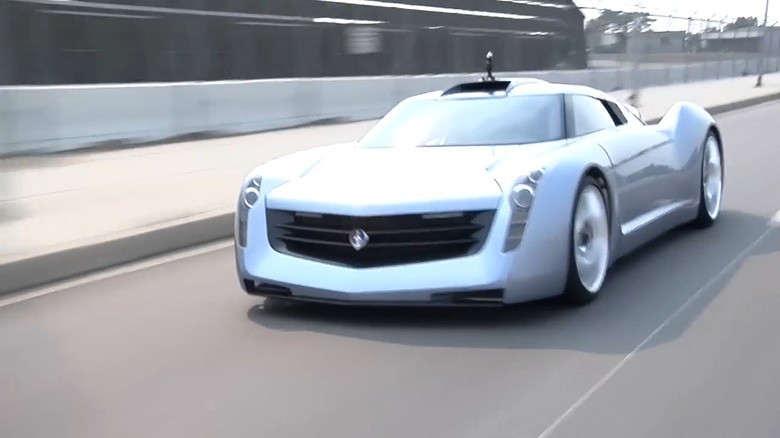
This one is particularly rare because it was made as a one-of-a-kind collaboration led by Jay Leno himself, with help from GM, Honeywell, Alcoa, and BASF. The Leno EcoJet was designed to be fast and furious, but also environmentally friendly. The solution was a turbine engine, perhaps inspired by his childhood love of the Chrysler Turbine Car. Instead of a 1960s turbine engine, the EcoJet used a modern Honeywell LT101 typically found in helicopters. For fuel, it can run on several types, but for the sake of environmentalism, biodiesel was Jay's fuel of choice.
In both the EcoJet and Chrysler Turbine Car episodes, there's a certain magic that comes with hearing the turbine engine rev up. It consumes a whole lot of fuel, but there's no smoother and more performant way to get an automobile moving. As a one-of-a-kind concept car, the EcoJet is never going to make its way into mass production, but it proves its point that you don't have to choose between performance and environmental consciousness. There are still some kinks to work out, such as the sheer amount of noise generated by the engine, but Jay Leno and his collaborators can't solve all the world's problems; They can only get the ball rolling.
1931 Shotwell
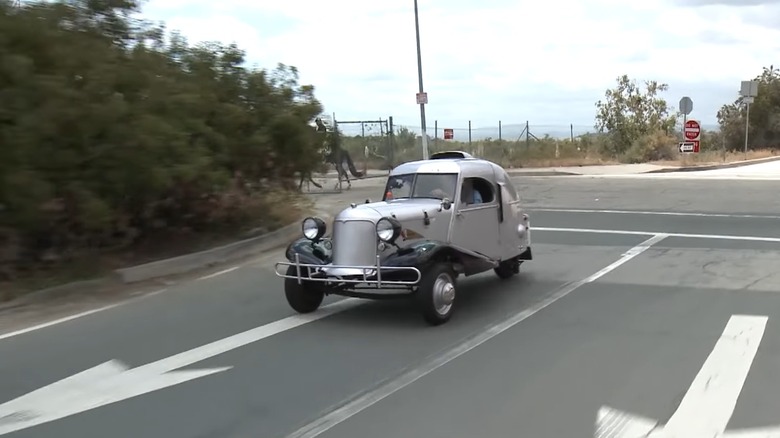
Philbert the Puddle Jumper. That's the name Minnesota's Bob Shotwell gave to his handmade car. It's referred to as the 1931 Shotwell, but there's no Shotwell Motor Company or anything of the sort. In 1931, Bob Shotwell was just a teenager who couldn't afford a car, so he built one himself. It's that simple. More than 60 years later, Shotwell offered to donate Philbert the Puddle Jumper to Jay Leno, as long as he promised to preserve it.
After decades of wear and tear, however, restoring the one-of-a-kind Puddle Jumper to its former glory proved to be easier said than done. The first time Jay tried to drive it in Los Angeles, he found that the California heat had melted the car's battery, so he and his team needed to perform an extensive rebuild project to keep it on the road. After all the work that went into it across two different time periods, seeing Jay drive Philbert in the 21st century, keeping alive the spirit of Bob Shotwell's engineering prowess and ingenuity, reminds us of why we love cars.
1934 Dusenberg Walker Coupe
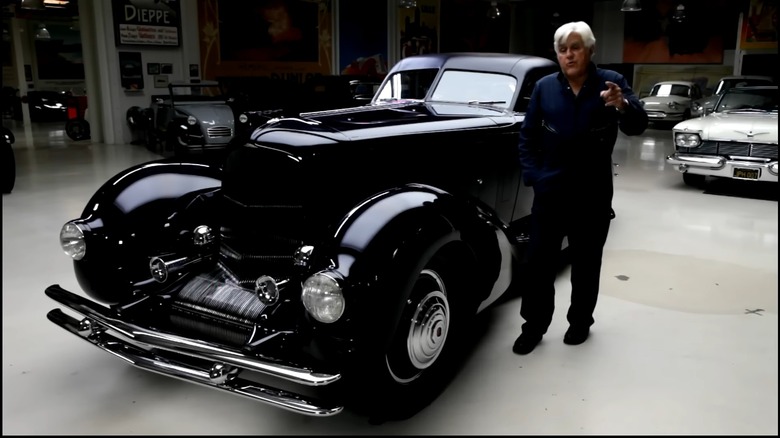
We mentioned a 1931 Duesenberg earlier, but now we've arrived at the 1934 Duesenberg Walker Coupe, which was tremendously expensive in its day, costing $25,000 back in 1934, during the height of the Great Depression. Jay describes it as the kind of car that was "designed to run over poor people," and people would literally throw rocks at it for being a symbol of the rich who could afford such luxuries while families were struggling.
Jay's Duesenberg Model J was purchased by Jay from a man named Morton French, who had paid $400 for it in 1963. And how much, you might ask, did Jay pay for it? $500,000. And that's before any of the restoration efforts. While French certainly made one heck of a profit, he didn't get to savor it. According to Jay Leno himself, the seller was in his late 80s when the transaction was completed, and died just a few weeks later.
By the end of its lifetime, that particular Duesenberg was being used as a tow truck and needed a lot of work to return to its former glory, but Randy Ema, who restored the 1931 model mentioned before, worked his magic once more and turned the '34 Duesenberg into a crown jewel in Leno's collection.
1994 McLaren F1
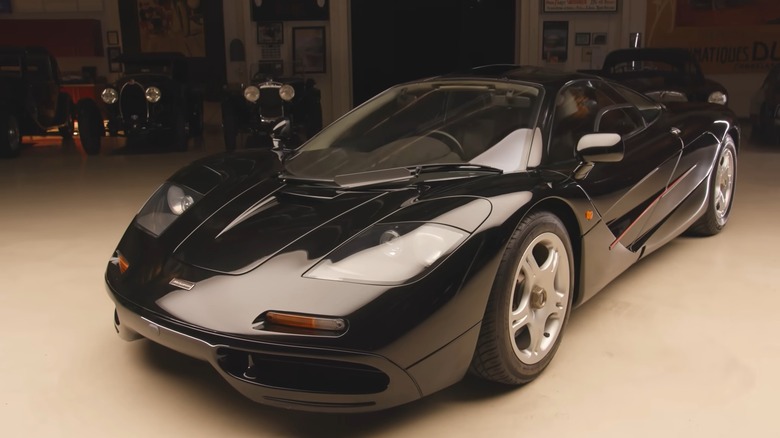
One of Jay's most precious and rare vehicles is the 1994 McLaren F1. Only 64 were ever made, and Jay Leno owns one, estimated to be worth somewhere around $20 million today. It's a beautiful piece of equipment, and to his credit, Jay Leno doesn't just collect them for the sake of having them. He does what all drivers want to do with cars. There's no point in owning and meticulously maintaining a legendary car if you're not going to take it out on the road, right?
Of course, if you're actually going to use your toys, they're going to incur some wear and tear. A 2024 episode of Jay Leno's Garage was entirely dedicated to detailing and deep cleaning Jay's McLaren F1. Sure, it's kind of a commercial for Jay's car cleaning and detailing supplies, but if you only learn one thing from this story, it's that Jay Leno knows his cars. When it comes to researching, finding, restoring, maintaining, detailing, and just about anything having to do with cars, we trust Leno's judgment.