

What Is And Isn't Covered By Subaru's Warranty?
We may receive a commission on purchases made from links.
Subaru gets high marks for dependability, earning the top spot for new car reliability from Consumer Reports, and many Subaru models also earn high praise from owners. Yet, reputation only goes so far. When car trouble arises, there's no substitute for the manufacturer's warranty. For Subaru, this includes the 3-year or 36,000-mile new vehicle limited warranty. This bumper-to-bumper coverage protects against defects in materials or workmanship for most vehicle systems. There's also a longer-lasting powertrain limited warranty that safeguards the engine and transmission.
But wait, there's more. Subaru also covers the emissions system and includes a warranty against rust perforation. That's a lot to keep track of, but we'll break down the details below. You should also know that Subaru's warranty protection isn't exhaustive. The automaker doesn't pay for maintenance, and coverage could be voided if you misuse or neglect the vehicle. We'll also explain what this means.
The term "limited" comes up frequently when looking at new car warranties — it's there for a reason. Under federal law, warranty coverage has to be defined as full or limited. Subaru, like most automakers, specifies that it covers only specific parts, certain defects, or repair costs for a particular period of time. When warranty coverage begins also matters. Subaru says coverage starts "on the date the vehicle is delivered to the first retail purchaser." However, if the car was used as a showroom model or company vehicle prior to being sold, its warranty coverage starts on the date it entered the dealer's service.
Subaru's bumper-to-bumper warranty
Just like food tastes better when someone else makes it, car repairs are much less stressful when the manufacturer pays the bill. That's what Subaru will do during the first 3 years or 36,000 miles, whichever comes first. The problem has to involve a defect in a part or the manufacturing process. So, a malfunctioning alternator is covered, while a dented fender from a parking lot incident isn't. This basic warranty covers most of the vehicle, minus the exclusions explained below.
Subaru goes beyond the bumper-to-bumper coverage with a lifetime limited warranty on the seat belts. Protection lasts for the car's usable life, covering the operation of the seat belts and related components, excluding appearance issues such as fading. Interestingly, only electric vehicles get their advanced driver assistance systems covered for 5 years or 60,000 miles. The basic warranty applies to these components in the other models.
There are other warranty points worth mentioning. Unlike some other automakers, Subaru will cover specific wear items during the first 3 years or 36,000 miles. Brake pads, clutch linings, and wiper blades are specifically mentioned as falling under the warranty, while Toyota, for example, says these exact parts aren't covered.
Subaru requires that warranty repairs be performed at an authorized dealer. However, the company will reimburse owners up to $500 for emergency repairs if a Subaru dealer isn't available within 75 miles. If a warranty-related breakdown immobilizes the car, the automaker will pay for towing to the nearest Subaru retailer. Subaru's description of its Alternate Transportation Program leaves some wiggle room, but the benefit could be useful. The warranty guide says an owner may qualify for a loaner or rental car if parts are delayed and repairs take longer than a "reasonable time."
Subaru's powertrain and rust perforation warranties
Subaru's powertrain limited warranty lasts for 5 years or 60,000 miles, covering the major components for the engine (including the block, heads, valve train, intake and exhaust manifolds, and oil pump) and transmission (such as the torque converter and electronic control unit). Other parts, like axle shafts, differentials, constant velocity (CV) joints, and wheel bearings, are also covered under the warranty. CV boots are specifically excluded.
Electrification adds another element to the powertrain warranty. Coverage for the high-voltage battery pack in the Solterra EV lasts 8 years or 100,000 miles, with at least 70% of its original capacity guaranteed. The AC/DC inverter, AC/DC converter, and electric motors are also protected. Hybrids are once again part of Subaru's lineup, with the Crosstrek Hybrid returning for the 2026 model year after a multi-year absence. The debut of the 2025 Forester Hybrid expands the automaker's electrified offerings. The hybrid battery system in both models also carries an 8-year or 100,000-mile warranty.
New Subarus are protected against rust perforation with a 5-year, unlimited mileage warranty. The keyword here is perforation, as underbody oxidation or surface corrosion isn't covered. Under this coverage, Subaru will only pay for defective OEM sheet metal components with catastrophic rust perforation.
How Subaru handles emissions coverage
Subaru's emissions systems coverage is extensive, with three different applicable warranties and federal and California versions of each. Several states (including Connecticut, Delaware, Maine, Maryland, Massachusetts, Minnesota, Nevada, New Jersey, New York, Oregon, Pennsylvania, Rhode Island, Vermont, and Washington) follow the California emissions standards. So, Subarus purchased in these states are covered under the California emissions warranties. The emission performance warranty applies if a Subaru fails an emissions test. Federal coverage lasts for 2 years or 24,000 miles, while California regulations require coverage for 3 years or 50,000 miles. A claim under either version requires Subaru to pay for repairs that enable the vehicle to meet emissions standards.
The emissions defect warranty covers specific emissions system components that fail due to material or workmanship defects. Federal protection lasts for 3 years or 36,000 miles, while California stretches the coverage to 50,000 miles over the same period. There's also an extended emissions defect warranty that protects high-cost components, such as the catalytic converter and engine control module. Federal coverage runs 8 years or 80,000 miles. For California, it's 7 years or 70,000 miles.
What Subaru's warranty doesn't cover
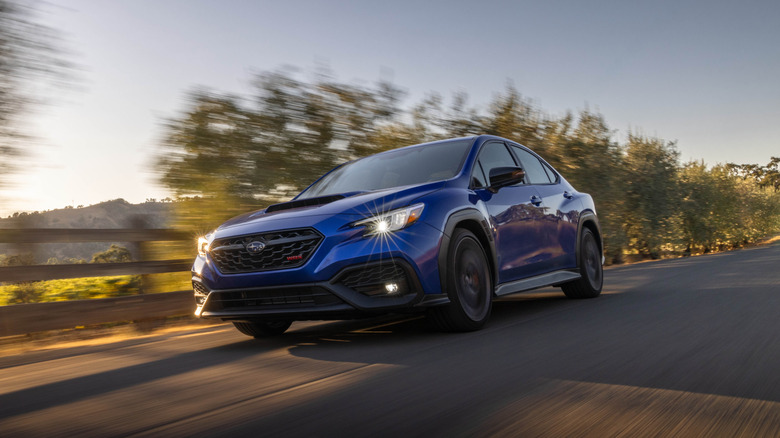
Unlike Toyota and Hyundai, Subaru doesn't include free standard maintenance with its new cars. That's unfortunate, because the automaker is among the most expensive brands to maintain and repair over 10 years. While tires are excluded from Subaru's bumper-to-bumper warranty, the tire manufacturer's warranty could apply, depending on the issue.
There's also a long list of prohibited activities that could jeopardize your Subaru warranty coverage, starting with damage caused by lack of maintenance, improper repairs, abuse, neglect, accident, or fire. Subaru also slips into its lengthy warranty fine print that modifications, participation in competitive events, and commercial use of the vehicle could impact warranty coverage. The automaker goes so far as to say that damage caused by environmental factors, such as bird droppings, chemicals, and tree sap, isn't covered.
Finally, say goodbye to warranty protection if the car's vehicle identification number (VIN) has been altered, or if your Subaru has been declared a total loss by an insurance company or earns a salvage title brand. Tampering with the odometer to affect mileage readings is another warranty no-no.