

What's An Italian Tune-Up And Can It Damage Your Engine?
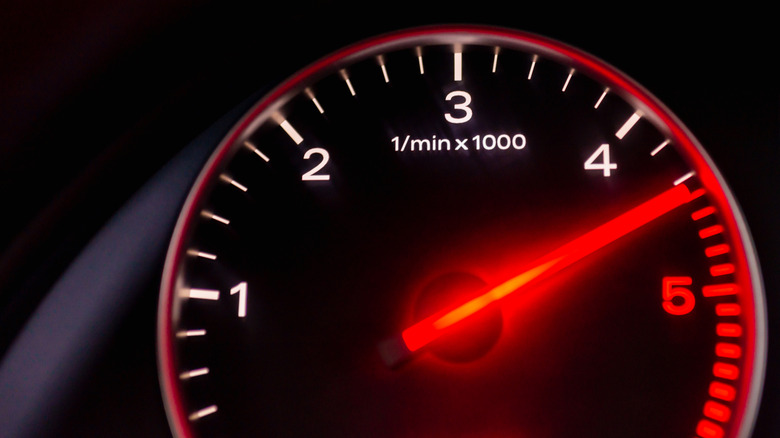
It's not often you hear that driving fast can make your car perform better, but that's essentially what many car owners believed was the solution back in the day, a practice known as the Italian tune-up.
Car engines and their components can accumulate carbon deposits over time, caused by unburnt fuel and oil residue sticking to internal surfaces. Back in the day, when cars were equipped with carburetors, many believed that driving fast and maintaining high RPMs — the Italian tune-up — would burn off these carbon and sludge deposits and throw them out the exhaust. The Italian tune-up may work in old cars with carburetors, as they were not precise in delivering fuel, resulting in carbon buildup on the piston and engine valves.
However, modern fuel-injected cars may not benefit from channeling your inner Lewis Hamilton, as their complex engine management systems constantly track the air-fuel ratio to ensure that carbon buildup is limited and the engine runs efficiently. Some studies, cited by Engineering Explained, suggest that carbon burns off engine components only above 325 degrees Celsius (roughly 617 degrees Fahrenheit), while piston temperatures typically range between 280 and 300 degrees Celsius (536 to 572 degrees Fahrenheit). So, in theory, carbon deposits can burn off, but it largely depends on how hot the engine internals can get.
Many experts believe that modern cars have a different issue, as carbon deposits build up on the intake valves, particularly in direct-injected engines. Aggressively driving such cars will not clean the intake valves, and experts believe that the solution to this problem is to use high-quality fuel and adhere to the service schedule recommended by the manufacturer. Others suggest other tips and tricks to prevent and clean carbon buildup.
Can an Italian tune-up damage your engine?

Can you cause serious damage to your engine by giving your car an Italian tune-up? Modern cars have several fail safes to ensure that you don't damage the engine when you get a bit carried away. The rev limiter, for example, protects the engine by preventing it from exceeding the manufacturer-set maximum RPM. However, that doesn't mean you can keep bouncing off the redline, as doing so puts significant stress on the engine's internal components and can cause damage over time. In fact, the aforementioned Engineering Explained piece cited one study claiming that carbon buildup increases at constant high speeds.
While the Italian tune-up likely won't help remove carbon buildup in modern cars, it's still recommended to take the vehicle on longer drives, especially if the car is usually used only for short trips. Doing so allows the engine to reach its optimal temperature, evaporate moisture in the system, and distribute oil properly.