

2026 Hyundai Palisade Hybrid Improves On A Winning Formula With More Power And Better Fuel Economy
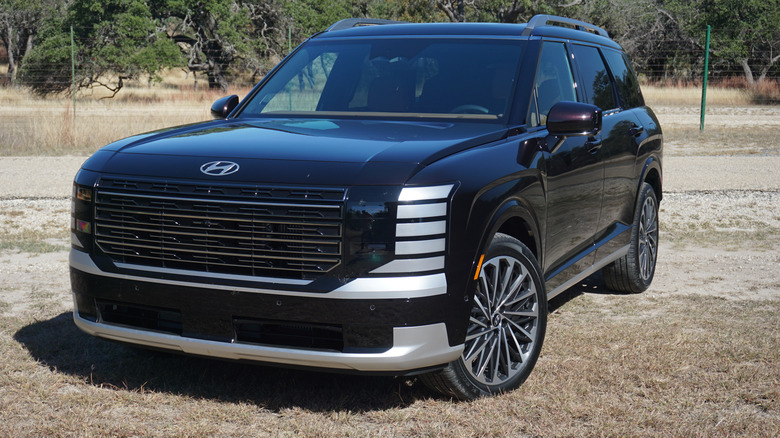
When I first tested the second-generation Hyundai Palisade back in August, I thought it was a wonderful family hauler that was only held back by one thing: its engine. While not a dealbreaker, the naturally aspirated 3.5-liter V6 that the 2026 Pali' comes with as standard isn't exactly inspiring when it comes to power or efficiency. With just 287 horsepower and 260 pound-feet of torque on tap, the V6 Palisade felt a bit gutless, but I knew better things were on the horizon. Well, we've reached the horizon, and it's the 2026 Palisade Hybrid.
Folks, I'm happy to say Hyundai fixed the only real issue I had with this car, so at this point it's pretty hard to find any significant faults with the big family crossover. Hyundai created a premium-feeling SUV with striking looks, more than enough power, solid fuel economy, and enough room and features to keep the whole family happy. While it might not be the type of car the average Jalopnik reader is after, you've gotta admit, the Palisade Hybrid is an impressive vehicle.
Full Disclosure: Hyundai flew me down to Austin, Texas, put me up in a lovely hotel and fed me all so I could drive the 2026 Palisade Hybrid.
The Motor
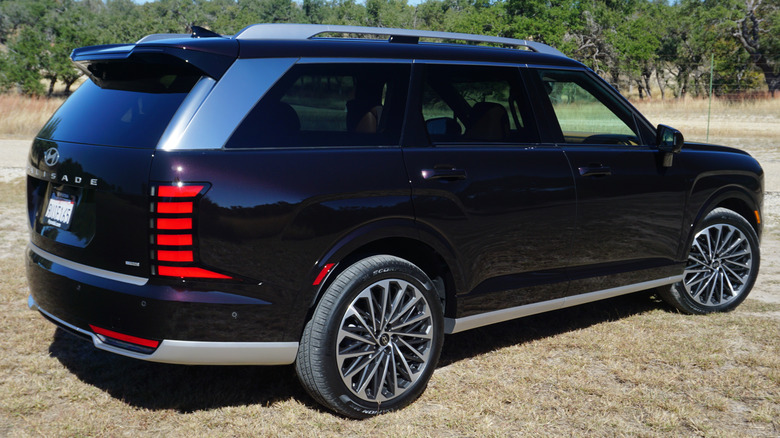
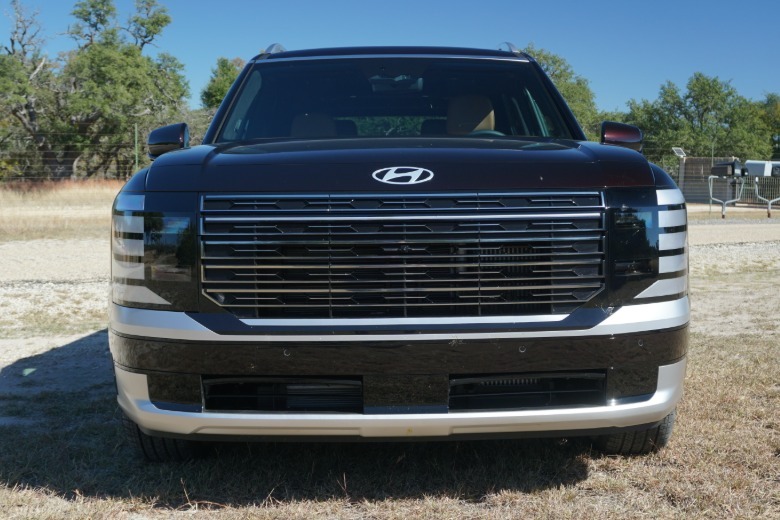
If you're looking at the Palisade Hybrid and thinking to yourself, "wow, that looks a hell of a lot like the regular Palisade," you'd be correct. The two cars are nearly identical from the outside (and inside), other than a small Hybrid badge on the trunk. The only real difference is — you guessed it — the powertrain. What we've got here is a turbocharged 2.5-liter inline-four that produces 258 hp and 260 lb-ft of torque on its own. It's then bolted up to a couple of electric motors to its left for a total system output of 329 hp and 339 lb-ft of torque. Power is sent to either the front two wheels or all four wheels through a six-speed automatic transmission and an electronic limited-slip differential.
The two electric motors are vastly different in size, with the smaller one acting more as a starter-generator and something to run the accessories. Under heavy acceleration, it can assist with actually moving the car, but that's more of a task for the other, much larger electric motor, which puts out 71 horsepower all by itself. They're both powered by the same 1.65-kWh battery pack, and such a small pack means that there really isn't any all-electric range, but the Palisade Hybrid will cut the ICE motor every once in a while when cruising to save on gas.
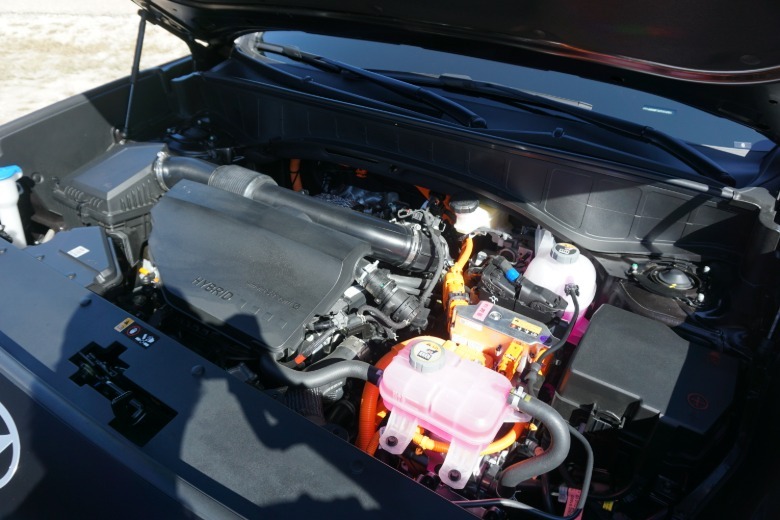 2026 Hyundai Palisade Hybrid engine
And save it does. Depending on the trim level, the Palisade Hybrid will get up to an EPA-estimated 33 miles per gallon city, 35 mpg highway and 34 mpg combined. Of course, with bigger wheels and more weight, those numbers drop to 31, 32 and 31, respectively. Finally, adding Hyundai's HTRAC all-wheel-drive system, which has an actual mechanical connection to the drivetrain, will zap a few mpg, dropping numbers to 29 city, 30 highway and 29 combined. That's really solid — a fully-loaded all-wheel-drive Palisade Hybrid weighs a tick over 5,000 pounds, about 140 pounds more than the non-hybrid.
Hybrid drive
On the road, the extra power of the Palisade Hybrid does make a real difference. Of course, this car isn't fast by any means. However, in Car and Driver's testing, an AWD Palisade Calligraphy reached 60 mph in 8.0 seconds. I didn't officially measure this car's 0-60 or anything, but my ass tells me that a full second could have been lopped off that time. Its extra power makes a big difference when merging, and there's so much more low-down torque that just isn't there in the V6. The regular Palisade has to really be wrung out to get the most power out of it, but that's not the case with the Hybrid, which will also help you get better fuel economy.
The hybrid powertrain does a wonderful and seamless job of transitioning between the electric and gas motors. There's very little shudder from the drivetrain, and aside from the fact that the slightly-louder-than-I'd-like grumble from the turbo-four goes away, I had no idea the car was switching between motors.
 Andy Kalmowitz / Jalopnik
There was a touch of jerkiness that is a bit common with Hyundai's in-house built six-speed automatic, though. The automaker, along with its Kia and Genesis siblings, insists on using its own transmissions. While they're solid for the most part, they lag behind units like the ZF eight-speed that's seen in so many cars these days. I'd also like it if there were a couple more gears, as on the highway, it sat at higher revs than I would have expected. But the fuel economy returns were still good, and noise was kept to a relative minimum, so I suppose it isn't too much of an issue.
I could tell you how this thing drives in a sporty atmosphere, but who the hell cares? It's fine. The steering is vague on center, the suspension is soft and it rolls a lot. Don't bother trying to push the Palisade Hybrid. It won't like it, and neither will your family.
This thing is about cruising above all else. It's a far more refined and luxurious-feeling driving experience than nearly everything in its class. To get this sort of tech and comfort outside of the Palisade, a BMW or Mercedes is probably where you'd end up, and that includes Hyundai's suite of driver-assist and safety systems. They do a lovely job of keeping the Palisade Hybrid on the straight and narrow without hitting the car in front. It's not as fantastic as GM's Super Cruise or Ford's BlueCruise, but it's a damn good third place for mass-market systems.
This interior, man
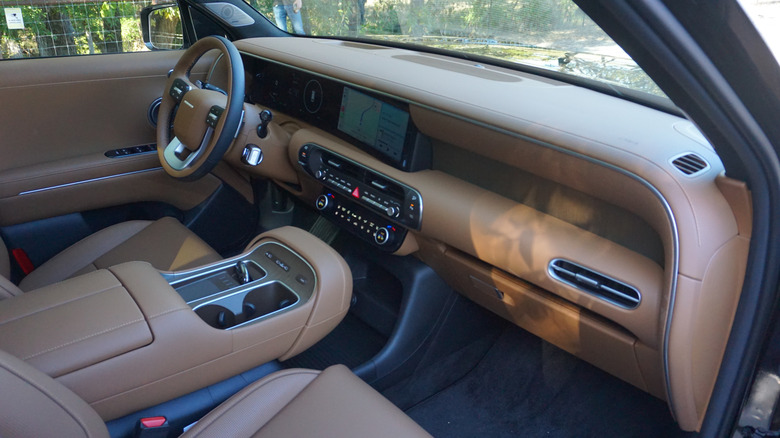
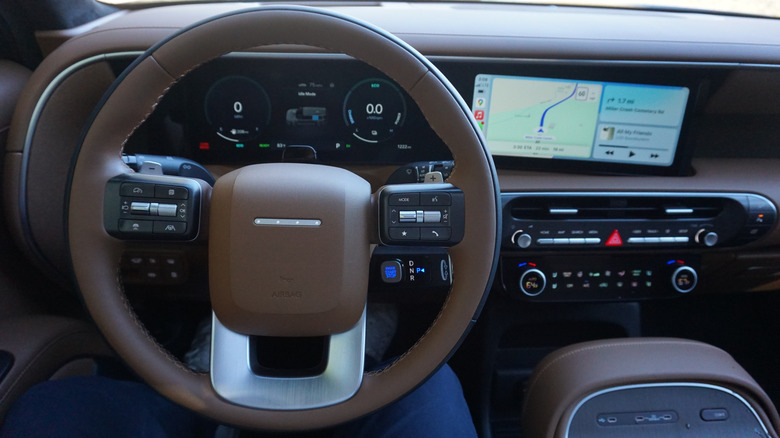
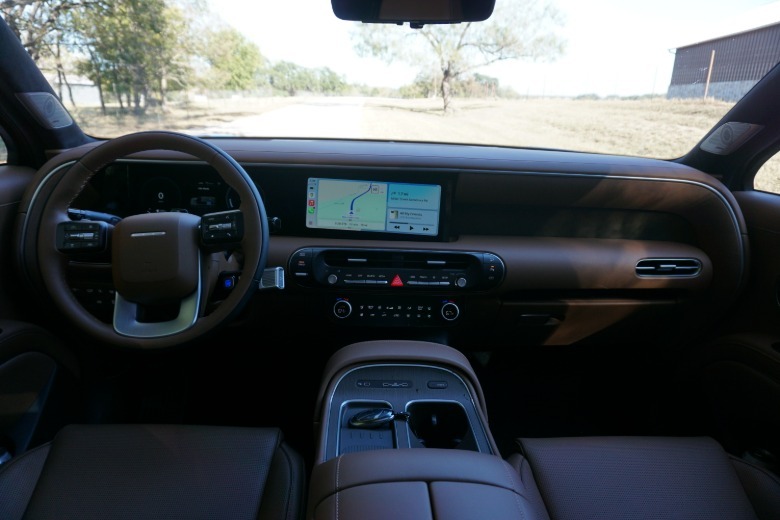
I said it before and I'll say it again: the interior of the second-generation Palisade is exceptional, and that doesn't change at all in the Hybrid. The Calligraphy I drove here in Austin was spec'd almost exactly the same as the car I drove in Northern California over the summer, save for the color — Galaxy Maroon over brown Nappa leather. My non-hybrid tester was Robust Emerald, but in most lighting, they both look black.
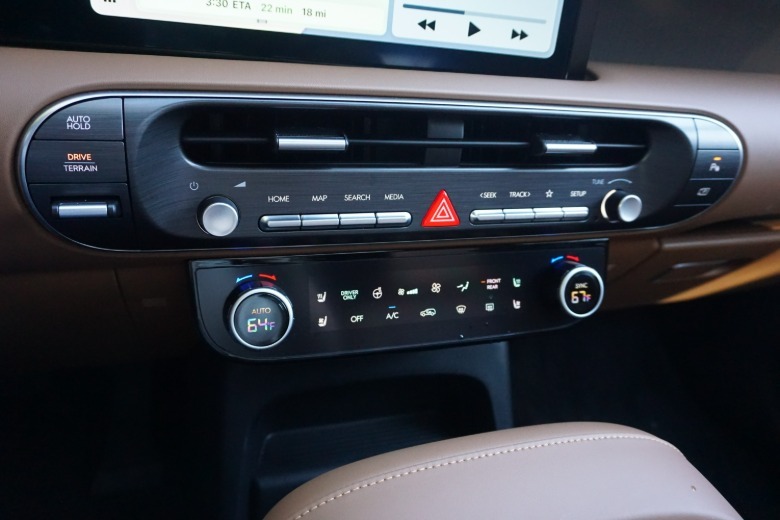
The centerpiece is the pair of 12.3-inch screens, which work in concert with one another to give all the info anyone could ever need. Of course, wireless Apple CarPlay and Android Auto are available if you'd rather use that. Don't fret, though, my Luddite friend. Hyundai recognizes that not everyone is as screen-enlightened as I am. That's why there are still plenty of buttons inside the Palisade Hybrid that control things like the climate controls and radio tuner. Put down the pitchforks.
 Andy Kalmowitz / Jalopnik
Unfortunately, the main issue I have with all non-Genesis HMG products continues here: the goddamn gauge cluster just isn't configurable enough. There's no way to display a full-size map or even the music you're listening to. No matter what you do, you're stuck with two analog-ish gauges on either side of a tiny info display in the middle. I know Hyundai can fix this. Genesis doesn't have this problem. Yes, this is a small nitpick, but what would I be if not a guy who points out little problems?
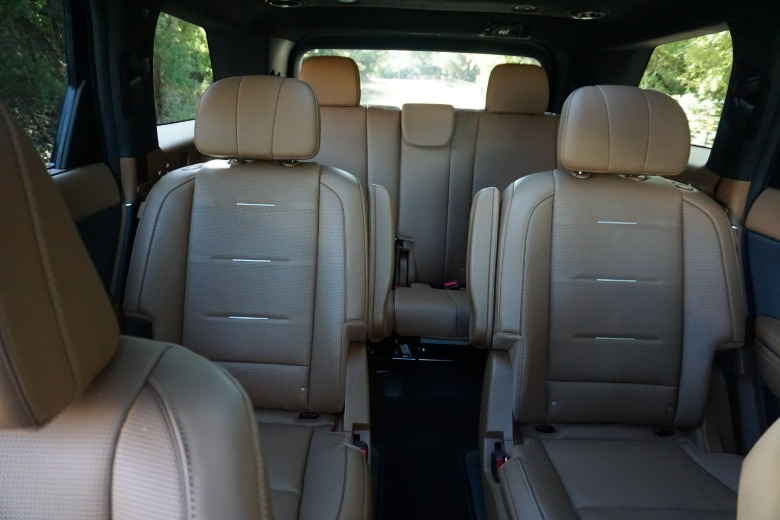
The seven-seater layout, arranged in a 2-2-3 layout, was all a great place to spend time — especially the first two rows' captain's chairs. There's plenty of adjustability in both rows, and the front gets Hyundai's Relaxation reclining mode that lets you chill out. The driver's seat even has Hyundai's Ergo Motion seat, which is sort of like a massaging seat if someone with very weak hands were doing it.
 Andy Kalmowitz / Jalopnik
Second-row passengers get fully electric seats, plenty of USB-C ports, a sunroof, and their own climate control buttons to keep everything copacetic. Hell, I was even able to fit my 6-foot-1 frame in the rear-most seats with the forward two set to my own position. I wouldn't recommend doing this for a long time, but in a pinch, it can work. With all three rows up, it'll still be able to swallow up 20.2 cubic feet of cargo. If you need more, drop the third row for 46.3 cubic feet. Need even more somehow? The second row drops to a van-like 86.7 cubic feet. If that isn't enough, strap a trailer to the rear and tow 4,000 pounds (1,000 less than the ICE model) worth of your garbage. It's no surprise that there's all this room inside, though. The Palisade Hybrid is a big gal. It's got a 116.9-inch wheelbase, and it comes in at 199.4 inches overall.
The one to buy
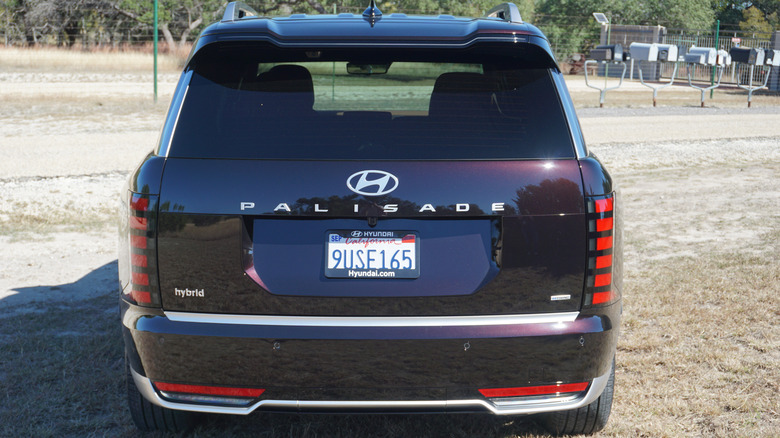
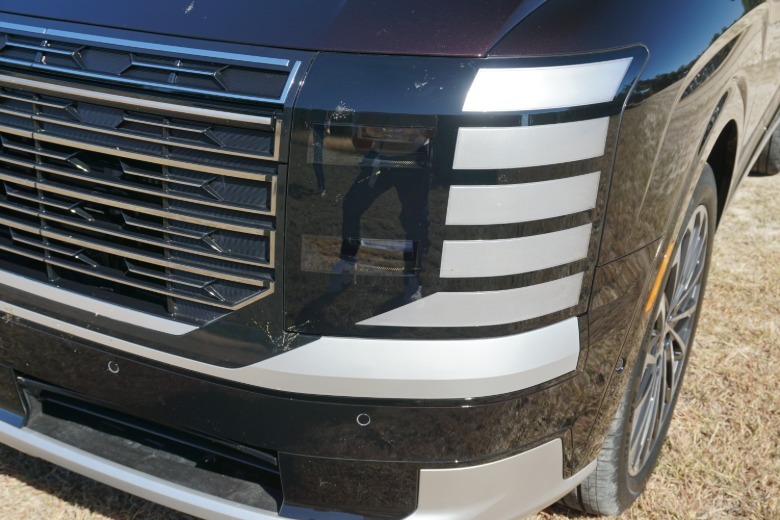
In hybrid guise, the 2026 Palisade still looks badass, all about strong vertical lines and hard angles. In my original review of the car, I said it looks like you asked a child who is in the Mafia to design a family crossover, and that still holds true, but after spending even more time with it, I've noticed even more design cues that remind me of Range Rovers. That's really not something I have an issue with, as the Range is one of the best-looking SUVs on sale today.
Since the buyer is getting more with the Palisade Hybrid, they are going to be paying more. It equates to a $2,250 price difference between the equivalent gas model. Of course, that's not nothing, but when you consider the EPA-estimated fueling costs for the two models, it should pay for itself in three-ish years. Even if it didn't, I think the Hybrid is still the one to buy.
 Andy Kalmowitz / Jalopnik
The Hybrid range chops off the bottom few rungs of Palisade Trim levels, so it starts with the SEL model, and unfortunately, there's no XRT Pro trim for the Hybrid. The Jury is still out on whether one is coming or not. We shall see. Right from the jump, the car comes with a power tailgate, H-tex seats, second-row captains chairs, a wireless phone charger, heated front seats, and roof rails. Prices start at $45,760, including destination. From there, step up to the SEL Premium for blind-spot monitoring, heated and ventilated seats in the first two rows, ambient lighting, a power moonroof and a bunch of other goodies. To me, this is the Palisade Hybrid that offers the most bang for your buck. It starts at $49,120, and both versions of the SEL can be had with seven or eight seats.
Next is the Limited. It gets 20-inch wheels, gloss black exterior treatments, more acoustic glass, leather seats, a heated third row, and a 14-speaker Bose audio system, among other things. The Limited starts at $53,590 and can only be had with seven seats. Finally, we've got the big-dog Calligraphy. It's the most realized version of the Palisade Hybrid, and it's where you get Nappa leather, the Eargo motion seat, a rearview camera display, a 12-inch head-up display, and Highway Drive Assist, among a slew of other features. This big boy starts at $58,380 and only has seven seats.
 Andy Kalmowitz / Jalopnik
When adding in all-wheel drive — a $2,000 option on every trim level — and my tester's lone option ($245 carpeted floor mats), you get a total price of $60,625. Sure, that's not cheap, but when you consider that the average new car is about $50,000 these days, it doesn't seem all that bad. The Palisade really is as nice as some far more expensive luxury SUVs.
It's hard to think of many, if any, cars in the Palisade's class that beat it on looks, comfort, luxury or efficiency. While it is a bit pricey, and its styling might not be for everyone, the Hybrid makes the already excellent Palisade even better. If you're in the market for this type of car, I really don't think you can go wrong with the 2026 Palisade Hybrid. Just make sure to tell your kids not to spill their goddamn juice box on your fine Nappa leather.