

Five Of The Most Powerful Chevy Small Block Engines Ever Made
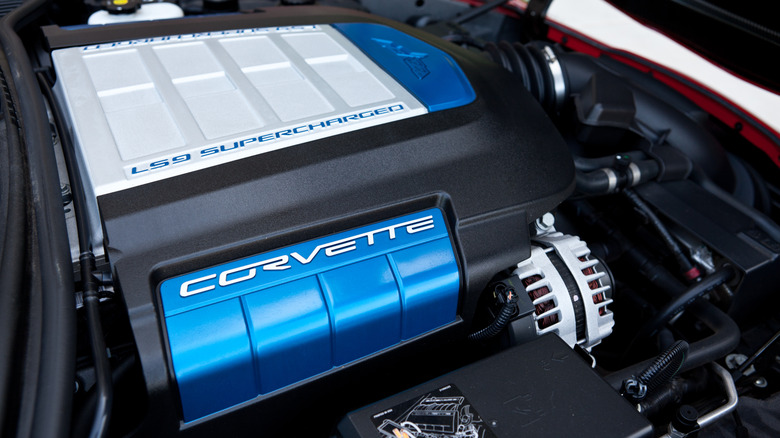
Let's define "small-block" so no one will get mad (people will still get mad). General Motors may call the Gen-III to Gen-V LS and LT V8s "small-blocks" in marketing materials, but even Chevrolet's own crate engine page separates original-design small-blocks from the LS and newer V8s. Usually, when people refer to this engine type, they're talking about the 1955 to 1996 version of the engine that's powered more cars than any other. The last time a vehicle left the factory with an actual OG small-block was in the 2002 model year with the L31 5.7.
We can't leave it at iron-block Gen-Is and IIs, though. For the sake of inclusivity and variety — and the fact that LS and LT engines are fantastic — the newer models are going on this list. And since the headline isn't "Five Of The Most Powerful Chevy Small-Block Engines Ever Made Specifically By Chevrolet," we're going aftermarket, too. The biggest shame is that I must omit the glorious Mercury Marine-built DOHC LT-5. Even though it has the same 4.4-inch bore center spacing as garden-variety 350s, it was designed by Lotus and lacks any compatible parts with Chevy V8s.
So, here are the categories: "Old School" for Gen-I carbed V8s, "Plastic Fantastic" for the apex of the Gen-II, "LS is More" for the brilliant LS series, "LT-rrific" for the current LT, and "Mightiest Mouse" for the upper limit of small-block power.
Old School: 1970 Corvette/Camaro LT-1, 370/360 gross/~300 net hp
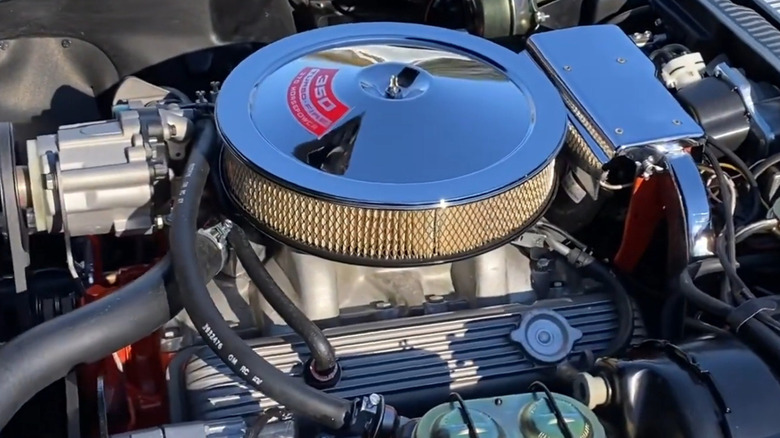
Corvettes usually feature the highest-strength Chevy engines, though Chevelles got the 450-gross-hp LS6 454 in 1970 and 'Vettes got the 390-hp LS5. Thankfully, America's sports car felt like spreading some LT-1 love. LT-1s also went into Camaros, and with the help of a central office production order, they made their way into Novas, too. But the Corvette didn't share all of its 370 gross horsepower; when the engines went in Camaro Z28s, they were downgraded to 360. In either car, the engine was making 380 pound-feet of gross torque. That's horsepower and torque rated in the old "gross" manner — with no engine accessories or other parasitic drags – not "gross" as in "vomit-inducing." The LT-1's net horsepower is about 300.
The LT-1 small-block (not to be confused with the hyphenless LT1 from the '90s) was a race-ready 350 with 11:1 compression. Thanks to its solid lifters, it was also able to boast a redline around 6,500 RPM. Man, it's a shame cars stopped using solid lifters. They might need frequent adjustment, but that clack is an aural delight.
Chevy buyers looking to go fast through both straight lines and corners chose the LT-1 because it weighed about 300 pounds less than a big block. If you're wondering why we didn't go with the 375-hp 1965 fuel-injected L84 327 instead of the 370-hp LT-1, well, it's because the L84 only made 350 pound-feet of torque. Giving up five horses for 30 extra pound-feet sounds like a fair trade to me.
Plastic Fantastic: 1996 Corvette LT4, 330 hp

Fine, scoff at the C4 plastic fantastic all you want. It may have a poor reputation these days, but when it debuted in 1984, it was a technological marvel with the sharpest handling of all other cars available. That said, '84 C4s did have the lame 205-hp L83 350 with the Cross-Fire Injection that became asthmatic over 4,000 RPM. Thankfully, Chevy ditched it for 1985's L98 350, which had proper throttle body fuel injection that brought horsepower up to 230.
Zip ahead to 1996, the C4 Corvette's final year, and 'Vette fans were eagerly anticipating the new C5. Though the fabulous DOHC LT5 had disappeared along with the ZR-1 package in 1995, Chevrolet gave the '96 C4 an excellent parting gift: The LT4, which is the ultimate factory evolution of the original small-block.
When the LT1 replaced the L98 in 1992, it was a massive leap forward, jumping from 250 hp to 300. That LT1 went into a slew of GM cars in varying states of tune, including the Camaro, Caprice/Impala SS, Buick Roadmaster, and Pontiac Firebird/Trans Am. But such was not the case for the LT4 with its 330 hp and 340 pound-feet of torque. Aside from a few special LT4-powered '97 30th-Anniversary Camaro SSs and Pontiac Firehawks, it was a Corvette-only affair. And even then, it was only in cars that got the ZF six-speed manual, including the blue and white limited-edition Grand Sport.
LS is More: 2009 Corvette ZR1 LS9, 638 hp
Chevrolet engineers hated the fact that Lotus designed the 1990 Corvette ZR-1's 375-hp DOHC LT5. The Gen III/IV LS was their revenge. It was a nearly 100% clean sheet design, as the only things that carried over were the 4.4-inch bore center spacing and rod bearings. The LS went with an aluminum block (with some iron blocks in trucks), and yet it was more robust than the old engine's block thanks to six-bolt main bearing caps and a deep skirted design.
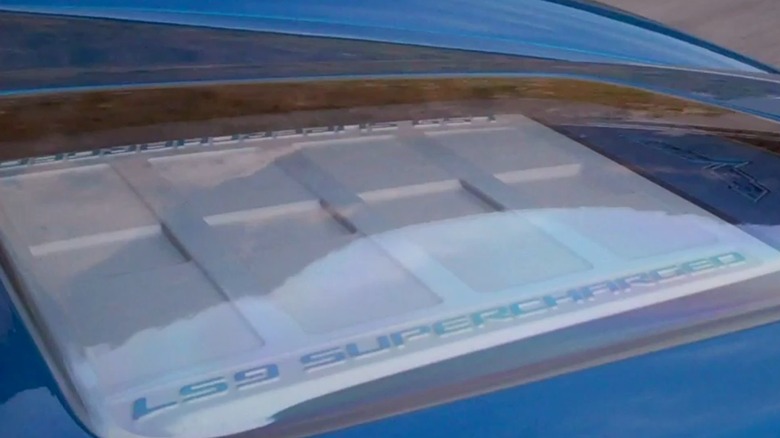
While the 345-hp LS1 that debuted in 1997 Corvettes is a legend, that's not where it reached its zenith. No, that would be the astounding 638-hp 6.2-liter supercharged LS9 in the 2009 C6 Corvette ZR1. That beast also had 604 pound-feet of torque, the most any Corvette had up until then, beating even the '91 Callaway Twin-Turbo Corvette and its 575 pound-feet. It's a good thing Chevy gave LS9s titanium connecting rods and forged steel cranks. The LS9 also got a dry-sump oil system to keep the spinning bits lubed up around corners, something missing from "lesser" LSA versions of the engine in Camaro ZL1s and Cadillac CTS-Vs.
When Car and Driver took the C6 ZR1 to the drag strip, it knocked off an 11.5-second quarter. To get that performance in the '60s or '70s, you'd have had to sell internal organs to buy a Baldwin-Motion Phase-III Corvette, Camaro, or Chevelle, each coming with a literal money-back guarantee that your car would run 11.5 quarters.
LT-rrific: 2019 Corvette ZR1 LT5, 755 hp
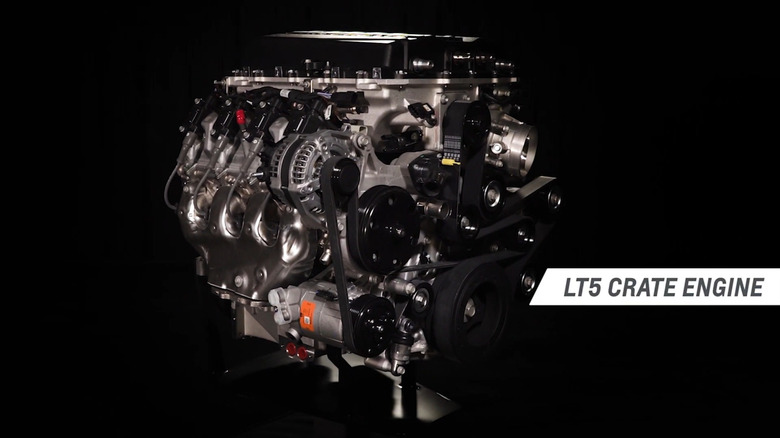
The LT5 was the perfect sendoff for the last front-engined Corvettes. The 2019 ZR1 offered an 8-speed automatic, but the 7-speed manual is a much better choice, especially since 2019 was the last year Corvettes came with them. The C7 Corvette may have cost GM next to nothing to develop, but it delayed the C8, giving us just a bit more time with an H-pattern manual on the market. Thanks, C7!
For the 2019 ZR1, Chevrolet boosted the Z06's 650-hp 6.2-liter supercharged LT4 to 755 hp and awesomely offered LT5s as crate engines, too. Performance from the C7 ZR1 was astounding, as Car and Driver ran to 60 in 2.9 seconds and through the quarter in just 10.7.
Replacing the beloved LS must have been nerve racking for Chevy, but thankfully, the Gen V LT is a brilliant follow-up. LT blocks feature upgraded gusseted water jackets for added strength. Head bolts are larger, too, at 12mm vs 11mm in the LS. Variable valve timing and direct injection also improved the LT's efficiency and power.
Even though the Gen-V engines don't share much with the original small-block V8 outside of a name and bore spacing, they have one heck of a legacy, and the modern V8s certainly live up to the "small-block" name. But, while the (non-Mercury Marine) LT5 is indeed a mighty mouse, it is not the mightiest.
Mightiest Mouse: Big Displacement LS, 3,000 hp (and up!)
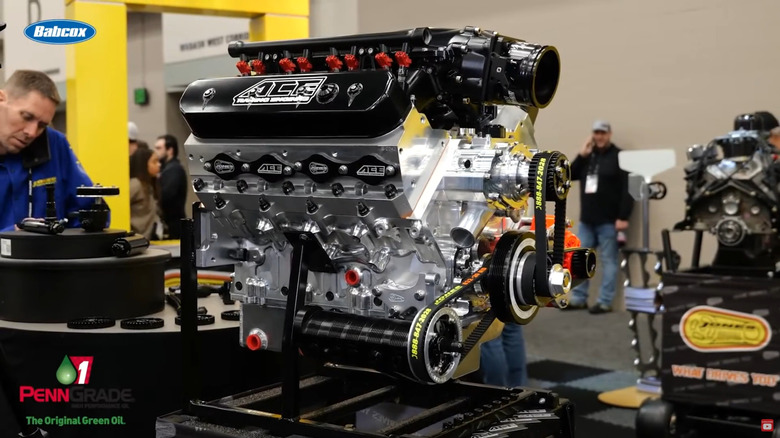
It's amazing what you can accomplish when you don't have to care about five-year warranties and NVH requirements. Independent builders take small-block and LS/LT engines to extremes. Chevy's 400 cubic-inch V8 is one of the biggest small-block engines ever built, but that displacement seems quaint now. At one time, a 454 cubic-inch small-block was considered astounding. Now CFE will sell you one at 600.
To get insane power, though, we can't rely on volume alone; we must turn to forced induction. If you're a purist who says that a real small-block Chevy V8 is based on the original design with its 23-degree valve angles, you can still enjoy insane power. The highest horsepower build we've seen of what can inarguably be called a "Chevy small-block" is one from Steve Morris Engines that produces 2,000 hulked-out stallions. But if you can flex your definition to include LS engines, you can climb even higher.
Now, we've not seen an LT build go higher than 2,000 hp, even though Scoggin Dickey got a naturally aspirated 440 cube LT to 837 hp. But Ron and Matt Hutter of Hutter Performance built an LS-based drag engine using CFE Racing's LSFusion block, resulting in an unbelievable 3,000 hp. And ACE Racing Engines' Sefan Rossi claims the company's billet 427 LS could handle north of 3,500 horses (pictured above).
If you know of a higher horse LS or LT build, I'm all ears.