

How To Survive A Tire Blowout On The Highway
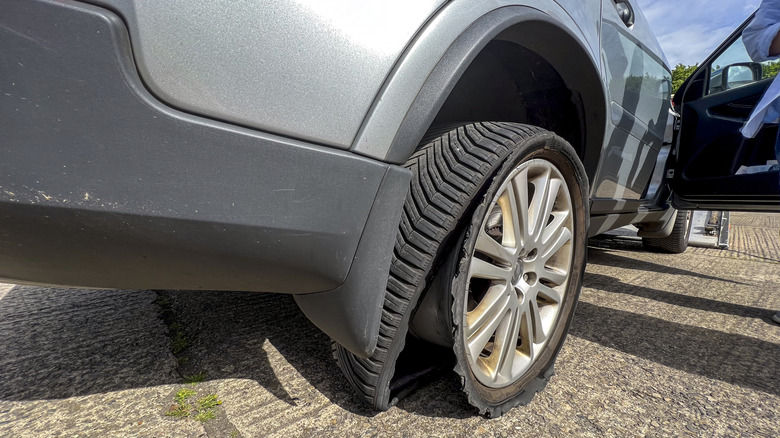
If you've never had a tire blowout before, it's easy to underestimate how scary it feels. The entire car jerks, and your first instinct is to slam the brakes. Don't. Braking during a blowout actually makes things worse, because it can cause the wheels to lock up, leading to a loss of vehicle control. Instead, you're supposed to stay calm and avoid panicking.
Next, keep steering straight, and gradually ease off the accelerator until the car slows down naturally. Once the vehicle is stable, you can turn on your hazard lights and pull over. Now, you can catch your breath and take a sigh of relief. It sounds simple, but in the moment, it can be extremely chaotic.
Then, the adrenaline fades and is replaced by a shaky sense of disbelief -– as well as the awful realization that you're about to spend some time changing a tire on your daily driver, in traffic. Hopefully, you're well equipped with emergency tools. Otherwise, call roadside assistance.
What you should (and shouldn't) do
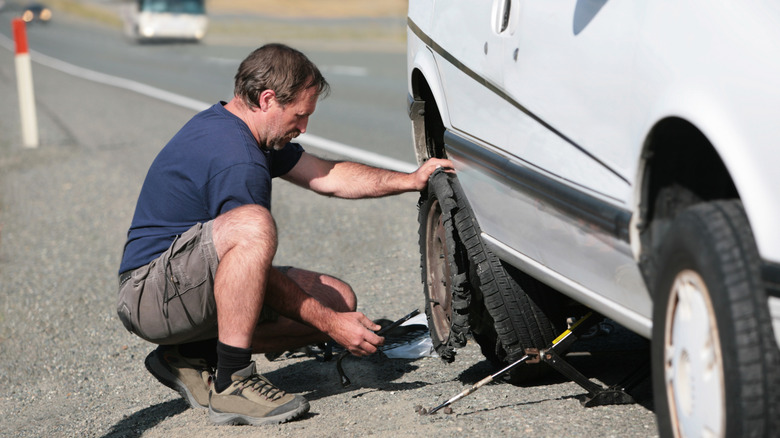
A tire blowout at high speed is not a pull over and fix it later kind of problem –- it's an immediate crisis. However, surviving it depends on how you react in those first few seconds. Always stay alert, and be attentive while driving.
The correct move is controlled calm — grip the wheel firmly, hold your lane, and let the car decelerate naturally. Never stop in the middle lane or near a curve, as secondary collisions often happen when cars stop in blind spots.
Furthermore, always perform a quick tire condition check before you hit the road, and check your spare before you need it. A basic pressure check every few weeks is a must. After a blowout happens, replace the spare right away, and purchase your new car tires from a trusted tire retailer. Always prepare, and equip yourself with emergency tools like wrenches, repair kits, a car jack, cones, hazard triangles, automatic tire inflators, a tire gauge, and more.
If your car doesn't come stock with a tire pressure monitoring system (TPMS), you may want to consider adding one. These systems monitor the pressure in your tires as you drive, and they can alert you if the psi in one or more tires drops too low. Remember that a completely blown tire cannot be repaired, so it's important to take the proper steps to care for your tires and avoid a blowout in the first place.