

What's The Difference Between Copper And Iridium Spark Plugs
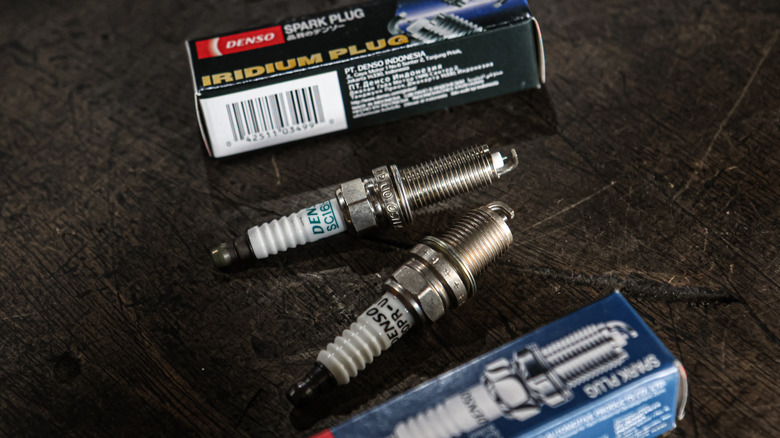
The automotive world has evolved in such a way that engines require spark plugs of a specific type. Using the wrong kind can lead to misfires and inefficiency, especially because spark plugs also come in hot and cold varieties. Spark plugs are typically named after the type of metal on their center electrodes, and those with fancy-sounding metals like ruthenium are usually more expensive but have extended lifespans.
The most common and basic type is the copper plug. It has a copper core electrode with a nickel alloy outer casing for improved durability. Copper plugs are widely available at auto parts stores, which is no surprise since they're the most affordable, typically costing $3 to $8 each. Besides the price, copper plugs have a few more merits. They tend to run cooler than other plugs, which makes them ideal for older vehicles with distributor-based ignition systems and turbocharged engines with higher compression ratios.
It all sounds fine and dandy, but there's a reason spark plug technology has moved toward harder, more durable metals like platinum or iridium. Copper plugs are great when new, but they don't last very long, with some cars requiring new plugs every 20,000 to 30,000 miles. Copper is a soft metal, so it can melt and wear out sooner when consistently exposed to intense heat and pressure inside the cylinder head. And when it begins to degrade, plugs can get fouled easily with harmful deposits, causing misfires or a hard-starting engine.
Iridium spark plugs can go the extra mile
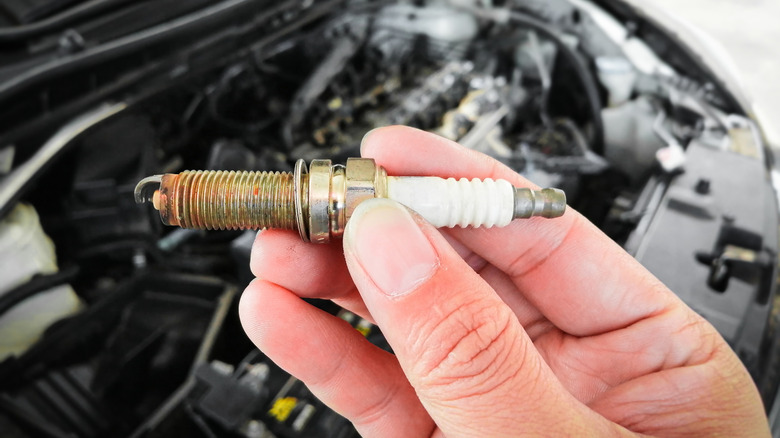
Whereas copper plugs are on the basic end of the spectrum, iridium spark plugs were the big daddies before ruthenium ended their reign. Instead of a copper center electrode, iridium plugs use, well, an iridium core. Iridium is a much harder, non-reactive metal with an extremely high melting point. In fact, iridium is the most corrosion-resistant element in the periodic table, making it highly suitable for vehicular applications.
Iridium is about eight times stronger and six times harder than platinum or copper. That's why iridium plugs outlast most others — some can run up to 100,000 miles before they even start to wear out. That's about five times the lifespan of a comparable copper spark plug, but you'll have to pay for the privilege.
Iridium may be the adamantium of spark plug metals, but it's a rare metal that only makes up 0.001 parts per million of our planet's crust, so it's more expensive to produce. Most iridium plugs cost $10 to $25 each, more than three times the price of a copper plug. The cost is somewhat negligible if your car has a V6 or four-cylinder engine, but the expenses could rise significantly for modern Hemi V8 engines with 16 spark plugs.
The good news is that not all engines need iridium plugs, so it's best to refer to your car's owner's manual. Depending on the make and model of your ride, upgrading to iridium plugs from copper may enable the engine to sip less fuel and give it more pep. However, engines that require iridium plugs could persistently misfire, sputter, idle erratically, or run with a general feeling of lethargy when forced to operate with copper plugs.