

Why You Can Sink A Subway Car To Make A Reef, But Probably Not An Automobile
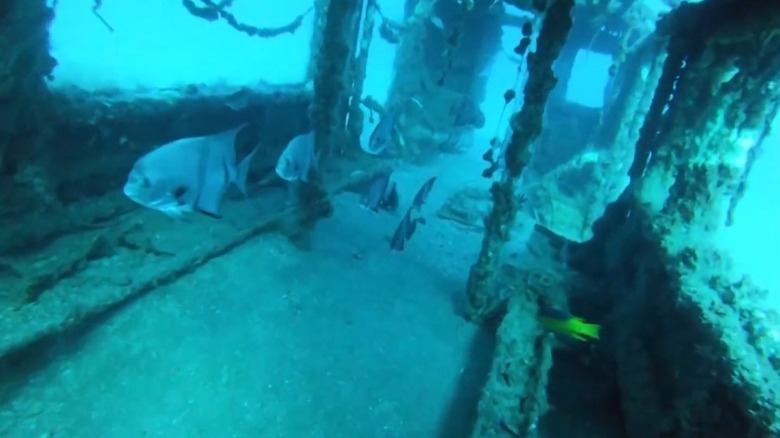
A wide-open expanse of seafloor covered with sand doesn't present many opportunities for sea creatures to survive. Reefs, on the other hand, are absolutely brimming with life. While debris like ship anchors can wreak havoc on natural coral reefs, old ships, concrete bits, and even retired subway cars have become seeds for thriving artificial reefs. However, the choice of material matters a lot. New York's MTA tried to turn Brightliner subway cars into reefs and it didn't go as planned. But when it did the same with Redbird cars, the project thrived.
Subway cars like the ones from New York's decommissioned Redbird trains make a great environment for fish. This is due to the windows and doors offering several passages, providing protection for slow swimming species and hidey-holes for others. Jeffrey Tinsman, project manager of Delaware's artificial reefs, explained the advantages of artificial reefs to CBC Radio, stating "there's about 400 times as much food for fish per square foot as there is in the natural sand bottom."
Not only is it good for the fish, but it also makes the spot attractive to divers and fisherman, and it repurposes the subway cars rather than having them scrapped. It seems like old automobiles would make great artificial reefs after removing everything harmful — but they don't. This is because vehicle frames break down too quickly under the ocean surface. Rather than creating a bustling ecosystem for decades, automobiles would maybe last a few years before completely succumbing to rust. Plus, the process and cost of transporting and sinking these vehicles would make their short lifespan even less worthwhile.
Miami Beach does have an artificial reef that includes cars, but not like you might think
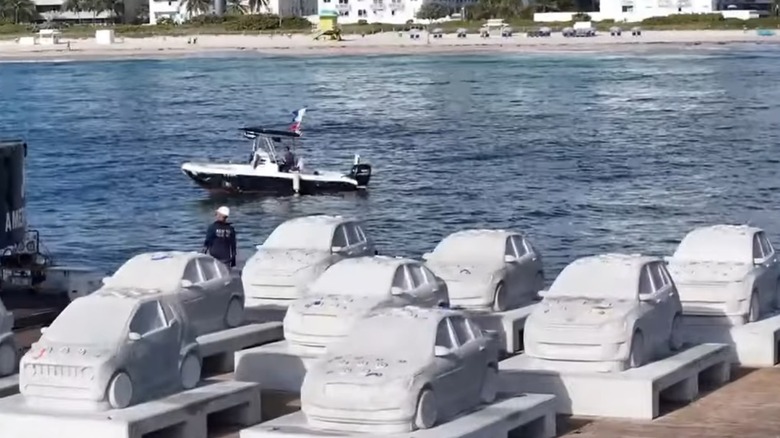
While subway cars can last decades resting at the bottom, concrete can provide an artificial reef for perhaps a thousand years. But artist Leandro Erlich sought to create both a visually-pleasing and thought-provoking underwater piece off the shores of Miami, Florida. So, using marine-grade concrete, he sculpted a total of 22 vehicles of different types in an effort to both bolster Florida's reef system and bring attention to the subject of automobile emissions. While alternatives to traditional internal combustion engines have expanded in recent years, with greater EV adoption as an example, at least one new study says plug-in hybrids are almost as dirty as gas cars.
Erlich's sculpted concrete cars are a part of The Reefline, an underwater park that runs for seven miles. It's open to the public and is meant to draw attention to ocean conservation; specifically the sensitive underwater ecosystem running along Miami Beach.
Whether it's an old decommissioned subway car or carefully sculpted concrete, artificial reefs helping to strengthen and increase reef systems around the world. Besides, it's doubtful the fish and mussels care what the reef is made from anyway.