

Can China's New C919 Jet Really Compete With Boeing And Airbus?
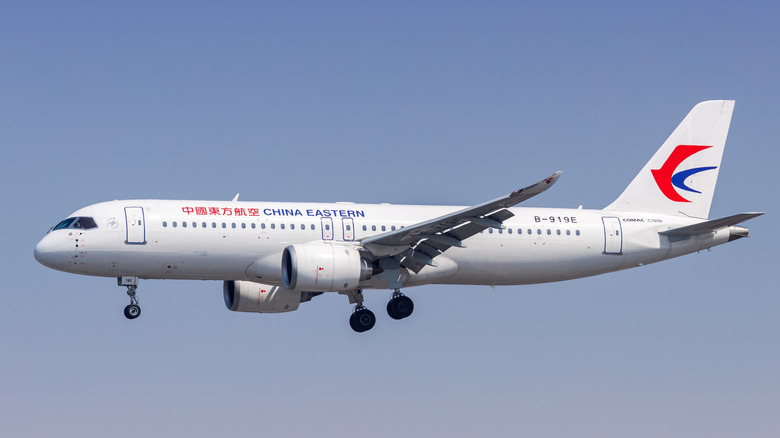
For decades, the commercial aviation market has been dominated by two major airline companies: Boeing and Airbus. China wants to change the game. Its state-owned planemaker, Comac, developed the C919 jet to directly compete with the workhorses of the aviation world, the Boeing 737 and the Airbus A320 series. The C919 was successfully brought into service by China Eastern Airlines in 2023, and so far, they have already received hundreds of orders, the majority of which were placed by Chinese airlines.
Nevertheless, the C919 still has a long way to go before it can actually stand tall with these giants of the aviation world. Beyond China, it is not yet authorized to fly in the US or Europe. Those approvals could take several more years. Beyond that, while Comac has demonstrated its ability to construct a fully functioning aircraft, manufacturing hundreds of them over a short period is a different ballgame altogether. Boeing and Airbus possess decades of supply chains, global service networks, and a trusted reputation with airlines. Comac isn't even close to achieving that level of production yet.
Still, there's some hope. Since Boeing is tangled in production issues and Airbus is already sold out for the decade on its narrowbody liners, there is a potential opening in the market for Comac to enter through — if it can manage to amp up its production to meet the current demands of the industry.
A Made in China jet that isn't fully Chinese
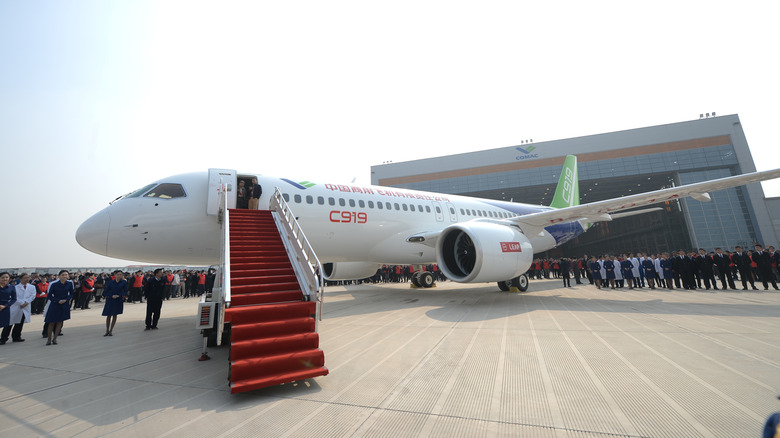
China calls the C919 its first homegrown large passenger jet, although this may not be the whole truth. The plane is mainly comprised of parts sourced from the West and is rumored to have been built with potentially stolen American expertise.
GE and Safran supply the plane's engines, Honeywell its avionics and landing gear, and Parker Aerospace its flight controls. It is not easy to replace these components because aviation certification makes switching suppliers slow and costly.
However, this dependency on Western parts poses a risk as well as an opportunity. Export controls or tariffs by the U.S. would interfere with production – although this might simply drive China to build its own aerospace supply chain faster. It has done this before in other industries by using state subsidies and long-term planning to catch up.
Beijing has invested billions of dollars in Comac to make the C919 successful, including selling the planes below cost to local carriers. The strategy is developing a foundation for a future where China will not require Boeing and Airbus to sustain its airlines.
The road to real competition
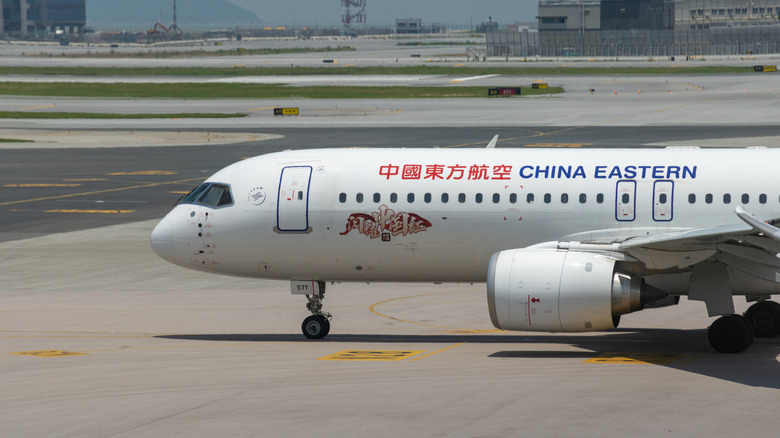
The real challenge facing Comac is the global perception. With the growing trends around customer satisfaction, airlines care a lot more about reliability and passenger trust, which become differentiating factors for them. Right now, the C919 is not viable outside of its home market. While China's aviation regulator has certified it, without certification from Europe's EASA or the U.S. FAA, it doesn't stand much chance of survival if it cannot fly internationally. Even if it somehow manages to overcome that barrier, convincing foreign carriers to invest in and trust a Chinese jet will take time and a lot of serious marketing efforts.
Comac could potentially play on price while competing. If it sells the C919 for 10 to 20 percent less than, let's say, an A320, cost-sensitive airlines in Asia, Africa, and Latin America might make the switch to the cheaper option.
This has been done a few times in history before as well. Airbus faced the same sort of skepticism when it started back in the 1970s. However, with government support and continuous innovation, it now stands as Boeing's proud equal, with the A320 recently surpassing the Boeing 737 as the most popular plane of all time. Comac could follow in the footsteps of Airbus by starting slow and state-funded. For now, the C919 won't break the Boeing-Airbus duopoly overnight. However, it's a credible start, and its success would signal that China can build its own aviation ecosystem.