

How To Remove A Stuck Bolt (Without Breaking It)
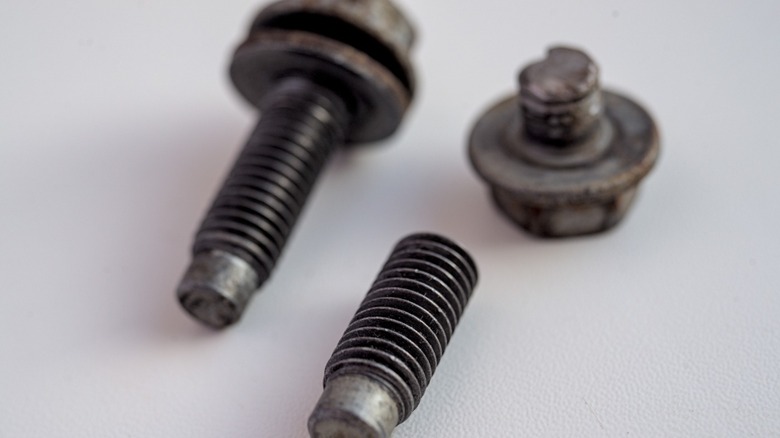
There are very few things we find more frustrating than starting what should be a simple part swap, only to snap off a bolt. That's an automotive lesson some of us have learned the hard way. What should be an easy job ends up taking twice as long — not fun!
What causes a bolt to get stuck in the first place? Rust is often the culprit, especially if the bolt has been exposed to the salt that gets thrown on icy roads in the winter, and it certainly doesn't help if the bolt frequently gets wet. There's also something called Galvanic corrosion. Galvanic corrosion happens when two different metals, like a stainless steel bolt and aluminum components, are connected electrically and exposed to an electrolyte like moisture from a 12-volt battery or saltwater. Of course, humans can cause stuck bolts as well, thanks to things like overtightening or the improper use of a thread locker, like Loctite.
So, how do you get one of these stubborn bolts out without snapping it off? There are penetrating oils and lubricants like WD-40 and PB Blaster that can help. Technique, like rocking the bolt back and forth a little at a time, is important, too. You can also try tapping on the fastener just hard enough to knock the rust off, applying some heat to the bolt, or using a cheater bar. Depending on the situation, you may need to use a combination of these methods.
Lubricants and penetrating oils
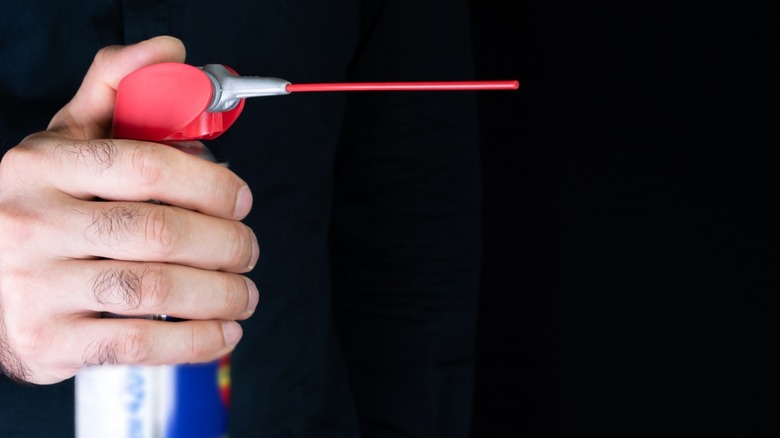
Just about everyone has some WD-40 sitting around the house. It's pretty well known for being able to loosen things up, and stuck bolts are no exception. There are other penetrating oils you can try as well, like PB Blaster, Liquid Wrench, and CRC Knock'er Loose (you've got to love that name). Penetrating oils aren't just good for stuck bolts but also for breaking loose seized spark plugs.
Whatever you use, be generous with it, as you want to douse the bolt and allow the lubricant to work its way into the threads. Then, let it sit awhile, at least 10-15 minutes. For bolts that are really stuck, letting them soak overnight is best. You may also need to go back and douse the bolt multiple times. After the lubricant has had time to settle, try loosening the bolt normally. If that doesn't work, you may need to combine this method with one of the other methods we mention here.
If these products don't do the trick, you can try touching the bolt with a lit candle, letting the wax seep into the hole and around the threads. As the wax cools, it forms a slippery layer around the bolt. You'll want to try loosening the bolt while the wax is still slightly warm. This is probably a good time to remind you to wear gloves when doing any of this, especially working with melted wax. You wouldn't want to burn your fingers.
Rock it gently
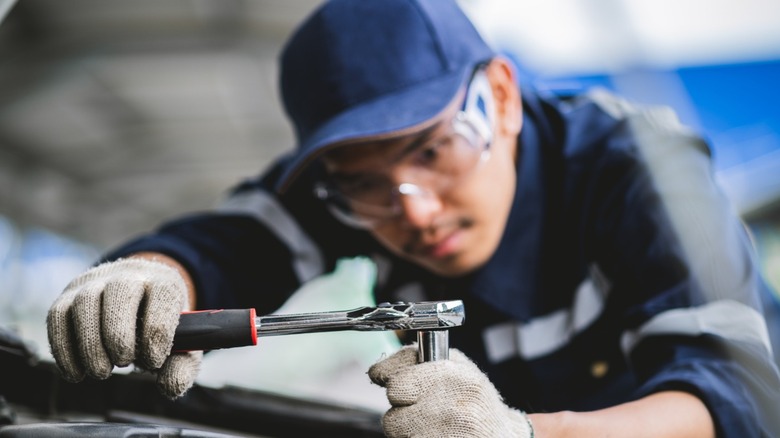
When you come across a bolt that seems like it doesn't want to budge, you may be tempted to apply steady pressure on it for one long pull until it finally moves. However, that can be good way to wind up with a snapped-off bolt head.
Instead, you can try rocking it back and forth gently. This helps knock off rust and corrosion. So, turn your ratchet or wrench to the left just a tiny bit if you can, then just a little to the right. Every little turn will hopefully knock off a little more rust, until you can finally loosen the bolt completely. This is a method you will want to use in combination with some of the other methods we mention here, like penetrating oils. Keep spraying the bolt with the lubricant as you try to rock it back and forth.
This is probably a good time to bring up some common sense items. For example, make sure you're using the right size socket or wrench. As we're sure you know, a socket that's just a little too big can round off a bolt head before you even have a chance to loosen it. A six-point socket will usually provide the snuggest fit. If you use a wrench, use a box wrench instead of an open one, which can slip and strip the bolt. That's why a set of box wrenches is among the tools a mechanic should have. Also, this may sound stupid, but make sure you're trying to turn your ratchet or wrench the right way. Most bolts loosen counter-clockwise, but some fasteners go the other way.
Give it a love tap (or 20)
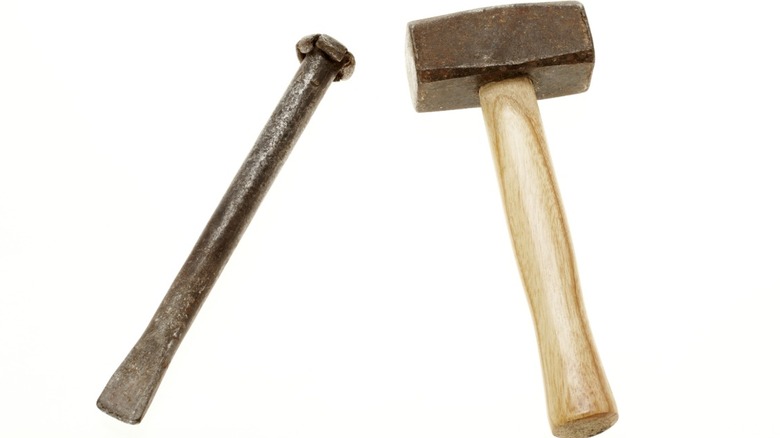
If you want to get that bolt out without snapping it, you've got to get the rust or debris out of the threads somehow. Sometimes, a good tap will do the trick. Try lightly knocking the bolt with a hammer and chisel or a punch.
You will generally want to hit the bolt in the center of the head. You don't want to bend or deform the bolt head in any way. Otherwise, you'll end up with a fastener that doesn't fit any socket. You could also try hitting around the bolt instead of on the bolt directly. The goal is just to knock that corrosion or dirt loose.
As a very last resort, you can try using an impact wrench to knock some of the rust loose. We call this a last resort, because an impact wrench can easily use too much force and snap a bolt. So, start with the lowest setting on the impact wrench and try short bursts. Use the rocking method with the impact wrench, turning the bolt left, then right, until it loosens. Finesse is the name of the game, here, as is patience. Taking your time to loosen a bolt can save you hours of work trying to drill out a broken one.
Use a little heat on the bolt
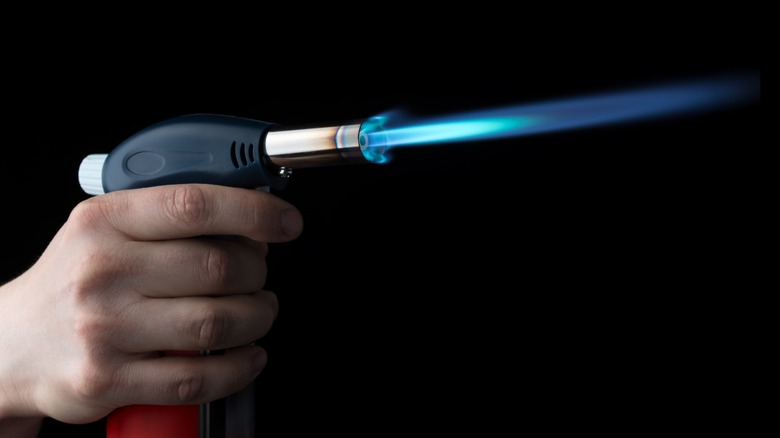
We can't believe we're about to suggest this, given the amount of disclaimers and cautions we're going to have to add with it, but you might try heating up the bolt using the flame from a small handheld butane or propane torch. This can be especially useful if a thread locker was used on the bolt, as it can help break the bond. It can also break up rust, because heat will cause the bolt to expand, crushing caked on rust against the walls of the hole. As the bolt cools, it will contract, giving it some room to move. Heat the bolt for a minute or two until it's almost red hot. Then let it cool a little before loosening.
Here come the disclaimers and cautions. Do not use WD-40 or other penetrating oils in conjunction with this method. WD-40 and some similar products are flammable. So, make sure to read the label.
Here come some more cautions. Make sure you have plenty of ventilation, especially if using butane or propane. You also want plenty of room around the bolt, which can be tricky with a lot of engine parts. You don't want to melt wires or plastic components, after all. Also, make sure that the area is clean of oils and other residue. Finally, wear some non-flammable gloves while doing this. We can see ourselves absentmindedly touching the bolt before it cools down.
Use a cheater bar
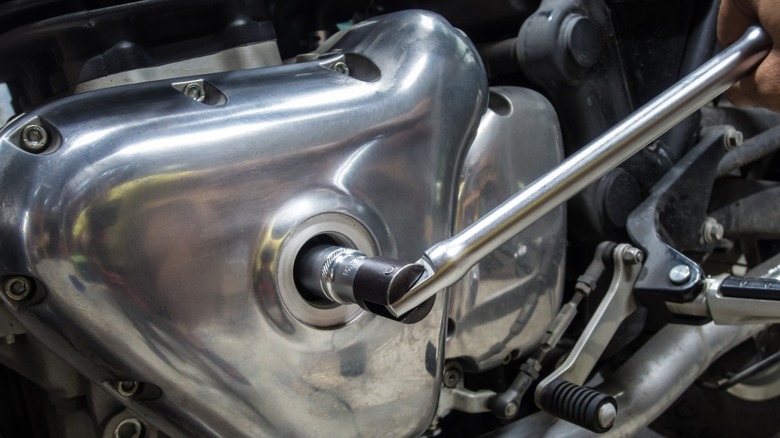
Most people who have spent time under the hood of a car have probably used a cheater bar at some point. It's easy, you just slide a longer piece of pipe over your ratchet. It gives you more leverage and you can tap a hammer against the pipe without damaging your tool. Breaker bars, which are long extensions for turning sockets, can work sometimes, too. Of course, with more leverage comes a greater risk of using too much force and snapping the bolt. So, be careful, and move slowly as you work move the bolt just a little bit at a time.
If none of these methods work, you're going to have to progress to more drastic measures, like drilling into the bolt itself and using a stud extractor. Just be very careful not to snap the extractor off in the bolt. These extractors are made from material hard enough to dig into other metal, so drilling into the extractors themselves is beyond difficult, if not impossible without the proper equipment. It's also a good idea to drill a pilot hole first and make sure you are drilling straight down into the bolt.
Whatever method you use, don't rush. Take your time, and use caution. It's best to go slow and ease the bolt loose. Remember to wear the right gear to protect your hands and eyes. Getting out a stuck bolt is a real hassle, but you can do it. We believe in you.