

Wet Clutch Vs. Dry Clutch: The Differences Explained
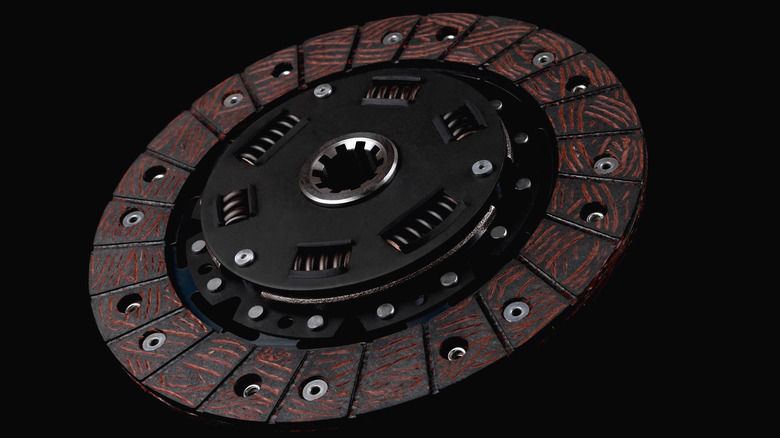
Most of us don't get to choose what kind of clutch sits between the crankshaft and the transmission – that decision has already been made on the factory floor. So whether your clutch is as wet as a fish or dry enough to start a bushfire, you're stuck with it. But why would anyone want a dry clutch when engines beg for oil (not that having too much oil in your engine is a good thing)? On the surface, it seems counterintuitive. And if a clutch is soaked in oil, doesn't that increase the risk of it slipping under pressure?
These questions matter more than you might think – especially in motorcycles, where both wet and dry clutches are common. Many modern cars, on the other hand, use wet clutches. The clutch is the middleman between your engine and transmission, an unsung hero that lets you shift gears and keep that engine purring smoothly. But not all clutches work the same. The way a clutch engages and the environment it operates in affect how power is delivered, how maintenance is done, and even how the engine sounds.
The main difference between a wet and a dry clutch is the use of lubrication, or the absence of it. It's one of those subtle mechanical choices that most drivers overlook, yet it reveals just how much thought goes into the engineering of an internal combustion engine. So let's dive a bit deeper into their application and whether one is a better choice for you than the other.
Why the wet clutch rules the real world
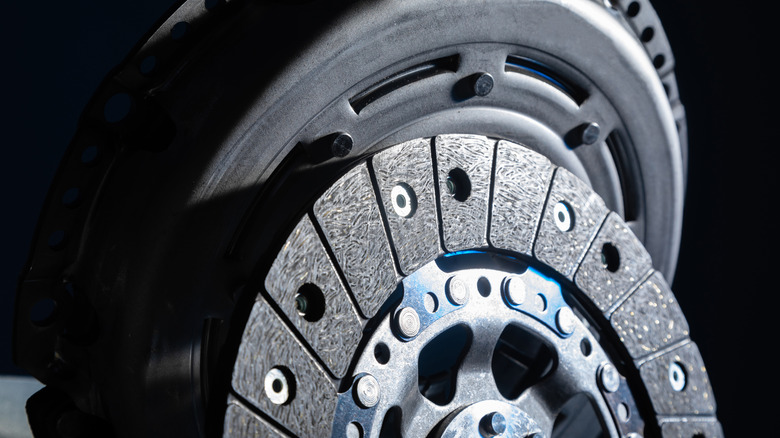
A wet clutch functions just as the name suggests: it works while immersed in a bath of lubricating oil. The oil cools the clutch plates and provides a smooth engagement, which is ideal in high-heat conditions, long operating hours, and stop-and-go traffic. Wet clutches — whether in cars or motorcycles — use multiple plates and require very little maintenance. The oil reduces friction, and the system retains just enough of it to prevent overheating, allowing the clutch to tackle high amounts of power while minimizing wear. The lubrication system also controls the heavy heat and friction that would otherwise destroy clutch plates and overload the transmission in heavy traffic.
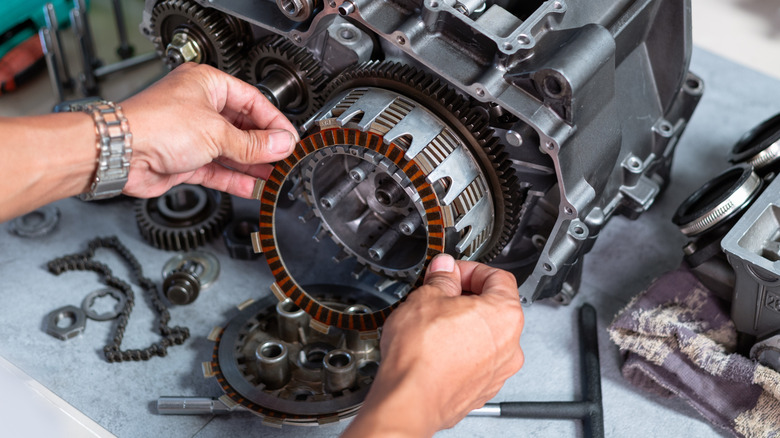
Imagine the clutch pack as a stack of alternating friction and steel plates, all soaked in oil. When you pull on the clutch lever on a motorcycle or press the clutch pedal in a manual-transmission car, a mechanical or hydraulic system actually separates the clutch plates, temporarily breaking the connection between the engine and the transmission. This disengagement allows the gears to change without grinding. When you release the lever or pedal, the pressure plate pushes the friction plates back together, locking them just enough to transfer power from the engine to the transmission, and ultimately to the wheels. These friction plates are made from tough materials like copper, cork, or composite fibers. When this action is repeated many times over, heat is generated, and the oil bath is what keeps everything cool.
Everything seems perfect with a wet clutch in multiple applications. However, there's always a clutch, err... catch. The multi-plate design can be complex and finicky to service, and because it's bathed in oil, that fluid gets dirty faster, translating to more frequent oil changes. The oil also creates a little drag, which slightly dulls power delivery compared to a dry setup.
Why the dry clutch screams performance
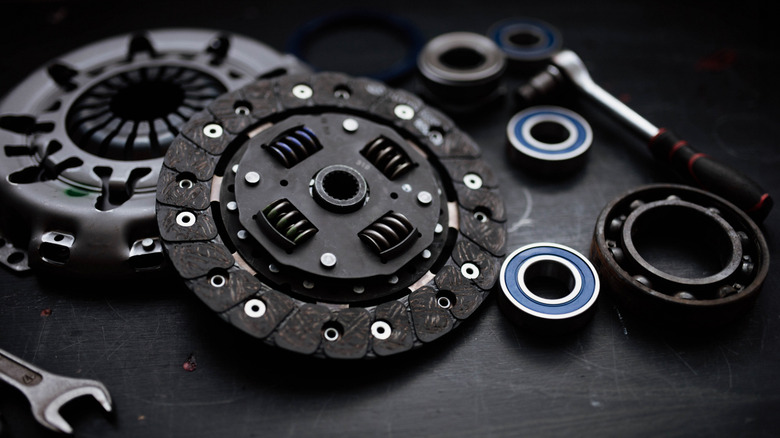
Unlike a wet clutch that spends its life swimming in oil, a dry clutch does its job without lubrication. It's usually a single-plate setup, relying purely on friction to grab and release power. With no oil sloshing around, there's less drag in the drivetrain, which means more of the engine's grunt actually makes it to the wheels. The absence of fluid also eliminates the parasitic losses caused by pumping and churning oil, making dry clutches a favorite among performance purists who value mechanical efficiency over civility.
The trade-off is that dry clutches wear out faster, heat up quickly, and hate traffic with a passion. They have their fair share of quirks too. They're better suited for low- to mid-torque machines — anything making over 250 lb-ft starts chewing through plates fast. Without oil to cushion the friction, they wear quicker and demand more maintenance, which can get expensive over time. And then there's the noise. Dry clutches make a distinct metallic rattle. Ducatis come to mind first — what may sound glorious on one can get old fast while moving in traffic.
Dry clutches find their best use case in performance applications like sports cars, superbikes, and racing or track cars and motorcycles. The lack of oil translates to a more direct response, and the simplicity of the design makes maintenance easier.
Does your clutch choice actually matter?
Circling back to the beginning of the article, you rarely get to choose between a wet and a dry clutch. What you might want to think about is the application of the vehicle in question. Planning track days? Considering a new race car or superbike? Pick one with a dry clutch because it will offer more feel, feedback and responsiveness, thanks to less drag on the system. The absence of oil also eliminates the added weight and hardware of the lubrication system. The excess noise, meanwhile, translates to aural theatrics, so it won't be a bother on track or in a race setting. Easier maintenance is another added bonus, helping you get in and out of the pits quickly.
If you're on the other side of the spectrum, where the vehicle is meant for comfortable commuting, your priorities will be different. In any application where smoothness of operation matters more than the viscous shifts of a dog box, a wet-clutch-equipped car or motorcycle should be your pick. They'll last longer, can sustain more abuse, and are quieter at idle too.
Both systems do the same job, which is to transmit power between the engine and the gearbox. The real difference lies in how they handle the heat, friction, and the overall feel of operation. Knowing the difference between wet and dry clutches is useful in other ways, too. For instance, if a vehicle runs a wet clutch, it's usually built to handle more torque — which tells you a lot about its performance and durability. Understanding those details gives you an edge when you're shopping, tuning, or just trying to sound techy at the next cars-and-coffee meet.