

These 5 Car Makers Own The Most Brands Right Now
Imagine if the top automakers of the world entered a bar. Volkswagen would show up with a full VIP entourage with Bentley sipping a martini, Lamborghini revving at the curb, and Skoda quietly picking up everyone's tab. Stellantis would crash in right after, dragging 14 cousins from two continents and arguing over who gets the last drink. Geely would stroll in looking mysterious, introducing everyone to their "friends" Volvo, Polestar, and Lotus, who keep insisting they're totally independent while sharing the same wallet. General Motors would nurse a bourbon, bragging about its Ultium batteries and reminiscing about the good ol' Pontiac days.
That's the thing about today's car world — it's not about who drives what anymore, it's more of who shows up with the bigger family minivan. Some automakers arrive with a sensible two-brand setup, while others bring an entire soccer team and a dog named Limited Edition. In today's consolidated car market, brand count translates to power. The more marques a company owns, the more segments it can dominate. But managing such empires can get tricky. Too many badges can mean internal competition, blurred brand identities, and ballooning R&D costs leading to bankruptcies or closures, while some brands are resurrected with a second chance at life. Still, a few of these giants are determined to play this game, balancing heritage, electrification, and global diversification.
According to a 2025 breakdown by Consumer Reports, five automakers stand out when it comes to the number of most active in-production vehicle brands owned, without including defunct or dormant nameplates. Each offers its own approach to scale and brand management, ranging from old-world luxury to fast-rising EV startups. It's part business strategy, part corporate chaos, and totally fascinating.
Volkswagen Group -- The brand empire
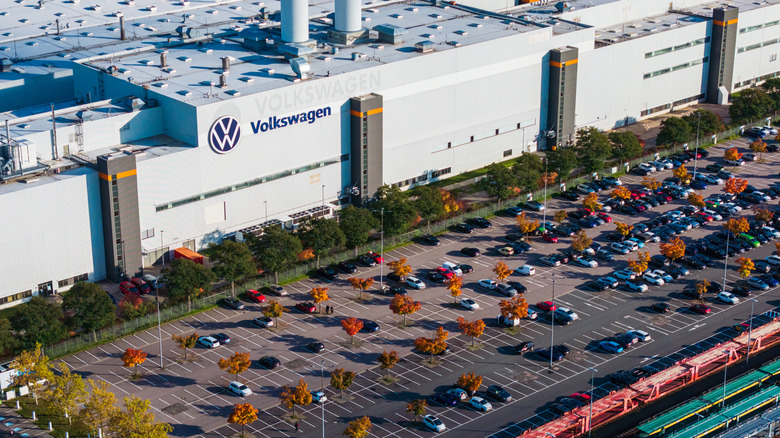
If there's one company that has mastered the art of juggling brands, it's the Volkswagen Group. The German giant presides over a vast portfolio spanning mass-market, luxury, performance, and even motorcycles and commercial trucks. Its active brands include Volkswagen, Škoda, Seat, Cupra, Audi, Porsche, Lamborghini, Bentley, Ducati, and Scout Motors, along with heavy-vehicle specialists Man and Scania.
1998 saw Volkswagen breathe new life into the historic Bugatti name. In 2021, one of the biggest shakeups in VW's portfolio came when the group agreed to fold Bugatti into a joint venture with Rimac. Volkswagen (via Porsche) transferred the Bugatti brand into the newly created Bugatti Rimac, where Rimac holds a 55% controlling stake and Porsche retains 45%. The idea was to combine Bugatti's century-old heritage and name recognition with Rimac's current EV and battery engineering prowess. Meanwhile, Volkswagen Group of America struck a distribution agreement to import and sell Bugatti and Rimac vehicles in the U.S., cementing VW's role in the high-end market funnel.
On the volume side, VW's scale is stupendous. In fiscal 2024, the Volkswagen Group delivered over 9 million vehicles globally (including both passenger and commercial). Of those, about 8.7 million were passenger cars. On the revenue front, the VW Group pulled in approximately $351.31 billion (€304.97 billion) in revenue in 2024.
Volkswagen's secret weapon is the modular architecture underpinning its group cars. The MEB platform underpins most VW Group EVs, while the PPE architecture brings cutting-edge performance to premium models, just as the MQB and MLB systems revolutionized combustion-design platforms. Thankfully, somewhere in the Group's factories, a grumpy engineer is probably dusting off a drawer full of old knobs and buttons to rethink touchscreens and saying, "told you so!"
Stellantis -- A post-merger monster
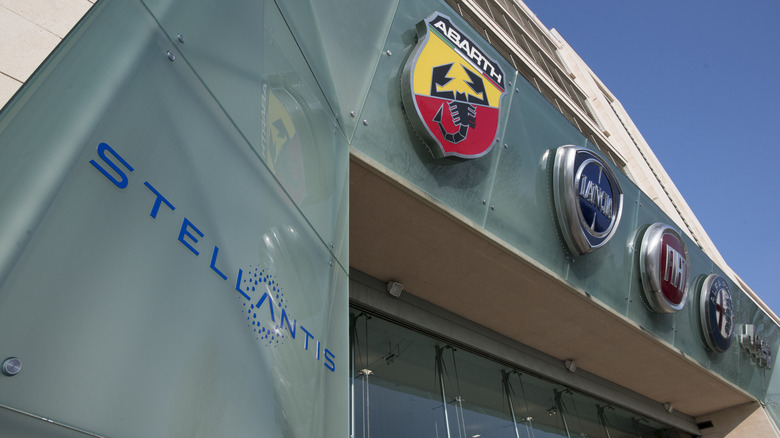
Stellantis sprang into existence in 2021 from the merger of Fiat Chrysler Automobiles (FCA) and France's PSA Group, instantly creating one of the broadest portfolios in the industry. Today, Stellantis actively manages 14 brands, covering everything from city commuters to sportscars.
Its umbrella includes Peugeot, Citroën, DS Automobiles, Opel, and Vauxhall across Europe. Fiat and Abarth handle compact cars and sporty derivatives, Alfa Romeo and Maserati play the Italian luxury and performance cards, and U.S. stalwarts, Jeep, Ram, Dodge, and Chrysler, anchor the North American markets. In 2024, Stellantis shipped about 5.4 million vehicles globally, down from prior years amid supply chain and product transition pressures, and pulled in net revenues of $180.7 billion (€156.9 billion).
Stellantis now employs four BEV-native modular platforms — STLA Small, STLA Medium, STLA Large, and STLA Frame, along with dedicated architectures for Smart cars and light commercial vehicles. The platforms are engineered for flexibility, allowing them to support multiple powertrains (electric, hybrid, and even internal combustion), and each platform can support up to 2 million units per year. This helps spread EV and hybrid development costs across multiple marques. But with fourteen brands, overlap is inevitable, and the company has already signaled that it may begin pruning less profitable names by 2026. Nevertheless, it remains optimistic for the U.S. market with a massive $13 billion investment.
Geely -- The quiet giant from China
Geely, a.k.a., Zhejiang Geely Holding Group, was founded in 1986 and entered the automotive industry in 1997. It may not flaunt flashes of fame, but it's quietly building one of the most ambitious multi-brand empires in the auto world. Under Zhejiang Geely Holding, the group oversees a spectrum of active marques that include Geely Auto, Lynk & Co, Zeekr, Volvo, Polestar, Lotus, Proton, Radar and Smart (co-owned with Mercedes-Benz), among others.
In 2024, Geely set new records. Geely Auto reported a record-breaking 2.17 million vehicles sold in 2024. The company's export arm also hit new highs, shipping 403,923 units overseas. Over the same period, Geely accelerated its international expansion, extending its reach to more than 80 countries and regions. It entered over 10 new markets while strengthening its foothold in key territories across the Middle East, Eastern Europe, and Latin America. Overall, the Geely Holding portfolio delivered 3.3 million vehicles in 2024. Financially, Geely Auto alone posted revenues of $33.7 billion (240.2 billion RMB) in 2024.
By consolidating sub-brands to reduce clutter, Geely's brand strategy is both aggressive and strategic. In 2024, Geely announced that its premium electric brand Zeekr will assume control of its sister marque Lynk & Co — currently held by Volvo Cars and Geely — giving it a 51% controlling interest. The remaining 49% will stay under a wholly owned subsidiary of Geely Automobile Holdings.
Though not loud, Geely may be one of the most efficient brand jugglers out there, quietly building a Chinese automotive empire that wants global reach. No wonder, then, that Volvo's CEO is predicting Chinese dominance of the industry going forward.
General Motors -- Lean, green and legacy-rich
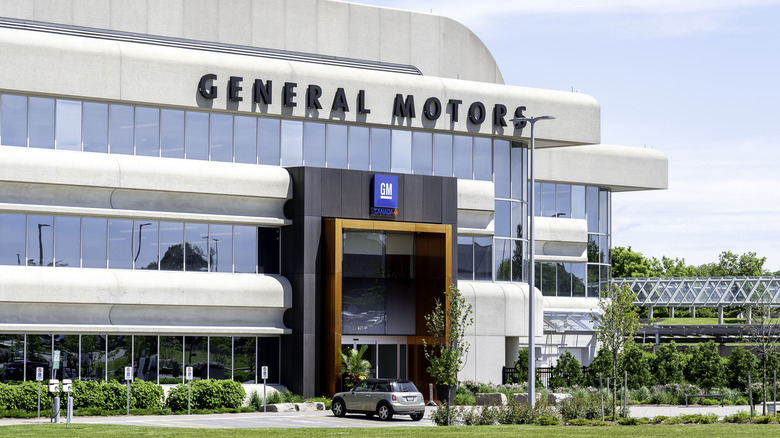
General Motors may have trimmed its brand roster over the decades, but what remains seems very purposeful. GM's active brands include Chevrolet, Buick, Cadillac, and GMC, as well as China-specific joint ventures.
Chevrolet sells everything from compact hatchbacks to full-size pickups and EVs, like the Equinox and Silverado EV. Buick has been rejuvenated in China and North America with stylish crossovers. Cadillac represents GM's luxury future, leading the Ultium-based electrification push with models like the Lyriq and the ultra-luxury Celestiq. GMC, meanwhile, focuses exclusively on trucks, vans, and SUVs, offering upscale variants of GM's utility vehicles, a strategy that has paid off handsomely with the resurrection of the Hummer brand as an EV.
Meanwhile, in China, the SAIC-GM-Wuling (SGMW) joint venture manufactures vehicles under the Wuling and Baojun brands. In terms of the scale of this alliance, SGMW alone delivered over 286,000 units in 2024. In the first quarter of 2024, GM's joint ventures delivered over 441,000 units of NEVs, a.k.a., new energy vehicles or plug-in hybrids and electric cars. But later in the year, mounting losses forced GM to write down over $5 billion in its China operations amid restructuring.
Despite China's turbulence, GM continues to invest heavily in its future. Last year, GM guided $10.5 to $11.5 billion toward capital expenditures, including EV and battery ventures. Its Ultium battery platform is leveraged across its brands and is central to its EV push. GM's strength lies in its focus on fewer brands, clearer identities, and shared technology across its lineup. It's a lean empire built from legacy, and one that hopes that its streamlined approach will guide it through electrification's next lap.
Renault-Nissan-Mitsubishi Alliance -- The hybrid ensemble
The Renault–Nissan–Mitsubishi Alliance operates more like a strategic coalition, where three automakers are loosely bound by shared platforms, investments, and goals, not full mergers. The Alliance has existed since 1999 and has leveraged modular architectures like the CMF-EV to pool R&D, supply chains, and components across marques to boost efficiency without erasing brand identities.
The Alliance's active brands include Renault, Nissan, Mitsubishi, and Infiniti, along with offshoots like Dacia, Alpine, and Mobilize falling under Renault's umbrella. Each brings something distinct to the table — Renault handles Europe with stylish EVs like the Megane E-Tech, Nissan stretches globally with practical models and the pioneering Leaf, while Mitsubishi plays strong in Asia with rugged trucks, crossovers and plug-in hybrids. Infiniti still carries the luxury flag, especially in North America.
In recent years, Alliance members have demonstrated scale, with the Renault Group recording revenues of $64.6 billion (€56.2 billion) in 2024 and delivering prising profits in all three of its core brands. However, Nissan's recent cost-cutting overhaul, plans to reduce production, and intentions to shrink cross-shareholdings reflects internal tension, expressed by former CEO Carlos Ghosn's views signalling that the Alliance is dead. However, the Alliance is deepening its collaboration in electrification — by the end of 2025, Mitsubishi and Nissan plan to launch EVs built on Renault's Ampere (formerly CMF-EV) platform, including a Nissan Micra EV and a fully electric Eclipse Cross.
The Alliance continues to balance autonomy and integration. However, its success hinges on whether it can knit together EV strategies that sustain shared technology platforms and manage diverging priorities without fracturing the coalition.