

When You Should (And Shouldn't) Use Premium Gas In Your Car
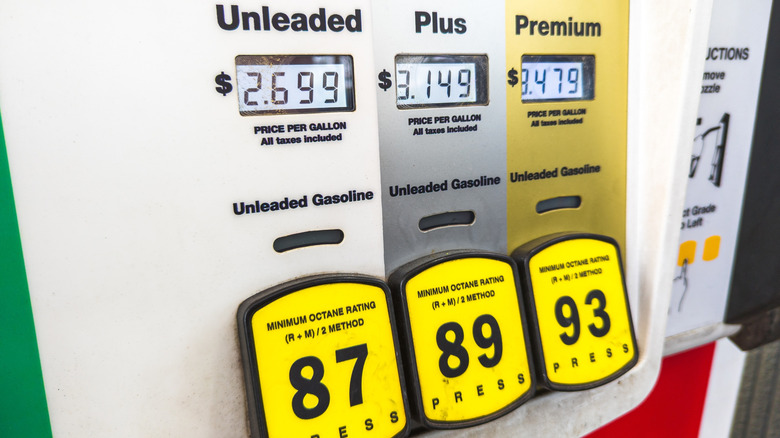
The price difference during a fill-up between regular and premium gas can be eye-opening. As of this writing, the U.S. Energy Information Administration reports that the average price for a gallon of regular gas is $2.90. Opt for "the good stuff," and the price at the pump increases to $3.78, a 30% boost. Spending extra makes sense when it's recommended by the manufacturer — some modern engines require premium gas. However, doing so in many other vehicles is a waste of money.
If you drive a 2025 Toyota Camry (a hybrid), its 13-gallon fuel capacity means spending $38 or $49 for a full tank, depending on your octane choice. The difference adds up more in vehicles with larger fuel tanks. A 2025 Ford F-150 with a 36-gallon tank will cost $104 to fill up with regular, while the price at the pump jumps to around $136 with premium. So the fuel grade you choose can have a meaningful impact on your wallet. Yet cheaping out isn't always the best approach.
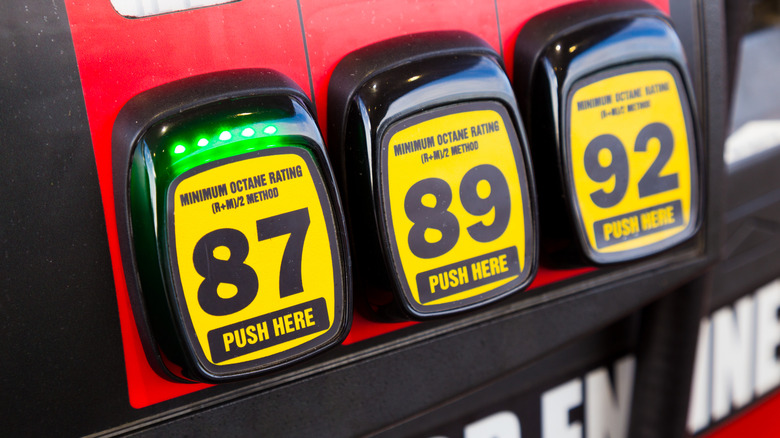
Regular gasoline has an octane rating of 87, and premium, depending on the brand, is 91 to 93. Mid-grade gasoline (what's the point of it, anyway?) typically has an 89 octane rating. The extra octane helps prevent engine pre-ignition or "knock," which can interfere with the combustion process in high-compression and forced-induction engines. Prolonged knocking, which results from the air-fuel mixture igniting too early under pressure, can damage the pistons, valves, and engine bearings.
When you should use premium gas
Combustion is a delicate dance in today's engines, especially in high-compression power plants or those with turbocharging or supercharging. Manufacturers have to balance efficiency and power while ensuring precise ignition timing and proper boost pressure. Factor in extra demands like heavy loads, steep grades, or stomping on the accelerator, and the need for smooth power becomes obvious. In many vehicles, peak engine output is dependent on using higher-octane fuel.
With many Ford EcoBoost engines, premium isn't mandatory, but the pricier gas delivers the "best overall vehicle and engine performance," according to Ford. In practical terms, you'll need to decide on the value of additional horsepower and quicker acceleration. A 2019 test by Car and Driver showed that an F-150 with the twin-turbo 3.5-liter V6 made 360 horsepower with 87-octane fuel versus 380 with 93-octane premium. The extra output translated into a 0-60 time of 5.3 seconds, 0.6 seconds quicker than with regular gas.
Yet other vehicles aren't so flexible with fuel choices. Porsche "strongly" recommends its gas-engine models "use premium fuel exclusively." The company warns that using lower-octane gas "could cause permanent damage to your vehicle and should be avoided" due to the risk of engine knocking. Mercedes takes a similar approach with its AMG editions, advising drivers to use premium-grade gasoline. The automaker does offer an exception if premium is unavailable: Regular is permissible, but only fill half the tank and don't drive the car hard or with engine speeds above 3,000 rpm.
When you shouldn't use premium gas
There isn't a prohibition on using high-octane fuel in vehicles designed for regular-grade gas. The only damage from splurging on premium will be to your bank account. The 87-octane-friendly engines simply can't take advantage of upgraded gasoline. A decade ago, AAA conducted a study confirming that premium provided no benefit in cars made for regular-grade gas. The organization found that American drivers wasted $2.1 billion a year under the mistaken belief that premium is better for their cars.
Many popular cars are fine cruising along with 87 octane in the tank. The owner's manual for the 2025 Toyota Camry specifies unleaded gas of an octane rating of 87 or higher. Honda says the same thing for the 2025 Accord, even though the base engine is a turbocharged 1.5-liter four-cylinder unit. The recommendations are similar with other examples from 2025, including the Chevrolet Equinox and Hyundai Tucson. Simply put, there's an abundance of vehicles that don't require premium fuel.