

How Does A Semi-Automatic Transmission Work?
One of the most fulfilling parts of driving a car is shifting gears. Enthusiasts like us yearn for open, twisty roads, going through the gears and surfing a wave of torque. Yet, most of us are stuck in traffic, where constantly shifting gears and pressing the clutch pedal feels less like joy and more like a tiresome chore. That's when an automatic transmission seems logical.
A semi-automatic transmission, then, offers the best of both worlds. It gives you the convenience associated with an automatic transmission, along with the ability to shift gears like a manual gearbox. Simply put, a semi-automatic gearbox removes the clutch pedal from the equation by electronically managing the clutch operation. So, you can shift gears without the need for clutch inputs.
Here, we are going to touch on the workings of semi-automatic gearboxes, the types of semi-automatic transmissions, their pros and cons, and whether they're a better alternative to fully automatic transmissions. After all, a transmission can make or break a car. Just look at these great cars that were ruined by their transmissions.
What is a semi-automatic transmission?
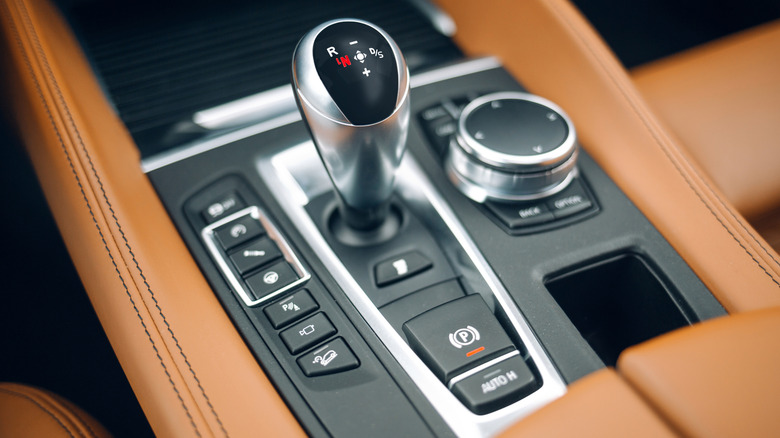
A semi-automatic transmission is also known as a clutchless manual gearbox. In layman's terms, a semi-automatic transmission is a manual gearbox that is partially controlled by the car's computer. Mechanically, a semi-automatic gearbox still uses gears and a clutch like a traditional manual gearbox, but the system does the clutch work and gear shifting for you, depending on your inputs via paddle shifters or a gear shifter lever.
In essence, a semi-automatic transmission delivers the mechanical efficiency and involvement of a traditional manual gearbox, but automates the work of gear shifting, connecting and disconnecting the clutch, as well as matching both their speeds for smooth shifts. The enthusiasts among you will appreciate the importance of rev-matching the engine and transmission speeds for that perfect shift.
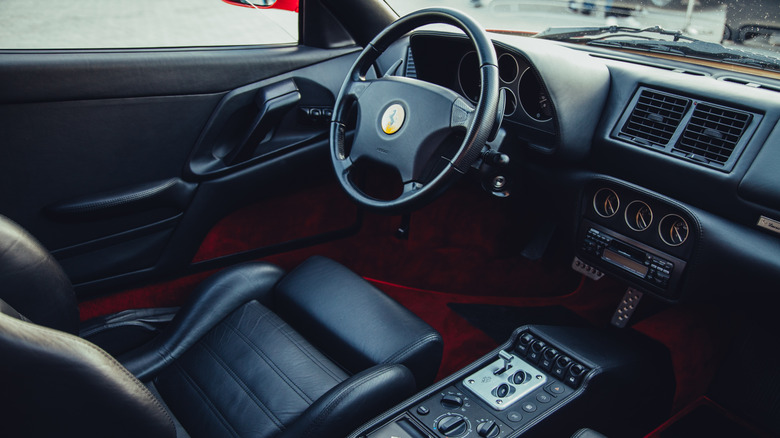
While we know who built the first automatic transmission, understanding when the semi-automatic transmission came to be popular is a bit complicated. It has been around since the late 1930s, featuring in cars such as the 1942 Hudson Six and 1955 Citroen DS. However, reports suggest Ferrari popularized the use of the semi-automatic transmission. Ferrari first used a semi-automatic gearbox and paddle shifters in its production road cars in 1997 with the 355 F1. It was a technology borrowed from its Formula 1 cars, which had been perfecting the semi-automatic gearbox for nearly a decade since its use in Nigel Mansell's Ferrari 640 F1 racecar. Do note the use of the word production, as two years prior, Pininfarina built the Ferrarfi FX. It was a special order of six cars built with an unlimited budget and a semi-automatic transmission for Prince Hakeem, the nephew of the Sultan of Brunei.
How does a semi-automatic transmission work?

A semi-automatic gearbox is similar to a traditional manual gearbox, save for the addition of a Transmission Control Unit (TCU), along with a host of sensors and hydraulic or electric actuators. To understand the process, let's break it down into a series of inputs.
While there may be slight differences in the actual mechanics, depending on the type of semi-automatic gearbox you have, the basic movements are as follows. It starts with you pushing a paddle shifter or moving the gear lever. This prompts the TCU to send a command to actuators connected to a clutch. The actuators push the clutch — the way your foot would press the clutch pedal – to disengage from the clutch plate and disconnect the engine from the wheels. Then, another set of actuators move the shift forks inside the transmission casing, physically moving the gear synchronizers, which lock the desired gear onto the main shaft. Once the gear has meshed with the main shaft, the TCU signals the clutch actuator to release, reconnecting the engine to the wheels and initiating power flow. Most semi-automatic gearboxes can also act as fully automatic gearboxes, which means they do the gear shifting for you.
This is the simple explanation. In reality, the TCU has to handle a lot more than this. While performing these actions, the TCU has to control the clutch actuator release speed. To control the jolt of the engine and clutch plate engaging, the TCU may also momentarily retard the engine's ignition timing or cut fuel supply.
Types of semi-automatic transmissions
An automated manual transmission (AMT) is the simplest of all semi-automatic gearboxes. It is a basic manual gearbox where actuators control the clutch and gearshifts. Some examples are the AMT gearbox in the India-spec Maruti Suzuki Alto or the intelligent manual transmission (iMT) in the India-spec Hyundai i20. While AMTs can act as fully automatic transmissions, iMTs require driver intervention to change gears. These gearboxes are used mainly in low-priced cars for their simplistic build and low-cost nature. These gearboxes are easy to make, cheap to run and maintain, and fuel efficient, though some dislike them for their slow and abrupt shifts.
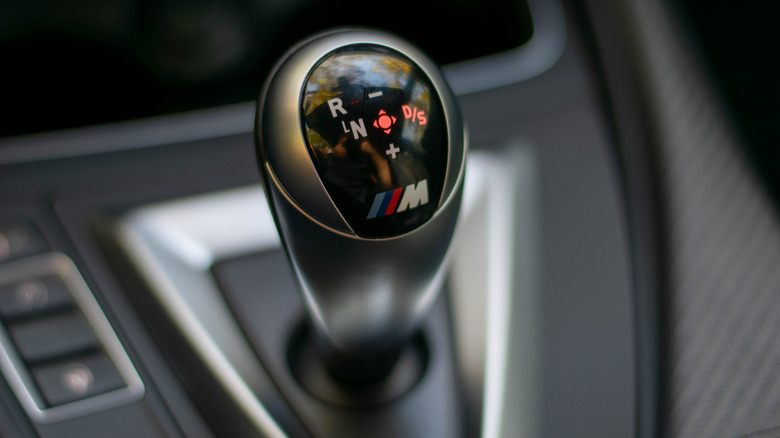
Then you have the sequential semi-automatic gearboxes, which can be seen in some high-performance sports cars. Like motorcycles, these gearboxes shift in sequence and you can't skip gears. Some common examples are BMW's Sequential Manual Gearbox (SMG) and Ferrari's 355 F1 semi-automatic transmission. These gearboxes have powerful hydraulic actuators and precise electronics for lightning-fast shifts. They're great for the racetrack but can feel tedious in stop-and-go traffic, due to their harsh shifts.
The dual-clutch transmission (DCT) is the next step in the evolution of the semi-automatic gearbox. It follows the same philosophy in that it allows you to shift gears manually without the need for clutch inputs. The primary difference is the DCT's use of two clutches instead of one. The DCT uses one clutch for even gears and one for odd gears. So, when you are in second gear, the gearbox has already pre-selected third gear with the clutch disengaged. Then, when you shift to third, the gearbox simply disengages the second gear's clutch and engages the third gear's clutch, effectively and rapidly shifting you into third gear.
Semi-automatic or fully-automatic?
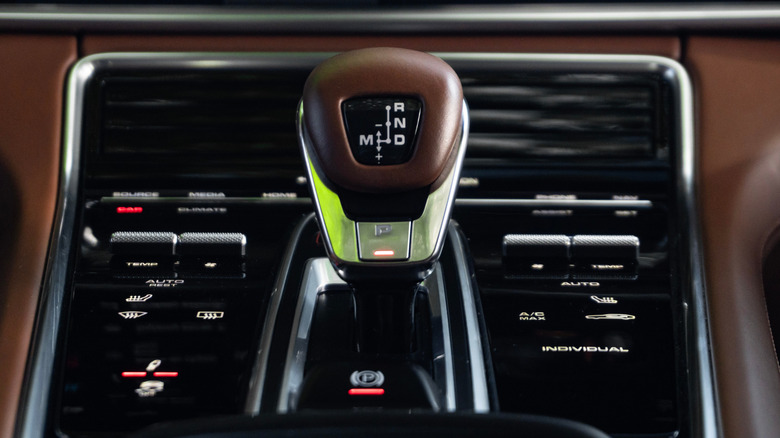
Like any transmission, the semi-automatic gearbox comes with its own set of positives and drawbacks. Since it has manual actuation, the semi-automatic gearbox delivers more control and offers fuel efficiency closer to its manual counterparts. The gearshifts, too, can be executed more quickly than an average driver using a manual, making them the go-to option for race cars, without compromising on the driver's ability to choose gears and retain control. However, these gearboxes, especially the actuators, are complex pieces of machinery that can be prone to failures and expensive to fix. You do have AMT gearboxes that are simpler and cheaper to manufacture than DCTs, but many enthusiasts claim that they feel lazy to shift, lurch while shifting, and can have large delays in between gear changes.
This leads us to the question of whether semi-automatic gearboxes are better than automatic transmissions with torque converters. Unlike traditional manual gearboxes with clutches, an automatic gearbox with a torque converter uses planetary gear sets, clutch packs, and a specialized hydraulic transmission fluid to transmit power. The fluid coupling in the torque converter, which does suffer from mechanical loss, also allows it to smoothly change gears. So, while a semi-automatic gearbox is direct and more efficient, an automatic gearbox with a torque converter has a significantly smoother operation.
Today, the semi-automatic gearbox exists in the form of the AMT, used as an affordable transmission option in low-cost cars, the DCT, used in luxury and high-performance sports cars, and the iMT, which you can find in some Kia models. However, they're still not as cool as the Koenigsegg CC850, which comes with a transmission that's both manual and automatic.