

Mazda Owners Complain The Most About These Common Problems
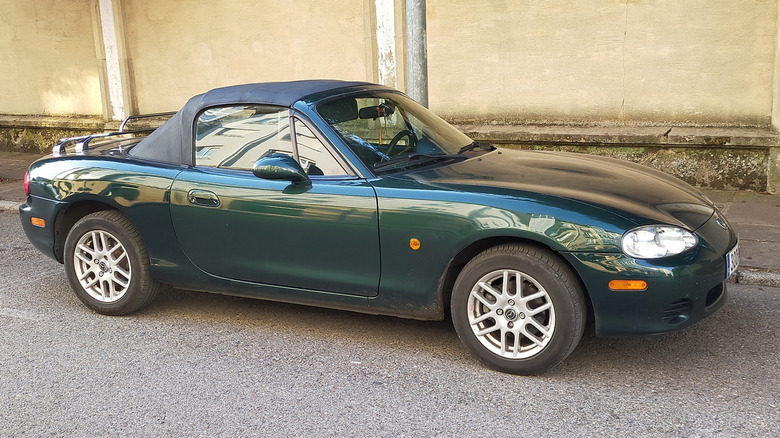
Mazda has done well to make cars that are priced reasonably low, look good, and, more importantly, offer a fulfilling driving experience. The carmaker has distanced itself from its Japanese counterparts like Toyota, positioning itself as a driver's carmaker and a fantastic alternative to other driver's cars from brands like BMW. Being a Japanese carmaker, Mazda has strong reliability roots, with Consumer Reports often putting Mazda at the top of its reliability standings. Some even call it the Japanese BMW. These traits have allowed Mazda to make Consumer Reports' list of the best used car brands.
However, while Mazda does have a strong reputation for reliability and durability, the brand does suffer from a few specific issues, often evidenced by customer complaints on Mazda forums or even by National Highway Traffic Safety Administration (NHTSA) reports. Using these inputs, we have compiled a list of common Mazda problems, including rust trouble, melting dashboards, wonky infotainment systems, engine issues, transmission quirks, Skyactiv malfunctions, and even the infamous P0300 error code. These ailments affect various vehicles in the Mazda lineup, from the sporty Miata to the CX-9 family hauler.
Rust issues
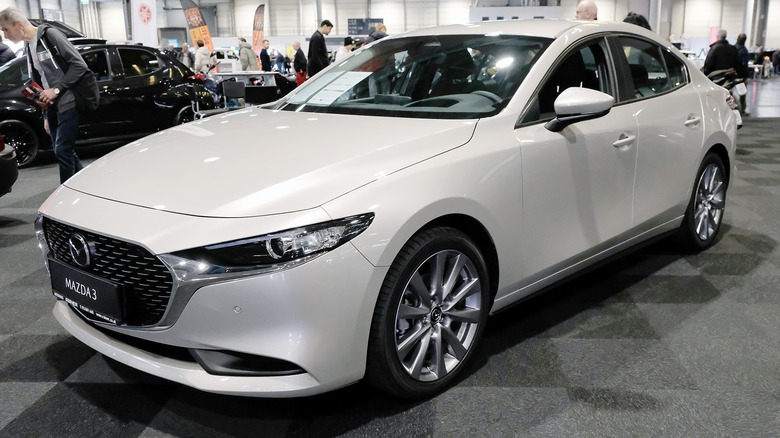
Many Mazda cars reportedly suffer from long-term rust issues. This was especially bad in 2000-era Mazda3s and Proteges. Mazda does offer a steel galvanization treatment and anti-corrosion coatings on most of its new models. However, go on the internet, and you can see gory images of rusted Mazdas from the 2010s in the Northeast and Midwest. These regions witness both cold temperatures and high humidity levels, leading to high condensation and moisture retention on vehicle surfaces — the ideal environment for rust formation. These areas are also called the salt belt, as, here, a significant amount of salt is used to remove ice from the roads in the winter, and this salt accelerates the rusting process.
The common areas of corrosion are the vehicle's underside, including locations like the subframe, wheel arches, and suspension components. In fact, in 2018, Mazda recalled thousands of Mazda6 cars made between 2009 and 2010 for suspension issues caused by excessive corrosion. While you can argue that most cars suffer from rust issues in the salt belt, Mazdas appear to be among the most affected. So, if you live in the northern part of the United States and are planning to buy a Mazda, it is prudent to thoroughly check the underside for rust.
Melting dashboards and glitchy infotainment systems
Yes, this was a thing with Mazda cars. It was a specific problem with the Mazda3 and Mazda6 models made between 2009 and 2013, especially those situated in the sun-drenched South and Southwest. In these cars, the plasticizer used in the dashboard materials would fail due to prolonged exposure to the sun's heat. So, the solid matte dashboard would turn into a soft, shiny one. This melted dashboard could also become insanely reflective, making it extremely difficult to look out of the windshield, resulting in a major safety concern. To its credit, Mazda did extend the warranty on these cars to 10 years to cover the dashboard replacement.
Another bone of contention with Mazda owners was the Commander knob. This rotary knob was introduced in the 2014 Mazda3, as part of its new Mazda Connect interface. Mazda added the rotary knob and physical buttons instead of a touchscreen in a bid to reduce distraction and help keep drivers' focus on the road ahead. Years on, the system attracted multiple complaints, from dead infotainment screens to connectivity issues. Apple CarPlay and Android Auto would abruptly disconnect, and voice commands sometimes wouldn't work.
Skyactiv not active
Mazda's revolutionary Skyactiv six-speed automatic transmission combines the smoothness of an automatic gearbox with the direct feel of a manual transmission through the clever use of a torque converter, planetary gears, and multi-plate clutch packs. While revolutionary in theory, in the real world, customers complain about delayed downshifts, harsh downshifts, and delayed gear engagement when moving from a standstill.
That wasn't the worst bit — 2006-2013 Mazda3 and 2008-2014 Mazda5 models reportedly suffer instances of transmission control module failure that causes the cars to suffer from harsh or erratic gearshifts or display engine and transmission warning lights. While customers love the Skyactiv gearbox for its direct shifts, the brutal shift issues are something they can't get behind.
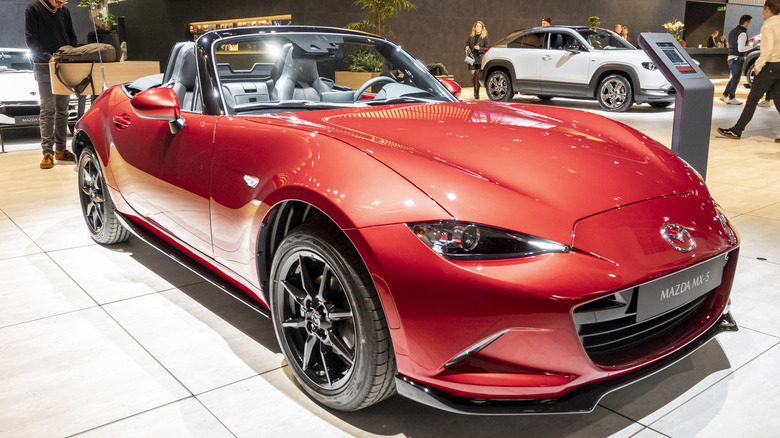
Some Mazda cars had problems with their manual transmissions as well. That's especially true for early 4th-generation ND Miatas. Many enthusiasts state that these vehicles came with transmissions designed for a 1.5-liter engine but attached to a 2.0-liter engine. In these Miatas, the second, third, or fourth gear is known to break if the car is driven hard. Other owner-reported Mazda transmission problems include worn synchronizer blocker rings that cause hard gearshifts. Some Mazda3 owners also complain of clutch failure at around 40,000 miles.
Engine issues

The Skyactiv paradox extends to Mazda's engines as well. While Mazda's Skyactiv-G series engines are considered robust, one of their strengths also turned into a bone of contention for some owners. The direct-injection engines on some Mazda3 and CX-5 cars can, over time, develop carbon buildup on the intake valves, causing high mileage models to suffer from problems like rough idling, power loss, dipping fuel economy, and, of course, the P0300 codes for engine misfires. Hopefully, these issues will be sorted in Mazda's upcoming Skyactiv-Z engine.
Another issue was variable valve timing actuators failing on early Mazda3 and Mazda6 cars equipped with 2.3-liter VVT engines. Some Mazda6 and CX-9 owners also complained of their turbocharged 2.5-liter cars throwing out random check engine lights and malfunctioning mass air flow sensors . Let's not forget about the iconic rotary engine on the Mazda RX-7, which was known for issues like excessive oil consumption and apex seal wear.
The tiny bits
With most of the major Mazda issues covered, let's look at the smaller issues that plagued cars from the Japanese brand. Mazda has seen its fair share of recalls during its time in the U.S. While the infamous Takata airbag recall extended to most Japanese cars sold in the States, there were some Mazda-specific recalls, including one for faulty liftgates in the CX 30. Mazda's biggest recall happened in 2021, when it called back nearly 120,000 cars and SUVs for fuel pump failure.
Some Mazda CX-9 crossovers made between 2007 and 2015 had faulty brake boosters, which meant some owners experienced rock-hard brake pedals. This issue escalated to the NHTSA, which investigated and found the problem to be a material defect in the brake booster diaphragm, leading to loss of brake vacuum and brake assist.
Then, there is the weak paint problem. Some say that Mazda's Soul Red Crystal paint is the best color the manufacturer ever sold. However, it's also a source of frustration for some owners. Mazda is known for applying a thin coat of water-based paint as part of its low environmental impact program. Many owners say that this thin paint layer is less durable and flakes and chips easily. The only solution is to take it to an auto body shop or apply a paint protection film (PPF) to the front end of your new Mazda.