

Mazda's Famous Red Paint Still Turns Heads: Here's Why It's Special
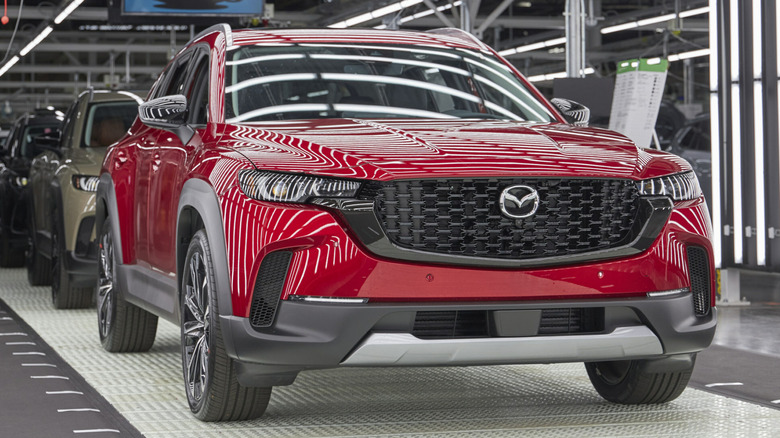
There are certain truths in the automotive world. A Porsche 911 has its engine in the rear, old Land Cruisers have worse aero than bread, and Mazda's Soul Red Crystal paint will make you look twice.
Every single time. You'll spot it across a Target parking lot under harsh fluorescent lights — it'll glow with a depth that makes a Land Rover seem like it got painted at Maaco. It's a color that has no business looking this good on a crossover, all for a modest $595 upcharge on the options sheet.
The secret isn't just a bucket of red paint; it's a fanatical obsession translated into manufacturing. Mazda calls the process takuminuri, or "paint by master craftsman," where the company programmed factory robots to mimic the hand movements of a master painter. This allows them to apply the paint in ridiculously perfect layers — a feat once reserved for custom shops, now on a mass-production scale.
It's a stunning achievement that has become a core part of Mazda's quiet push upmarket, proving you don't need a six-figure price tag to deliver something truly special. It's a shame everyone is buying boring colors.
A candy-apple finish for the people
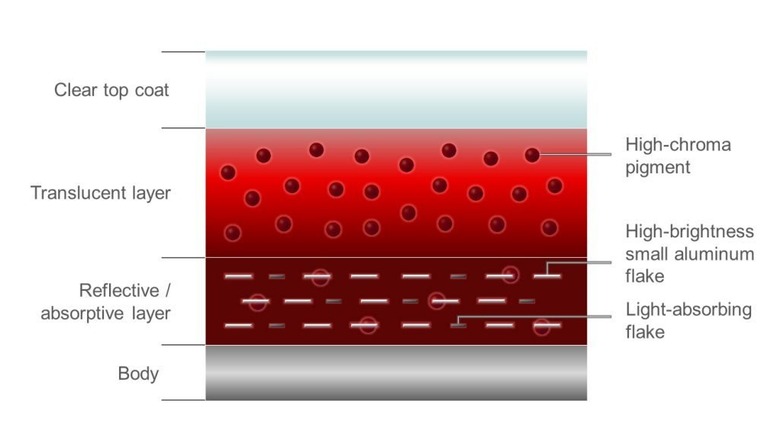
Soul Red Crystal isn't just a color; it's an optical illusion. Your average car paint is mostly a two-stage affair (beyond the primer): a layer of color and a clear coat on top. Mazda's approach is far more complex — a tri-coat process layered over a gray primer that manipulates light to create its signature look. It's essentially a mass-produced version of a classic candy-apple paint job.
The first layer, the reflective/absorptive coat, contains microscopic aluminum flakes that act like tiny mirrors, creating brilliant highlights. It also has light-absorbing flakes that produce deep, rich shadows, giving the car's body lines a dramatic contrast.
Next comes the translucent coat, a semi-transparent layer with a high-chroma red pigment. Light passes through this red layer, bounces off the metallic base beneath it, and reflects back to your eye, creating that "glowing from within" effect that makes the color seem 10 feet deep.
The final layer is a standard clear coat for gloss and protection. The result is a finish with 50% more depth and 20% greater color saturation than the original Soul Red.
Mazda manages all this with its eco-friendly, water-based Aqua-tech system, which consolidates the process to reduce energy consumption and emissions of volatile organic compounds. It's a flex of engineering that shows you don't have to destroy the world to make it beautiful.
The fragile truth

Now for the part that every owner with a Mazda this color either knows is coming, or will find out soon enough. Soul Red Crystal can be, to put it charitably, fragile. The internet is filled with anecdotal evidence from owners who swear the paint chips if you look at it the wrong way. And when a chip does happen, it may reveal the gray primer underneath, making the blemish stand out like a sore thumb.
Repairing it is no simple task, either. Matching the perfect color for a painter is already magic. It's a meticulous, multi-stage process that requires test panels and blending into adjacent panels to trick the eye into a perfect match. A seemingly small bump can easily turn into a multi-thousand-dollar repair bill. It's no wonder so many owners consider a paint protection film.
But here's the thing: nobody cares. The hassle is the price of admission for something that feels alive in different light — it's deeper than anything on TV these days. It shows Mazda is willing to prioritize something truly exceptional, even if it's not the most pragmatic choice. This paint is a statement: Craftsmanship and emotion still matter, even if the craftsmanship is done by robots.