

6 Car Mods That Hurt Resale Value (And 5 That Improve It)
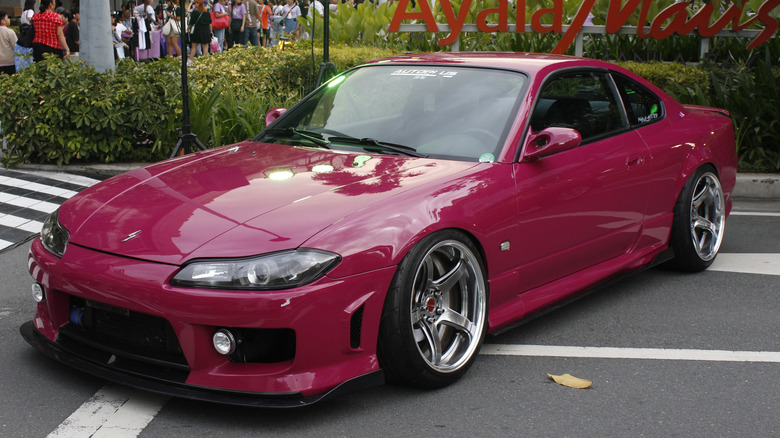
Immediately upon acquiring a new car, you may hear this common phrase from your peers: "What are you going to do to it?" For enthusiasts, especially, there is always some pressure to modify your car. It may be as simple as lowering the suspension and installing some bolt-ons, but as we all know, it can snowball into a caged, straight-cut geared mess shockingly fast.
However, if it's resale value you're concerned about, the question then becomes to what degree should you modify your car to ensure a good payout? Funny enough, in most cases the answer is not at all, as many of your favorite car mods are all bound to hurt your car's value.
However, there is a gray area. As we'll explore in this article, there are some key common themes strung through this discussion, including functional versus non-functional mods and DIY jobs versus professional ones, all of which can affect your resale value. So, if this dilemma describes you and your car, here are six mods that'll hurt your car's value, and five that could actually increase it.
Decreases value — Aftermarket exhausts
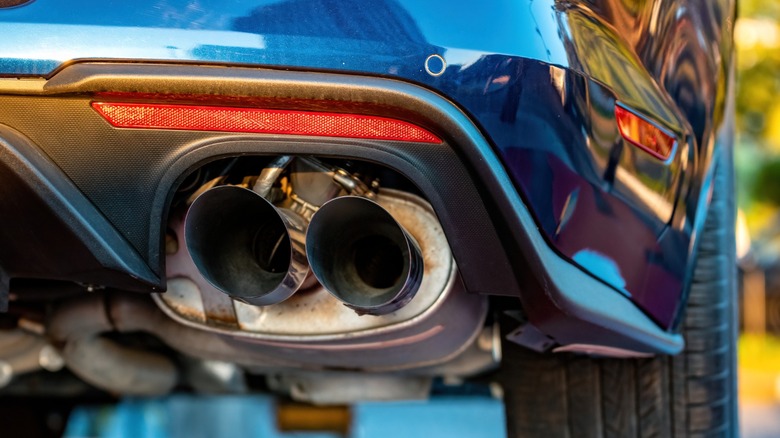
Believe it or not, your cheap exhaust sounds like garbage, and most people aren't spending thousands on a premium exhaust system that both improves performance and enhances the sonic nuances of the engine. Heck, even then, it doesn't always increase your car's value.
Let's take a look at two extremely similar cars to compare. This Mystic Blue 2003 BMW M3 Convertible has just 10,000 miles, no accidents, and one of its only performance modifications is a (not cheap) Dinan exhaust system. On the other side, we have another 2003 BMW M3 Convertible, this time painted in Jet Black with nearly 54,000 miles, no accidents, and no modifications whatsoever. The logical brain would say, with certainty, that the 10,000-mile example would sell for more. Surprisingly, that is not the case.
The higher-mileage M3 Convertible sold for $39,250 — over $4,000 more than the extremely well-kept Mystic Blue car. Both were one-owner, six-speed manual, low-mileage examples, but the modifications (or lack thereof) made the difference.
Unless your buyer wants the exact modifications you have already done, a clean canvas is always more enticing. As a helpful rule of thumb, if you are dead set on installing an aftermarket exhaust on a car that is mostly stock, keep the original system intact and include it in the deal, or revert the car back to stock before selling. As you'll continue to see, mods generally don't increase value, and can make a car harder to sell.
Decreases value — Custom paint and wraps
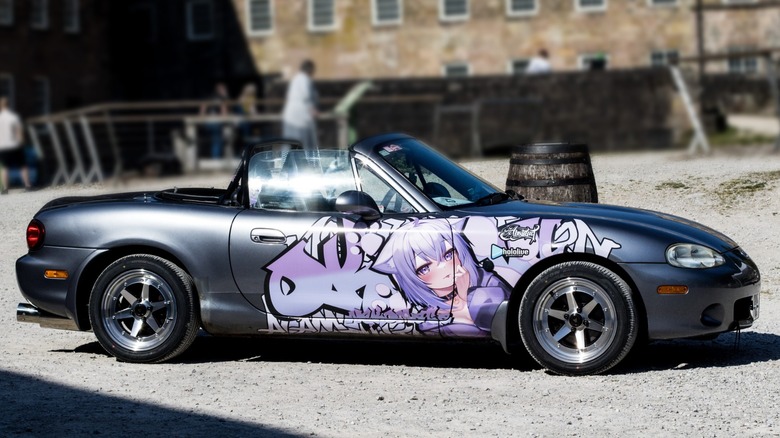
Paint originality is a major point of value for many cars. That's why a genuine Shelby Cobra that has some surface rust and patina on its original paint will always be worth more than one that's been redone. But of course, it depends. If you're trying to flip a base model 1995 Honda Civic that's peeling and fading, painting it will likely increase its value. However, in most cases, cars with original paint will fetch higher prices.
On classic cars, especially, paint is a key point of contention. Their age and likelihood of having cosmetic issues are higher, and when a car is repainted without extensive prior service documentation, that paint job becomes a big question mark of "what are they hiding under there?" Even if you aren't concealing any Bondo or frame rust, it can hurt your resale value.
One could also apply this rule to decals and stickers. If there's one rule about looks, it's that they're subjective, and if your buyer wants a "Limp Bizkit Woodstock 1999" bumper sticker on their car, you can be sure they'll do it themselves.
Decreases value — Non-functional aero and bodykits
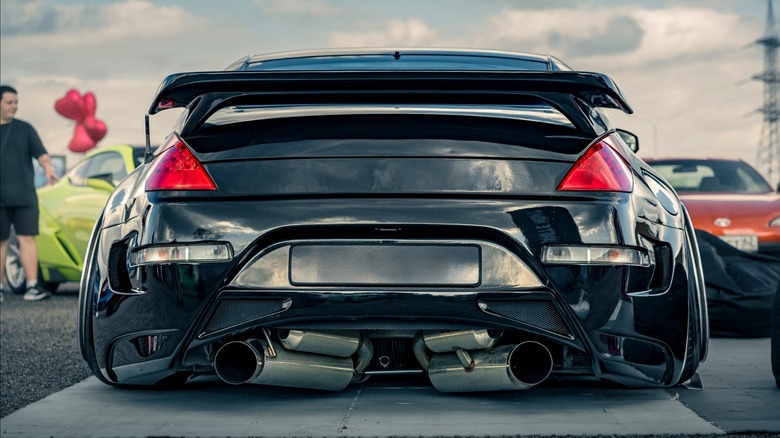
Here's where the debate about function becomes more relevant. That satin pink-wrapped Subaru BRZ with -20 degrees of camber, an outrageous body kit, and a GT racecar wing you've seen on your local motorway probably isn't being used at the track — and likely has a stock engine under the hood. Unless your car is a purpose-built track car and needs a wider front and rear track for additional downforce, an unmodified version of the same car will almost always sell for more cash.
Let's compare. Here is a 2003 Infiniti G35 wrapped in Racing Yellow, with a twin-turbo kit, a motorsport-style front bumper, a carbon fiber hood, and a giant carbon rear wing, among dozens of other expensive mods. Next, we have this Brilliant Silver 2003 Infiniti G35, completely stock minus a window tint and a cold-air intake. Both cars had around 44,000 miles at the time of sale and are accident-free, but, as you've probably guessed, the one without the splitter and wing sold for more.
The final bidding price of the silver and yellow cars was $9,700 and $7,700, respectively, giving the silver example about a 20% higher value. Even though the heavily modified G35 likely made more power and had thousands of dollars worth of parts installed, the clean slate came out on top.
Decreases value — Custom engine modifications
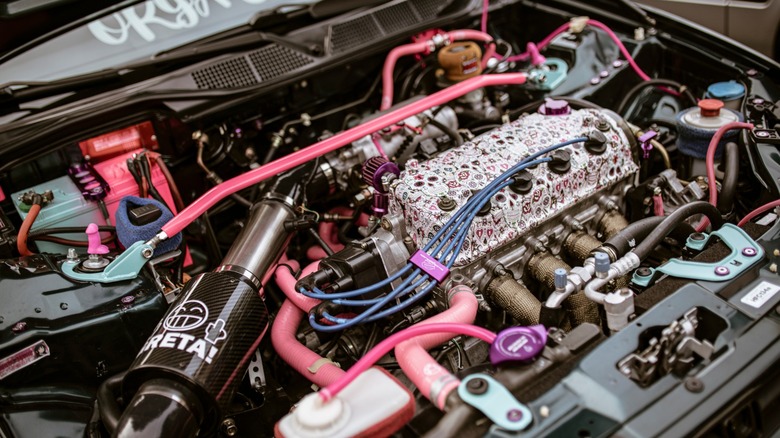
Although adding power to your car should be the last mod you do, it's usually the first thing on an enthusiast's mind. Those cheap eBay turbo kits and second-hand speed parts are alluring, but they might just end up making your car slower. If you think you might eventually sell your car, we suggest you play the long game and refrain from custom engine mods. Even some of the largest aftermarket depots themselves admit that modifications in general will not increase value.
Let's take a look at some examples. In front of you are two extremely similar F30 BMW 3-Series models, both finished in Mineral Grey Metallic with six-speed manual transmissions, no accidents, and around 75,000 miles at the time of sale. This 2014 BMW 335i has only a few modifications, including an aftermarket intercooler, charge pipes, and a cold-air intake, while this comparable 2014 BMW 335i xDrive is unmodified, minus a trailer hitch receiver. By now, you get where this is going. The one with no engine mods (besides a peculiar trailer hitch, for some reason) sold for more — $17,250 versus $12,800.
Even just three simple bolt-on engine parts were enough to devalue the rear-drive example by nearly $5,000 when compared to its unmodified counterpart.
Decreases value — Custom interior modifications
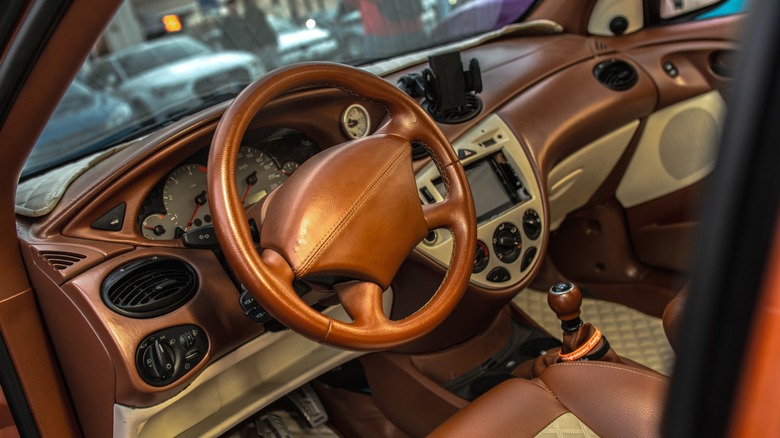
Sometimes, otherwise great cars can have atrocious interiors, and upgrading to a better-than-factory setup can be a major positive if done well. However, mods like painted interior accents, fake carbon fiber, gaudy floor mats, and furry seat covers will push more buyers away than you attract. The interior is always the place where a driver spends the most time, and if you've modified it to your personal style, that could limit the pool of buyers who will be interested.
As for presenting specific examples of this in practice, that's the tough part. Most cars with customized interiors also have other extensive mods done on the exterior and in the engine bay, which makes finding a comparison that isolates the interior mods that much harder. Regardless, cosmetic changes (especially drastic ones) can be a big turn-off for potential buyers.
However, all of our suggestions are just that — suggestions. Money isn't the reason why we drive and enjoy cars, and by all means, we encourage every enthusiast to customize to their heart's content.
Decreases value — Installing non-OEM parts
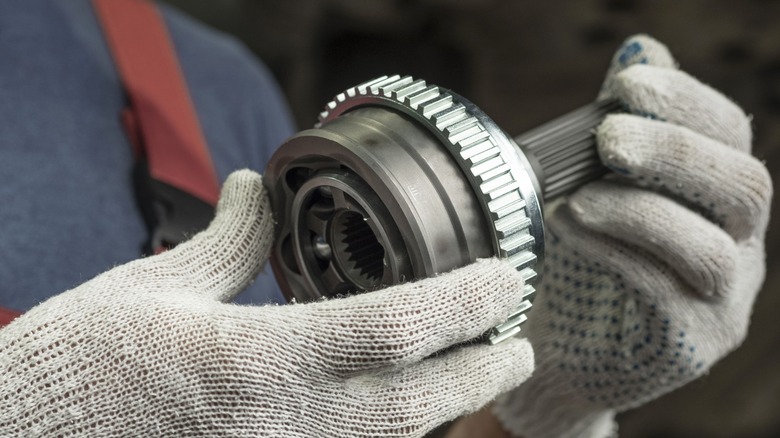
Not every car, especially older and rarer examples, will have the option for reproduction parts from the manufacturer or original suppliers. However, if you have the option to use them and choose not to, you're likely lowering the price you can get for your car down the road. According to J.D. Power, in general, a car that uses OEM parts for maintenance and repairs will retain higher resale values. Using genuine parts not only maintains your car's originality and reliability, but also tells potential buyers that you took care of your car.
Aside from resale value, choosing OEM parts has benefits in several other areas. In the event of an accident, cars that used OEM parts can retain more of their pre-accident value, sometimes up to 20% above that of a car with aftermarket parts. Additionally, using OEM parts after major repairs can keep your warranty intact, whereas aftermarket parts can void it altogether.
There are multiple caveats to this particular matter, however. If you couldn't care less about resale value and want to support aftermarket companies, or are building a track car that you intended to push to the limits, all power to you. Still, we'd be remiss if we didn't acknowledge the primary reason why folks use aftermarket parts versus OEM ones — cost. For those who have a limited budget, keeping their car on the road by any means necessary is something we'll never argue against.
Increases value — Upgraded tires
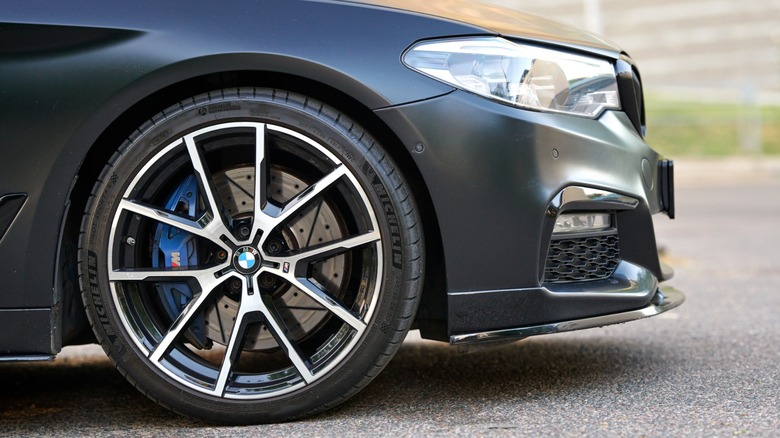
The progression of tire quality and performance is among the largest technological advancements in the automotive industry, and they are designed to be replaced over time. Of course, there are ways to get more miles out of your tires, but that's more about maintenance than modification — we're more interested in how upgrading your tires can help increase value.
Let's see this in action. First up is this Guards Red 2005 Porsche 911 Carrera Coupe, with 58,000 miles, few modifications, a six-speed manual, no accidents, and a set of Kumho Ecsta PS91 tires mounted on its wheels. It sold for $41,000 in June 2024.
Compare that to another 2005 Porsche 911 Carrera Coupe, this one also with few modifications, slightly higher mileage of 68,000, and a six-speed manual (both cars are accident-free). The rubber on this car, however, is a set of Michelin Pilot Sport 4S tires, a product considered world-class in terms of daily driving performance. As such, this example sold for nearly $10,000 more than the car with Kumho tires ($50,900) in March 2024.
If you can't afford expensive Michelins, that's okay – simply replacing your tires within the recommended window can help maintain resale value as well. However, if you want to see that extra bang for your buck when you put your car on the market, getting a tire that significantly outperforms your car's stock tires is a great way to maximize profits.
Increases value — High-quality sound systems
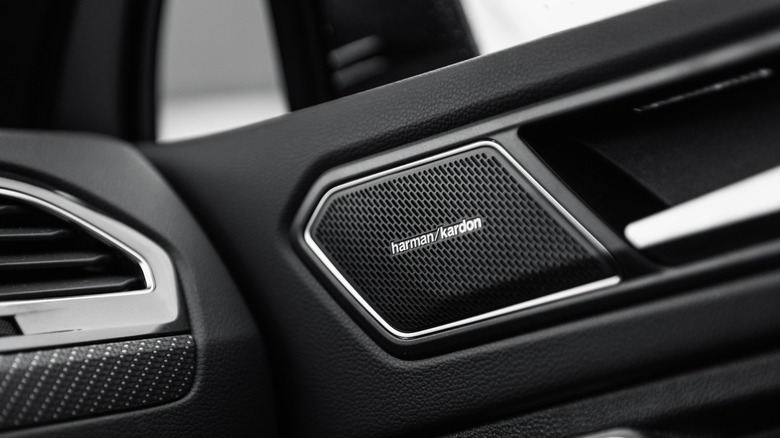
While there will always be certain cars that retain more value when completely unmodified, if your ride isn't particularly rare and didn't come from the factory with a high-quality stereo, upgrading the sound system can help raise your car's value. As mentioned earlier, the interior of a car is a highly personal space, and for many folks, music is an inherent part of driving.
Enhancing that aspect of the daily commute could be a big selling point for your potential buyers when compared to similar cars with broken or poor-quality stereos. This might not be the most important factor for enthusiasts who would rather hear their engine spin, but it's hard to find a driver who doesn't appreciate a quality sound system.
It must be said, however, that having a new sound system installed isn't a simple science if resale value is your priority. There are a few things you should avoid, such as subwoofers that take up trunk space, speakers that don't fit in the stock housings, head units that don't match the character of the interior, and any exposed wiring. If you can upgrade your system without running into any of these issues, you'll upgrade the experience without hindering the proper flow of the interior.
Increases value — Performance mods from reputable tuners
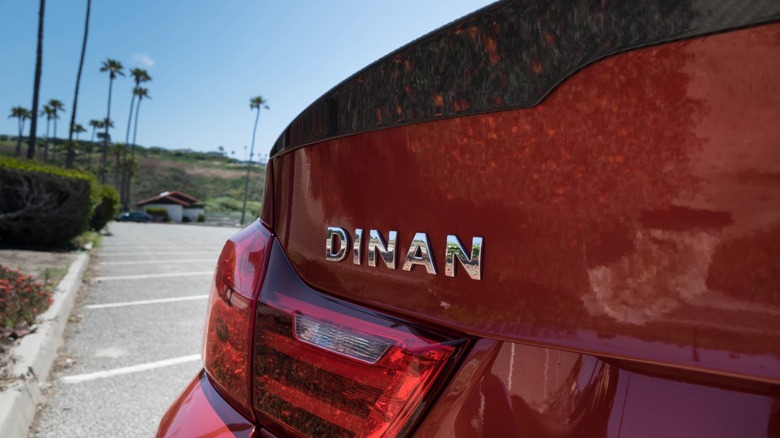
We've discussed how DIY or random assortments of engine mods hurt value, but not all parts (or their purveyors) are created equal. If you decide to mod your car, and if you can afford it, purchasing parts from a reputable tuner business can pay dividends. In the ideal scenario, you'll want to work with parts and tuners that have historic ties to your car's brand — think Roush for Mustangs, Dinan for BMWs, or ABT Sportsline for Audi and Volkswagen. These are companies that have semi-official relationships with the manufacturers, allowing them to produce some of the highest quality and most reliable performance parts available.
Take this Jet Black 2000 BMW M5 that went up for auction in July 2025 with a full Dinan S3 package — including a supercharger kit, ECU, full exhaust, carbon-fiber intake, and more — which boosts the 4.9-liter V8's output to a claimed 621 horsepower. This six-speed manual transmission with 88,000 miles sold for $62,555. Comparatively, we have this clean Silverstone Metallic 2000 BMW M5 equipped with a six-speed manual, and similar mileage to our first M5 at around 71,000. This mostly unmodified example sold for a solid $33,250 in September 2025.
The lesson? If your mods are from reputable sources, and even better, increase your car's rarity, huge gains in resale value are well within reach.
Increases value — Manual swaps on factory automatic cars
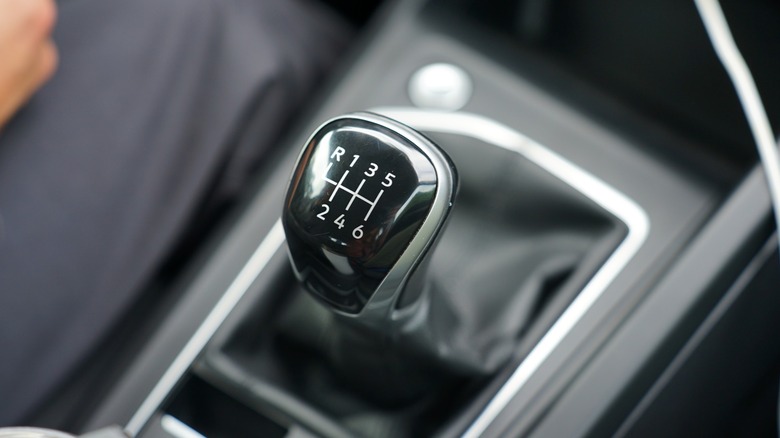
In many cases, a car fitted with a manual transmission becomes more desirable (and valuable) to deep-pocketed enthusiasts than its automatic counterpart. There is, however, a not-so-simple solution to this — a manual swap. If your car was cursed from the factory with the automatic transmission option, a professionally done conversion can transform the character of your car and its value.
Even better, if your particular car was never even offered with a manual, and there are reputable aftermarket kits for a swap, the rarity of your example rises exponentially. It's not cheap, though, don't get us wrong, but the value increase of putting a stick in your car could potentially cover the parts and labor costs.
One of the best real-world examples of the manual versus automatic car market is the Ferrari 360 Modena. While factory installed manuals were initially available, swaps have become quite popular among those who weren't willing to shell out the extra initial cash for a factory gated manual car. We've found two examples (this 1999 Ferrari 360 Modena with a factory F1 automatic, and this 1999 Ferrari 360 Modena with a six-speed manual conversion), both of which are 1999 model year cars and have less than 20,000 miles with no accidents.
Surprise, the manual-swapped 360 with 3,000 more miles sold for $14,000 more than the untouched automatic. In the words of our own Bradley Brownell –manual swap your Ferrari, you cowards.
Increases value — Fixing known issues from the factory
Even the best automotive engineers in the world make mistakes and compromises. There are thousands of parts on any single automobile, and oversights are bound to happen, whether they be the fault of bad engineering or excessive cost-cutting. As we're sure you're aware, the 996-generation Porsche 911 is one of the many poster boys for the poor factory design club.
The 996's flat-six used a part called the IMS bearing, which essentially facilitated the timing between the crank and camshafts, and well — it failed. A lot. This led to valves hitting pistons, sending metal through the engine and a catastrophic repair bill to your mailbox. As one could imagine, the IMS issue is a common selling point for 996s on the second-hand market, and it can have some dramatic results.
This black 2002 Porsche 911 Carrera Coupe has 69,000 miles, no accidents, and a six-speed manual, but has not had the IMS bearing replaced. Next, we have this Arctic Silver Metallic 2002 Porsche 911 Carrera Coupe, also mostly unmodified with a six-speed manual, and 45,000 miles, but with an IMS service done in 2014. It sold for $3,000 more than the black 996 despite having reported damage from a front-end collision.
Fixing design failures like these doesn't have to be as major, though. It could be as simple as replacing faulty hinges or swapping plastic piping with a fully metal system. Either way, buyers will notice, and peace of mind always pays.