

Here's How A Bad PCV Can Ruin Your Engine
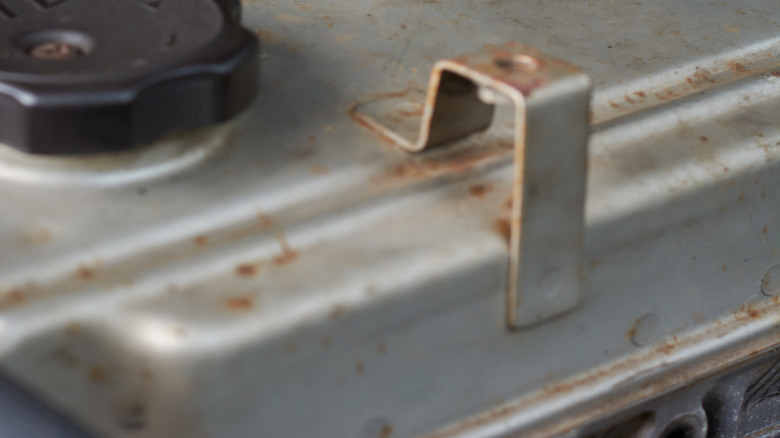
We don't mean to be the harbingers of doom, but it's unwise to keep driving if your car's engine has a malfunctioning positive crankcase ventilation (PCV) system, particularly a bad PCV valve. Continually doing so not only takes the fun out of driving, but it could also lead to catastrophic engine damage that's sure to drain your wallet. The PCV system has two main functions: It reduces harmful emissions by re-routing blow-by gases to the intake manifold, and it helps maintain a healthy-running motor by reducing pressure buildup in the crankcase.
The PCV in a modern car consists of hoses, ventilation passages, and a one-way PCV valve. Leaking hoses can cause vacuum leaks and an engine that won't start, but a failing or stuck PCV valve can introduce a host of symptoms. Whistling or hissing sounds could mean the PCV valve is stuck in the closed position, and the warning signs may include an illuminated check engine light, oil leaks, and poor fuel economy. Meanwhile, black exhaust smoke, hard starting, rough idling, or persistent misfires could mean the PCV valve is stuck in the open position.
Whatever the case, a stuck PCV valve is bad news for your engine. When it goes bad, it won't damage the motor outright. But if neglected long enough, a bad PCV can lead to sludge formation and oil dilution. And when the oil gets diluted with fuel and contaminants from unburned blow-by gases, it can cause excess friction and damage the bearings, cylinder liners, and piston rings due to inadequate viscosity. It all sounds expensive, but it doesn't stop there. It can also clog or damage the catalytic converters, which can cost a small fortune to replace.
How big problems can come from a small PCV valve
Most car owners may not even be aware of the PCV valve, and we can't blame them. In most cases, it only makes itself known when something goes wrong, and it does so in huge and noticeable ways. If the misfires and sputtering aren't enough to drive you mad, a bad PCV valve is one of the most common causes of oil leaks. When fuel vapors dilute the oil in the crankcase, the engine may burn oil and spew out more smoke or spray dirty oil all over the air filter. When the pressure inside the crankcase gets high enough, it can lead to oil leaks via damaged gaskets and seals. That's why we highly recommend that you get a faulty PCV valve diagnosed and replaced immediately to avoid expensive and imminent engine repairs.
It's good practice to inspect, clean, or replace the PCV valve every 20,000 to 50,000 miles. Some makes and models may include the PCV valve as part of scheduled maintenance, so it's best to read the owner's manual. You can clean it using carb cleaner or a degreasing spray, but it's better to replace it if the valve has severe contamination or rust. Replacing it is often the better option since a new PCV valve only costs $2 to $15, depending on your vehicle. Most cars with accessible PCV systems are good candidates for a DIY fix, but a mechanic will have a better idea of how to deal with it on vehicles with hard-to-access PCV valves.