

How Automatic Tire Inflation Systems Keep Semi Trucks Rolling Safely
While semi trucks and their trailers are obviously massive and heavy, it may not be apparent to everyone just how much more bulk these road goliaths possess when compared to other vehicles. Per U.S. law, the most a big rig and loaded trailer can legally weigh is 80,000 pounds. With so much heft, a significant strain is placed on all 18 wheels, making tire pressure a paramount concern for truckers.
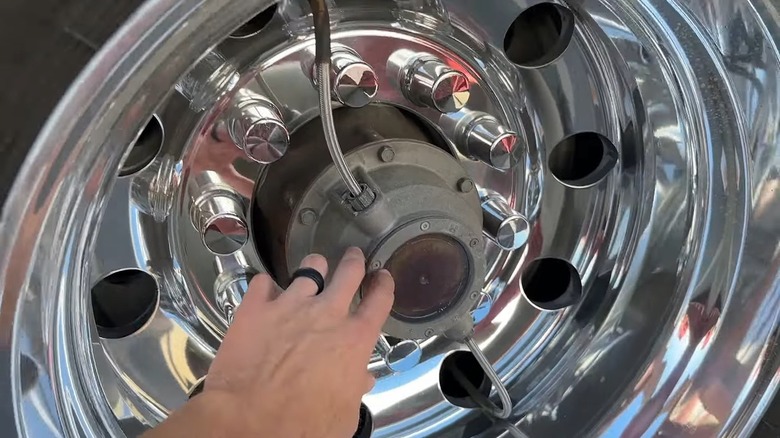
While some semi-truck drivers still thump their tires to check pressure, there are more advanced systems available that not only monitor tire pressure, but also automatically adjust it for those tires under the trailer. For instance, the Hendrickson TIREMAAX PRO uses a mechanical controller and incorporates unique valves into the trailer's hubcaps, which connect the tires to the trailer's air supply. This mechanical system not only adds air in low pressure scenarios and reduces pressure in overinflated tires, but it can also equalize the pressure across all the tires on the same axle.
What about the tires on the tractor, and what other advantages do these systems offer?
While automatic tire inflation systems have been around for more than 20 years, they only applied to tires on the trailer. But in recent years, some companies have been hard at work developing tire management technology for tractors as well. For instance, the halo system by Aperia Technologies utilizes a rotary pump that generates air pressure using the rotation of the wheels. However, while this product can add air, it isn't able to reduce overinflation.
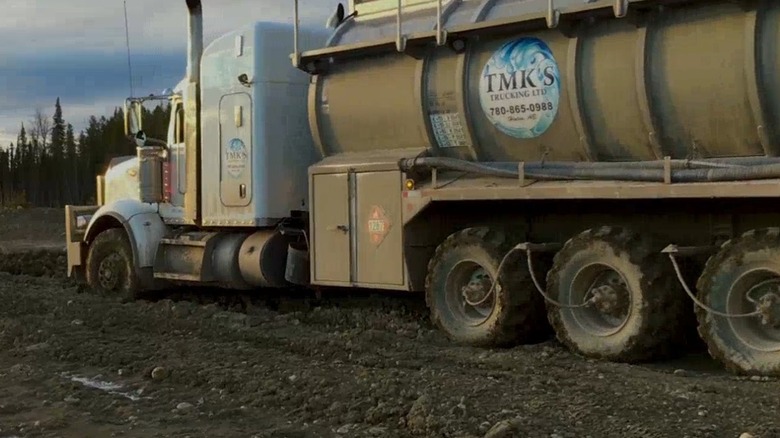
Although underinflation is usually a bad thing, it can come in handy in certain scenarios where traction is critical. Semi trucks are usually spotted along U.S. highways. However, in certain industrial applications, like oil and gas transport, mining, and logging, these large vehicles need to navigate on unpaved, rugged terrain. Some available systems, like the TIREBOSS Tire Pressure Control system, allow the driver to reduce the tire air pressure for an enhanced tread footprint. Increased contact between the rubber and the ground enables these trucks to get out in remote areas without getting stuck and bringing progress to a halt.
Why automatic tire inflation systems matter
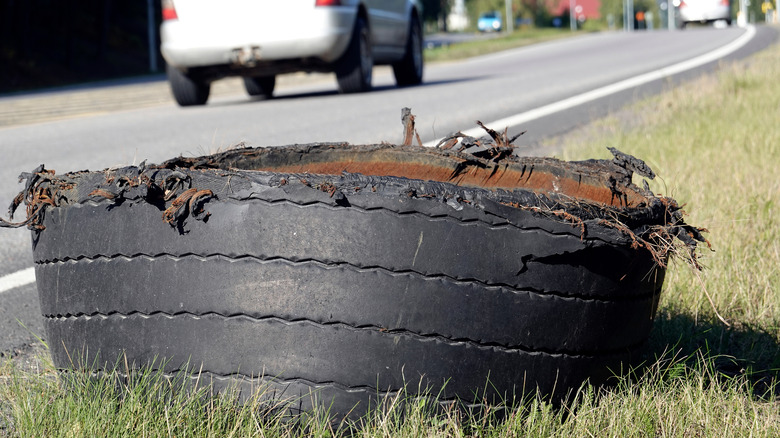
While tire pressure monitoring systems can help identify potential issues, blowouts still occur regularly — otherwise, you wouldn't see those gnarled rolls of semi tread alongside the highway. While fuel efficiency is key in the transport business, safety is also a top priority. When semi tires experience a blowout, it can be dangerous. A blown steering tire can suddenly cause the truck to pull to one side and has led to deadly highway crashes. Even when stationary, a blowout from a large tire can be fatal to anyone unlucky enough to be nearby. In fact, tire shops often employ safety cage devices specifically for semi tires to protect technicians from the effects of a blowout.
Tire pressure can not only be a safety concern, but it can also negatively impact vehicle handling and fuel economy. If the air pressure is too low, wear occurs more rapidly, stopping power is reduced, and performance is less efficient. If overinflated, tires can negatively affect a vehicle's ride. Furthermore, overinflated tires put more pressure on the very center of the tread, creating a distinct wear pattern and shortening the tires' lifespan. In addition, outside air temperature can also alter the pressure inside the tire, which can occur while enroute and even after checks have been made.