

How Long Does A Bottle Of Power Steering Fluid Last Once Opened?

There are three main types of power steering fluid. Many newer vehicles use synthetic power steering fluid, while many older cars need ATF or automatic transmission fluid. Mineral-based, non-synthetic power steering fluid is the third type and can be used in place of ATF for some cars. Whatever the case, fresh power steering fluid from the bottle should have a red, clear, amber, or pink color. If the fluid in the reservoir is dark, black, or has a foamy consistency, it's best to go ahead and change the fluid.
The same applies when adding fluid. Although your car's hydraulic steering is a closed-loop system, it might need a top off every once in a while. If you find yourself adding power steering fluid frequently, you may be dealing with leaks or worn seals. On a brighter note, power steering fluid has a longer shelf life than brake fluid (opened bottles of brake fluid only last for three to 12 months), but it all depends on the storage conditions and whether the fluid comes from a sealed or previously opened bottle.
An unopened and sealed bottle of power steering fluid can stay fresh for three to five years if left in a cool, dry place. However, the shelf life drops to two to three years if the bottle has been opened, and we're talking about a tightly-capped bottle stored out of direct heat or sunlight. Before pouring that old bottle of power steering fluid into your car's reservoir, check the contents to ensure that the fluid is fresh and hasn't started degrading. Do not use the fluid if it's dark, has a thicker consistency, or has a disgusting odor.
When to change the power steering fluid
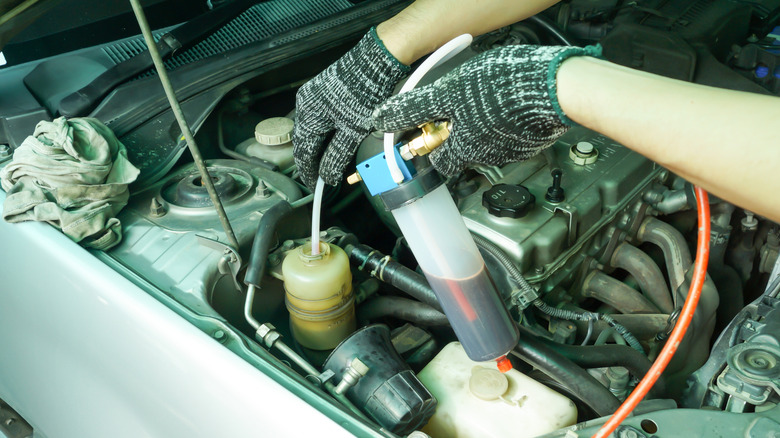
The debate about whether hydraulic steering is better than electric power steering (EPS) can go on and on among gearheads. However, EPS beats hydraulic systems in one area, thanks to its straightforward upkeep — EPS systems typically don't use power steering fluid, meaning there are fewer hoses and seals that can degrade and leak. On the flip side, hydraulic power steering offers the best and most precise driving feel, but it's not a set-and-forget system.
Fluid changes are necessary every 30,000 to 50,000 miles or every two to four years, but it won't hurt to check the power steering fluid in the reservoir periodically (preferably at every oil change) to ensure that the fluid is not discolored or burnt. You should also check the fluid level while you're at it. Driving with low fluid levels will introduce more heat and friction to the power steering mechanisms, causing early wear, tear, and, potentially, a huge repair bill. On the other hand, overfilling the power steering fluid reservoir can raise the operating pressure of the system and lead to spills and leaky hoses.
Diligent care and maintenance will keep the system tight as a drum. Symptoms like whining noises, tugging sensations, or stiff steering could all point to low fluid or a need to flush the system. Refer to your car's owner's manual to find out the factory recommendations for power steering maintenance, including the fluid type and service intervals.