

Can You Really Clean A Car Air Filter, Or Should You Always Replace It?
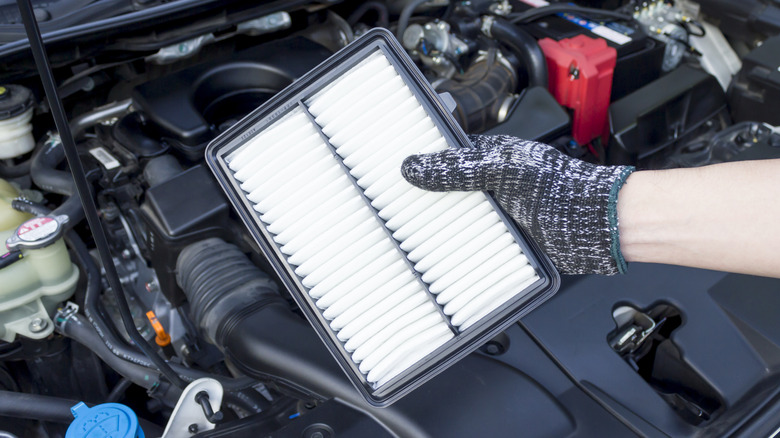
The answer to whether it's possible to clean your car's engine air filter depends on the type of filter in question. Most cars have disposable OEM paper filters that don't last for very long before getting clogged with dirt and restricting the air flow. Internal combustion engines are essentially huge air pumps, and they need clean air to combust effectively without gumming up the valves and damaging the pistons and cylinders with harmful debris.
However, you can clean reusable air filters. These products tend to be more expensive than standard OEM models and are often built by performance companies, like K&N.
As a general rule, replacing disposable OEM air filters every 12 months or 12,000 miles is critical for engine health. Attempting to clean paper air filters with soap and water can damage the fibers of the filtration media. Even a slight impairment could allow particles of dirt to enter the intake manifold, which is why paper air filters should be replaced instead of cleaned. On a lighter note, air filters are relatively affordable and easy to come by, with most costing $10 to $25 on average.
It's safe to clean reusable air filters
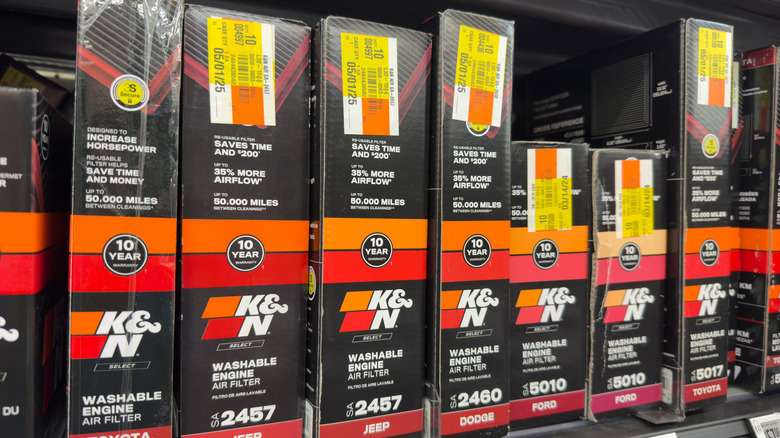
It's a different story if your car's engine has a reusable air filter, particularly from popular aftermarket brands such as K&N and AEM. Although they can cost four to five times as much as ordinary paper filters, reusable filters offer several benefits to offset the extra cost. They feature a more rugged construction owing to their reusable nature, and most use tougher cotton fibers or advanced synthetic media in multiple layers to withstand daily use, abuse, and periodic washings, all while still allowing for strong air flow.
Reusable filters typically require cleaning services every 50,000 miles, but your mileage can vary, and you should inspect the filters more frequently than that. If you drive in dusty or congested areas, the filter may become dirty at 25,000 miles. In some cases, the increased air flow can add horsepower, but take this with a grain of salt. If you really want to add power, upgrading to a cold air intake, adding less restrictive headers & mufflers, and purchasing an engine tune yields better results than swapping from a stock to a reusable air filter.
Cleaning a reusable air filter is as easy as spraying it with cleaner, rinsing it with water, letting it dry, and re-oiling the fibers if applicable. The downside is that some reusable filters require specialized cleaning and oiling kits, which can add to your expenses. Despite that, reusable air filters can save you money on filter replacements in the long run, and some brands even design their filters to last for the life of the vehicle.
Symptoms of a dirty air filter
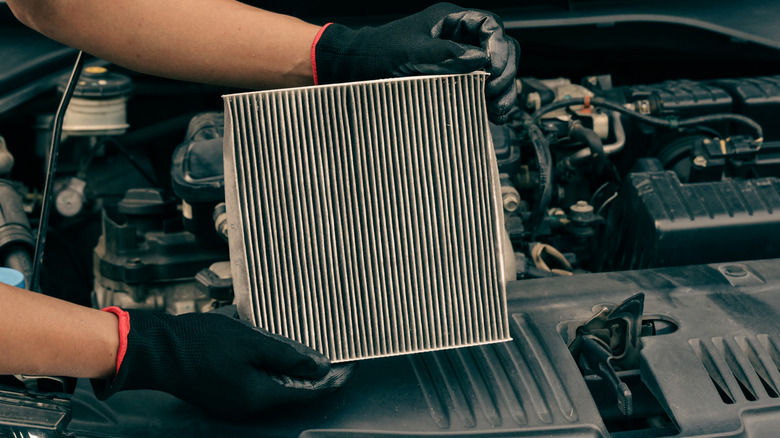
A modern car will come with replaceable air filters for the engine and inside the cabin (the cabin air filter helps keep the AC blowing cold and fresh). A dirty or severely clogged engine air filter can cause misfires, a pesky check engine light, dark smoke from the mufflers, mediocre performance, and poor fuel economy. In some cases, a clogged air filter can cause the engine to make strange noises or unusual sounds, signs that the motor is choking for air and is unable to breathe.
Meanwhile, a dirty cabin filter can get inundated with dirt, pollen, bugs, dried leaves, and other particles. Water contamination is another possibility that may cause mold, bacteria, and mildew growth within the system, causing an unpleasant and musty smell when turning on the AC. We highly recommend replacing the cabin filter at the same intervals as when cleaning or replacing the engine air filter. Additionally, you can purchase reusable cabin filters that feature the same increased longevity and durability. They're typically more expensive, but they're better for the environment while also offering superior filtration.