

What Are The Downsides Of All-Terrain Tires For Highway Driving?
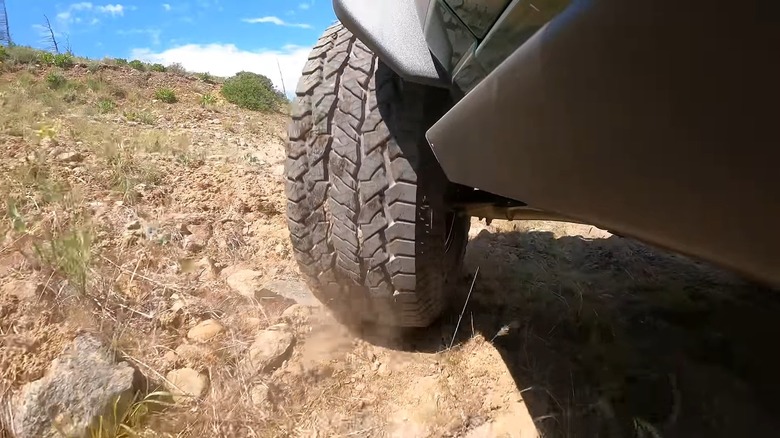
Different types of tires can significantly affect your car's performance on various surfaces. For example, all-terrain treads can offer advantages like enhanced durability, proficiency across various terrains, and improved grip off-road. In fact, here's how the best all-terrain tires compare. Unfortunately, all those positives can also come with some downsides, depending on the specific tire you choose.
While the bolder tread pattern of all-terrain tires is responsible for many of its benefits, those deeper treads can become a nuisance at faster speeds. On the highway, the larger gaps in the tire pattern can create additional road noise that is noticeably louder than standard models. However, the difference in sound between highway and all-terrain tires isn't always massive. One YouTuber performed a sound test to compare a set of highway tires to a set of all-terrain tires. While there were slight differences between the two, the comparison ultimately revealed that the off-road tires were about 1.5 decibels louder at highway speeds.
If some extra noise was all you had to worry about, it might not be a big deal. However, all-terrain tires can also negatively impact performance on paved surfaces. For instance, these meatier tires can reduce stopping power and reduce traction, especially when cornering. Luckily, there isn't just one all-terrain tire, but a range of choices that favor different surfaces.
Your driving habits can help you narrow down tire options
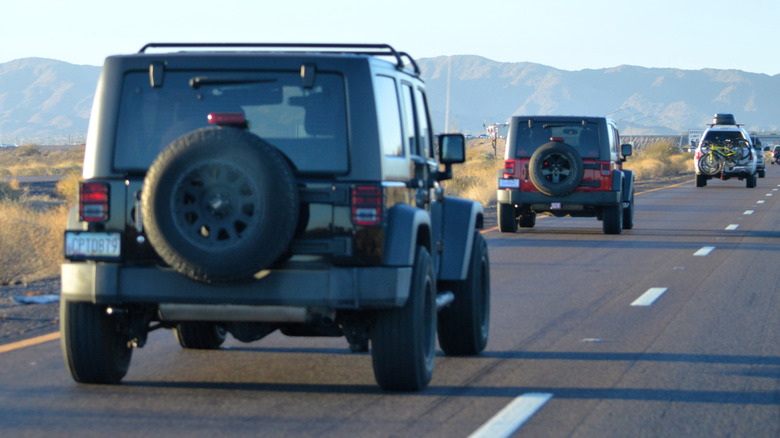
Unfortunately, there isn't just one type of tire that meets everyone's needs across the board. To help ease some of the confusion, here's a quick explanation of the different types of tires. There are enough variations that you should be able to find a set of tires that work for your vehicle. In fact, even within the all-terrain tire category, there are options that lean more toward highway performance, while others favor rugged surfaces.
For example, if you plan to spend only a small percentage of your time behind the wheel in the backcountry, you might opt for an on-road all-terrain tire. You can spot the difference in these tires' tread patterns, as the blocks will be more closely spaced, providing a smoother experience on the highway. This variant still offers some rugged capability, but it won't subject you to the same degree of performance loss on paved surfaces.
However, if you spend half your time on rough trails that include sand, snow, or other obstacles, a more aggressive all-terrain tire might be the better choice. These tires are often thicker, providing additional protection against the rigors of an off-road environment. They can also feature a deeper and more spread-out tread pattern, ideal for strong grip when digging into the trail. Also, if you live in somewhere that experience significant snowfall, you should look for a Three-Peak Mountain Snowflake (3PMSF) icon on the sidewall of the tire. This indicates that the product has undergone and passed a traction test in the snow.