

Is AWD Or 4WD Better For Winter Driving?
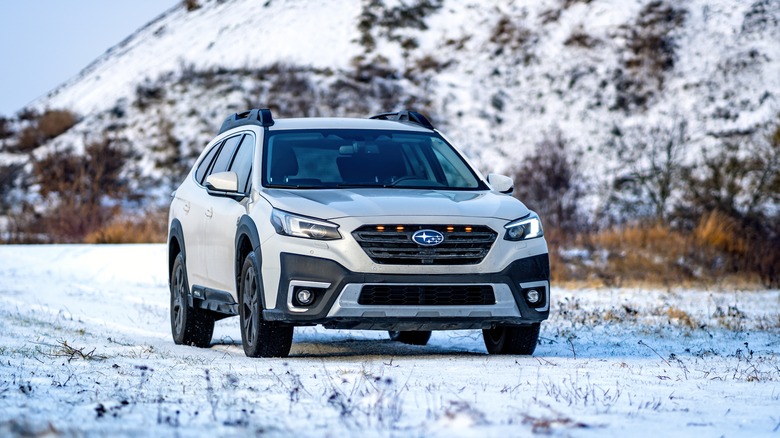
Car buyers typically ask for safety advice during winter storms about choosing between all-wheel drive (AWD) and four-wheel drive (4WD). The two concepts appear to share common characteristics at first glance, but in reality, the operation of each system differs significantly from the other. AWD constantly monitors traction and automatically adjusts how much power goes to the front or rear wheels. Because the system can shuffle torque seamlessly, AWD vehicles are comfortable to drive in normal conditions and only show their advantage when the pavement turns wet or snow-packed.
4WD, also called 4x4, on the other hand, is part-time by design. It's not meant to be left on all the time. Instead, the driver engages it when extra traction is needed, such as on an unplowed road or when powering through a drift. Locking the front and rear driveshafts together ensures torque is split evenly, but that only helps when the surface is loose enough for tires to slip.
How AWD keeps you moving in snow and ice
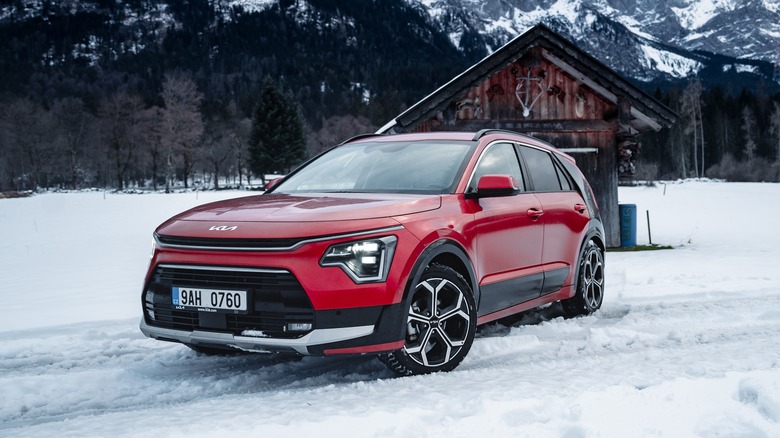
AWD works quietly in the background, which is part of its appeal. Unlike 4WD, it doesn't require the driver to flip a switch or yank a lever. Sensors monitor traction constantly and decide how to distribute torque across the axles. In normal driving, most AWD systems send the majority of power to either the front or rear wheels for efficiency. The instant slip is detected, power shifts to the wheels with grip.
AWD systems enable independent wheel rotation, which prevents the wheel binding and bouncing that makes 4WD vehicles hard to control on paved roads. The system allows an AWD crossover to drive through icy intersections and snowy highways without any need for driver assistance. In high-performance cars, it provides improved launch performance and cornering stability through its ability to distribute torque precisely. The same principle functions during winter months, but at lower speeds.
When 4WD becomes the smarter choice
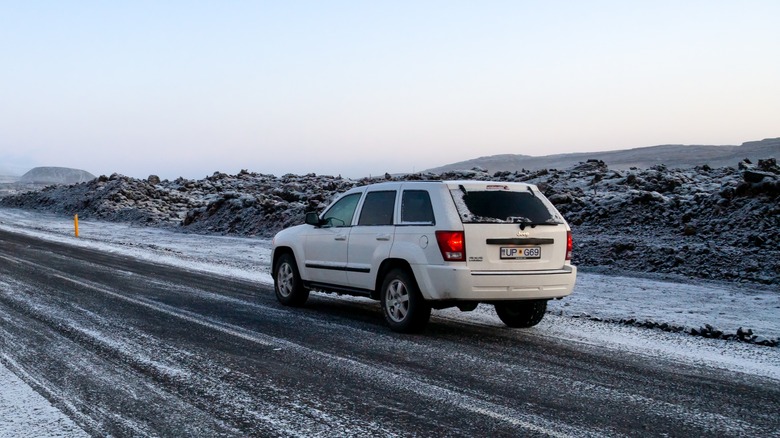
AWD handles most winter driving needs, but there are conditions where 4WD proves its worth. A traditional 4WD system locks the front and rear driveshafts together. That means torque is split evenly between axles, ensuring that at least one wheel in the front and one wheel in the back keep spinning no matter what. However, that capability comes with trade-offs, because higher cost and lower fuel economy are part of the package.
The biggest limitation is how 4WD behaves on pavement. Because the front and rear axles are locked, turning can cause tires to scrub or hop, and driveline binding can occur. This is why 4WD is often referred to as "part-time." Drivers are expected to use it only when conditions demand. For those who live where plows are slow or snowstorms pile up quickly, 4WD provides a margin of safety AWD can't always match.
Why winter tires still matter most
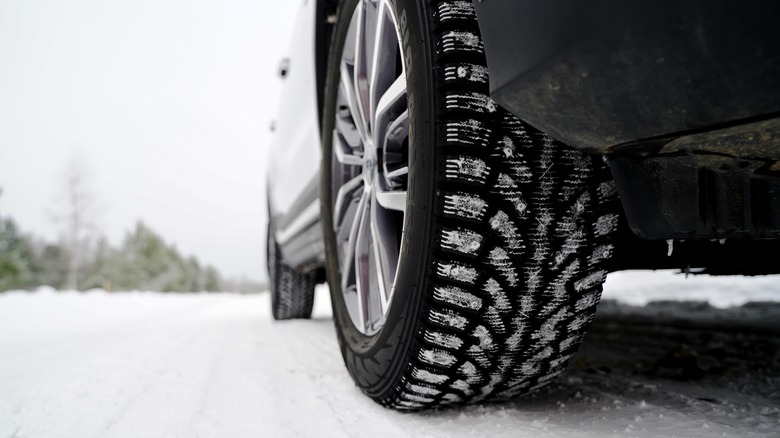
There's one detail often overlooked in the AWD vs. 4WD debate: tires. Both systems help you accelerate in slick conditions, but neither improves braking or cornering on ice. Stopping and turning depend entirely on tire grip. That's where winter tires come in. They use softer rubber compounds that stay flexible in freezing temperatures and tread patterns designed to dig into snow and channel away slush.
4WD can help you blast through an unplowed road or get out of deep mud, but if you need to stop suddenly, locked axles won't change how quickly you slide on ice. In fact, the extra weight of some 4WD systems can increase stopping distances. This is why tire choice matters more than drivetrain in winter safety.
Some drivers assume AWD makes winter tires unnecessary, but that's a dangerous misconception. AWD and 4WD only manage where engine power goes. Tires determine whether that power actually transfers to the road.
Choosing the right setup
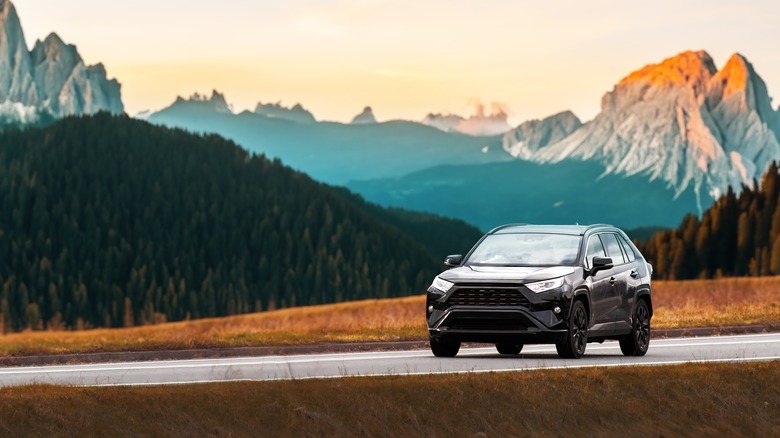
For city and suburban drivers on plowed roads, AWD is more than enough when paired with winter tires. It works safely on pavement and doesn't carry the fuel economy penalty of heavier 4WD systems. For those who live in rural areas or need to tow in snowy conditions, 4WD is the more capable choice. Its low-range gearing and equal torque distribution provide the brute force needed to get through the worst scenarios.
Some vehicles combine these systems through automatic AWD operation with 4WD locking features for particular driving conditions. The Mercedes G-Class, along with other luxury SUVs, implements this system, which enables drivers to handle regular driving and harsh weather situations. The product offers multiple functions, but its high price point makes it less attractive.
Even the best-equipped vehicles still need caution from the driver. If you're shopping, think less about which system is "better" in theory and more about which system fits your lifestyle. AWD makes sense for most drivers, while 4WD is the right call for those who regularly face conditions AWD can't handle. Either way, pairing it with winter tires is non-negotiable.