

When The Battery Light Comes On, How Long Is It Safe To Keep Driving?
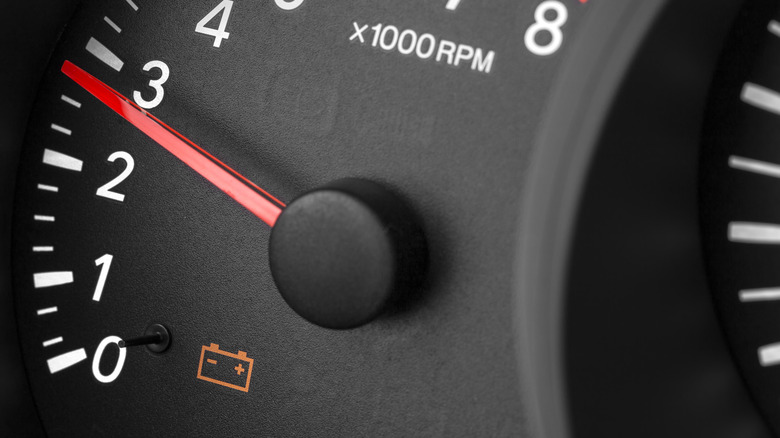
Consider yourself pressed for time if the battery warning light turns on while you're driving. The red or amber light generally means one of two things: Either your 12-volt battery is weak and on the verge of failing or your car's alternator is toast. A bad alternator is the most likely cause of an illuminated battery light, and this means you don't have much time before the vehicle shuts down completely and leaves you stranded. On average, you can continue driving for about 30 minutes to an hour with a lit battery light, but the actual time depends on the condition of your car's 12-volt battery.
You see, the alternator recharges the battery and supplies power to electrical accessories like the power windows, headlights, infotainment system, air conditioning, and heated seats. It generates juice by converting the crankshaft's mechanical energy into electricity via a serpentine belt connected to the alternator's pulley. As the belt rotates the alternator's pulley, it generates an alternating current. An internal rectifier then converts that alternating current into direct current to recharge the battery and power vehicle electronics.
The alternator is a robust unit and could outlive the factory warranty. However, intense heat, excessive wear, and water damage can shorten its lifespan. It's normal for the battery light to illuminate briefly when turning the key and starting the engine. But if the light remains on after the engine warms up, cancel your plans and bring the car in for service ASAP. If your alternator fails while driving, the 12-volt battery will be your car's only source of electricity, which means time is not something you can afford to waste.
What are the symptoms of a bad alternator?

Besides a battery warning light, a failing alternator can display a few other symptoms. These symptoms include dim headlights, a flickering instrument cluster, unresponsive electrical accessories, whining or grinding noises from under the hood, hard starting, and a smell of burning rubber or scorched wiring. The rubbery smell could be due to a snapped, misaligned, or poorly tensioned serpentine belt, making it unable to spin the alternator's pully to produce electricity.
A typical alternator consists of many parts, such as the rotor, pulley, stator, rectifier, and voltage regulator. Any weak point can cause the alternator to fail and trigger the battery warning light. Unfortunately, alternators are expensive and replacing one can cost between $750 and $850. The alternator is typically maintenance-free and doesn't require fluid changes or adjustments. However, there are things you can do to make it last as long as possible.
That includes keeping the alternator dry and avoiding water splashes or fluid contamination. Periodic inspections of the drive belts and pulley bearings are also essential for long-term operation. Watch out for rattling or grinding noises coming from the alternator, which are classic symptoms of worn-out bearings. Meanwhile, screeching noises when starting the vehicle or when driving could mean a belt replacement is in the cards.
What to do if the battery light turns on while driving
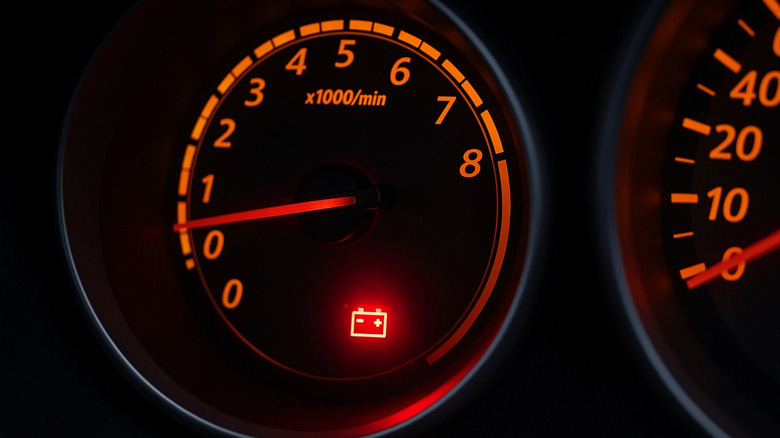
Since time is critical when the battery light turns on, your best recourse is to continue driving and hope that the battery has enough power to take you home or to the nearest service center. The least you can do is try to minimize the electrical load in the hope of conserving power and extending your range. Turning off non-essential accessories like the heated seats, stereo, and air conditioning will help greatly when it comes to preserving juice.
Don't turn the engine off unless you're home or in the garage, as the battery probably won't have enough reserve power to restart the car. If you feel that the vehicle is getting weak and is about to shut off, find a safe place to pull over ASAP and call for help. In addition, ask the mechanic to replace or recharge the 12-volt battery after replacing the alternator.
The alternator's failure may have weakened or severely compromised the battery. For reference, a new 12-volt sealed lead-acid battery starts at around $200, but you could get a better deal on a Costco battery, depending on your vehicle.