

Why Car Makers Switched To Single-Use Oil Drain Plugs
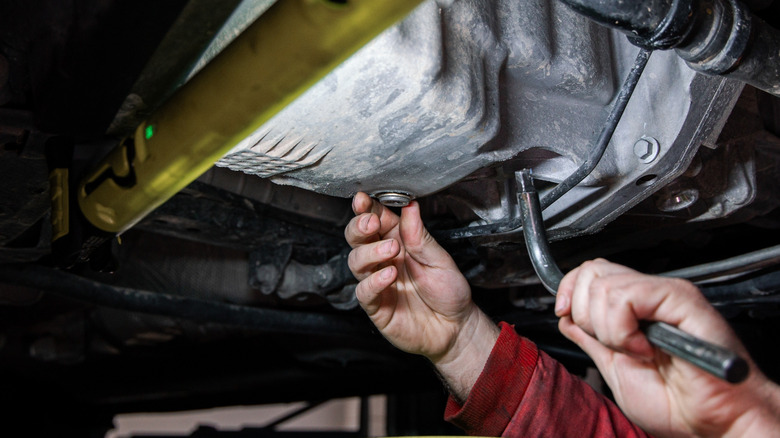
The oil drain plug is typically a reusable part in older cars with old-school metal or aluminum oil pans. With most only needing a rubber O-ring or crush washer replacement whenever they're reinserted, those metal drain plugs can serve you well for many thousands of driving miles. However, the convenience has been somewhat shattered by newer car models with plastic oil pans.
Sure, carmakers can boast about the lower production costs, weight savings, and lower emissions afforded by plastic oil pans, which is why the engine bay of cars from Europe, America, and Japan has become a haven of plastic parts. The debate over whether plastic is good or bad has led to divisive opinions among automakers, mechanics, and car owners, but it seems plastic in cars is here to stay, like it or not.
Then again, the switch to plastic oil pans has inevitably led to transitioning from metal to, you guessed it, single-use plastic drain plugs. We can only think of material compatibility as the reasoning behind this, but it may also have to do with skirting potential liabilities on the automaker's part. Vehicles with plastic oil pans need new oil drain plugs with every oil change, and it all has to do with avoiding potential leaks that may occur if the plastic drain plug is reused.
Check the owner's manual

If you have a modern car manufactured from the late 2000s onwards, it will most likely have a plastic oil pan. Whether you have an Audi, Porsche, BMW, Mercedes-Benz, or Volkswagen, replacing the single-use oil drain plug at every oil change is necessary. Meanwhile, a similar rule applies to Ford, Chevy, Dodge, GMC, Nissan, and Honda cars.
If you're unsure whether you need a new drain plug or if your vehicle has a plastic oil pan, refer to the owner's manual for guidance. Reusing the single-use oil drain plug increases the risk of bothersome and costly oil leaks due to silicone O-ring failure, a somewhat innocuous part that is prone to hardening, cracking, or breaking down when subjected to extreme heat cycling. That O-ring is what keeps the oil from leaking through the plastic drain plug, while some may have accompanying gaskets or crush washers that are also single-use parts.
Another reason why you should look to your car's owner's manual is to determine how to loosen the old drain plug and install a new one. For instance, some Ford trucks with plastic oil pans only require loosening and refitting the plastic oil drain plug by hand, since using a tool may damage or overtighten the tabs that lock the drain plug securely.
Meanwhile, certain Volkswagens and Audis need a specialized tool to unscrew the single-use drain plug, but some owners have no problems using a flathead screwdriver, in some cases. No matter which, it's not worth reusing the single-use drain plug of your car. Spending the additional $5 or so for a new plastic drain plug is worth the trouble than wasting time and money dealing with inevitable oil leaks.