

The Most Common Causes Of Car Oil Leaks: Explained
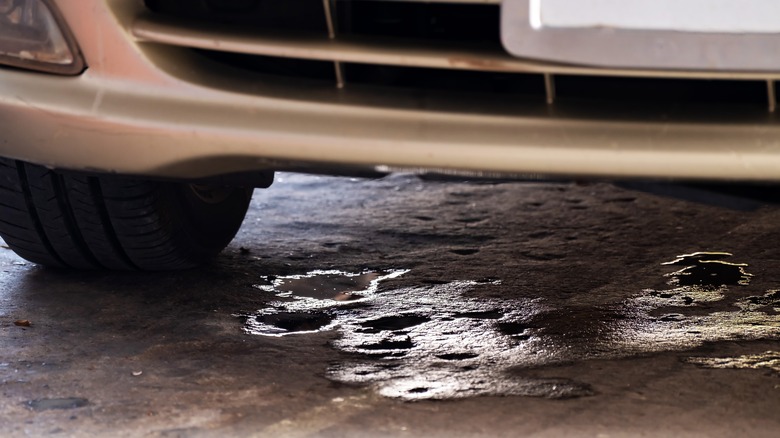
Your car's engine, whether gas, diesel, or hybrid, requires sufficient oil to operate smoothly. Too much oil is bad for any engine, but the right amount offers protection against cold starts, reduces friction, and maintains better fuel economy as the engine runs. As you probably know by now, periodic oil changes are critical to extending an engine's lifespan, but all of that is for naught if your engine has oil leaks. Even the tiniest leak can worsen through neglect, while more significant leaks can make your vehicle guzzle oil like a racing car.
Some oil leaks are easier to spot, such as stains and gunk accumulation around the valve covers. The others, well, are harder to point out, but the common denominator is unsightly oil spills on the garage floor, particularly right under the engine bay. In most cases, vehicle age, wear, and neglect are to blame for most oil leaks.
Even the best-engineered motors can succumb to oil leaks, and even newer engines can consume oil to the point of initiating a class action lawsuit. On the other hand, engines can have oil leaks through substandard engineering or poor-quality materials, which is a problem that Jeep 2.5L and 4.0L owners can attest to. The truth is, all engines can leak oil as the mileage piles up, and here are the culprits most likely to blame for those annoying oil stains on your driveway.
Leaky gaskets
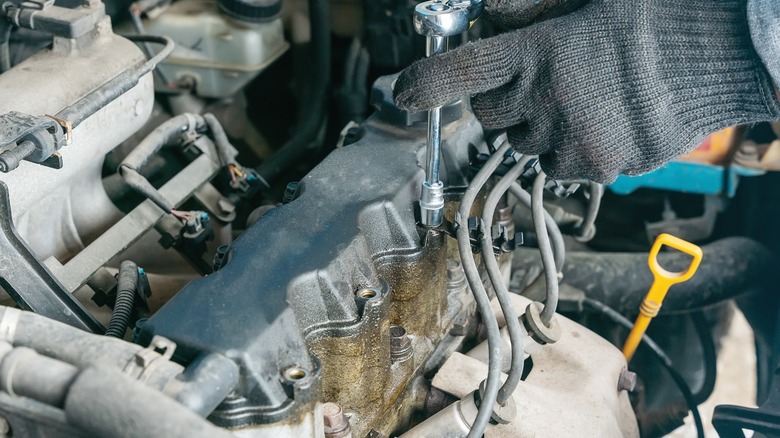
A modern engine can have dozens of gaskets to keep it together and prevent gases, coolant, and oil from mixing or spewing out of the assembly. Some of those gaskets, when they go bad or deteriorate, can leak oil. For instance, the aforementioned valve cover gasket can deteriorate and allow oil to leak out from the top of the engine. Another source of oil leaks from the top of the motor is the oil filler cap, specifically around the oil filler hole.
A defective oil cap that is improperly seated or damaged could allow oil to escape, especially while the engine is running. In contrast, the oil pan gasket sits below the engine and prevents oil from leaking out of the crankcase. Over time, repeated hot and cold cycling of the engine can wreak havoc on the oil pan gasket as the oil warms, cools, or operates under pressure (such as when accelerating hard or towing heavy loads), leaving behind a trail of leaking oil wherever you go.
Changed the oil recently? Check the drain plug and oil filter
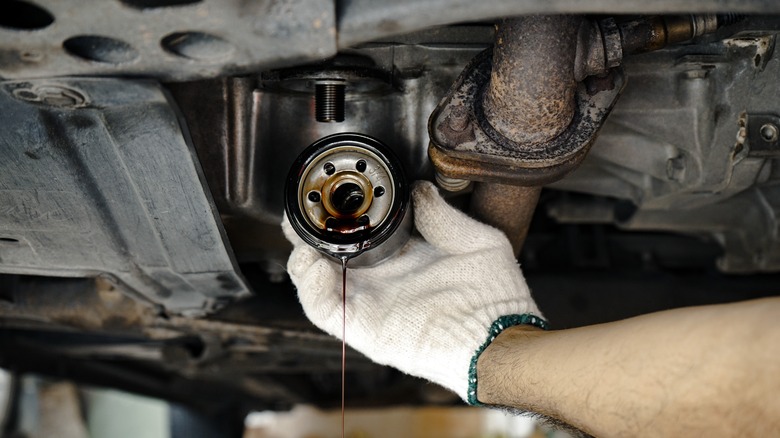
Enthusiasts have a mental checklist when performing maintenance tasks, and one of those is to start the motor and check for possible oil leaks from the drain plug or oil filter after a DIY oil change. In most cars, the drain plug has a small gasket or rubberized washer that could tear or wear out, which is why enthusiasts insist on replacing it at every oil change.
Meanwhile, some cars with plastic oil pans come with non-reusable oil drain plugs, which means you'll need to replace the drain plug each time you change the oil. Some users have resorted to reusing those plastic drain plugs, but it may be a terrible idea if your car is still under warranty. Regardless, leaky drain plugs are most to blame for some oil leak issues, so it's better to consult the owner's manual to determine if your car needs new drain plugs after every oil change.
Furthermore, an improperly seated oil filter is sure to cause nasty leaks. When removing an old oil filter, double-check to see if the old filter gasket has come loose, too. Leaving the old gasket and screwing in a new filter (with a new gasket installed) will compromise the seal, allowing oil to leak out.
Dilapidated oil seals
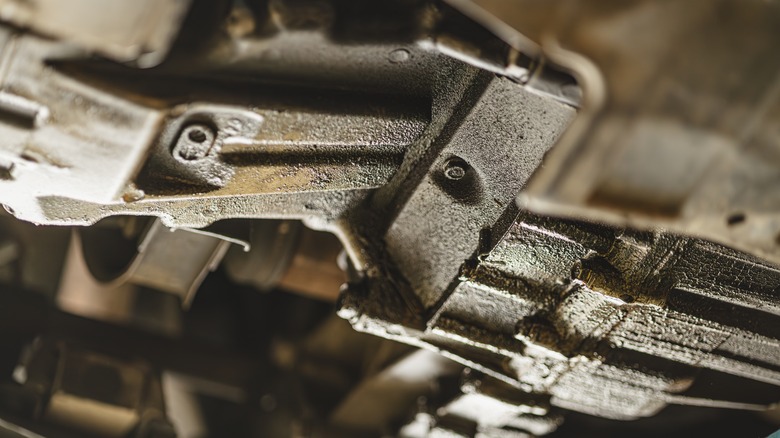
An engine can have as many oil seals as gaskets. And like the gasket, those seals are common causes of nasty oil leaks when they break or deteriorate. The crankshaft and camshaft seals (or main seals) succumb to pressure and stress as the engine runs, what with all the hot oil, rotating mass, and whatnot. The result is that they will inevitably wear out and start leaking oil, and it's a problem most evident in older, neglected cars.
Oil drips at the front or back of the engine or near the timing cover are guaranteed symptoms of deteriorated crank or cam oil seals, and it's a problem that's best left addressed by a professional mechanic or your know-it-all uncle, when applicable. Speaking of the timing cover, it also has a seal that wears out over time, manifesting as ugly oil leaks from the top or side of the engine. Look for signs of oil or gunk buildup around the timing cover to confirm.
Dirty or clogged PCV valve
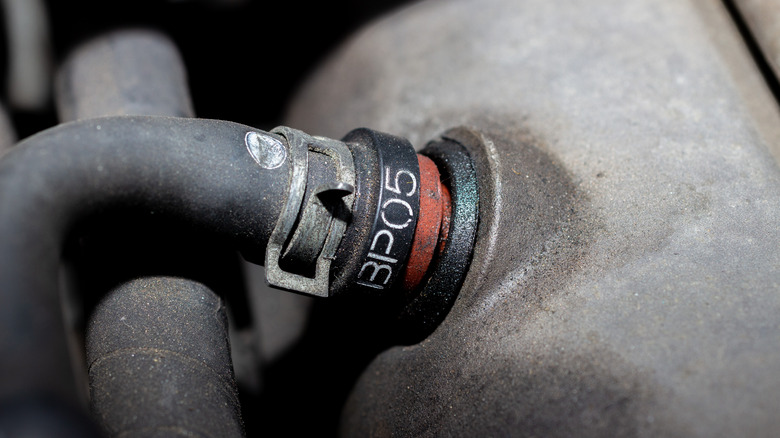
Modern vehicles have a Positive Crankcase Ventilation (PCV) system that utilizes vacuum pressure to remove blow-by gases from the crankcase and route them back to the intake manifold for combustion. In an ideal setting, the PCV can evacuate gases from the crankcase much faster than the engine can produce. As the engine ages, the PCV valve can get clogged with oily grime, preventing it from doing its job. And when it does, all kinds of nasty things begin to happen. Pressure will start to build up inside the engine, causing gaskets and seals to fail prematurely and cause oil leaks, including the many rubber hoses and plastic parts of the PCV system.
Meanwhile, a clogged PCV valve can make the engine burn oil and also produce sludge, a nasty buildup of thick, gooey, contaminated oil that can render your engine inoperable. You can prevent sludge through rigorous oil changes and by cleaning or replacing the PCV valve every 20,000 to 50,000 miles. The symptoms of a clogged or damaged PDV valve include hissing or whistling sounds from the motor, an illuminated check warning light, rough idling, oil leaks, and engine misfires.