

Rebuilt Title Vs. Salvage Title: What's The Difference?
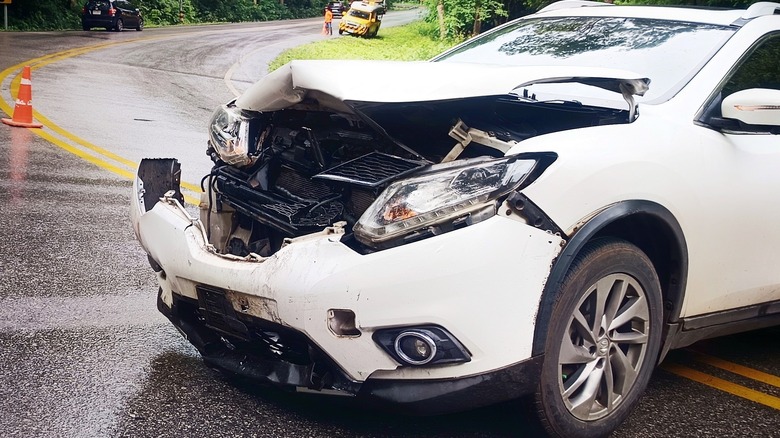
Shopping for a used car can be tough when your finances are tight. Scrolling the internet may eventually reveal a vehicle that seems nice and has a low price, perfect for someone with temporary cashflow issues. However, then you might see that your Craigslist or Facebook find has flood damage, resulting in a salvage or rebuilt title.
What do those titles mean, and which one is better if you're shopping for a car? Well, we don't recommend buying either, unless you want to buy it for parts. If you are considering a rebuilt or salvage car, though, rebuilt titles are better. Why? Because you can't drive a car that has a salvage title.
That, in essence, is the difference between these two titles. Salvage titles are issued to vehicles that have been damaged so badly that it is not worth it for the insurance company to pay a repair shop to make it roadworthy again. It is not legal to drive a car with a salvage title, meaning you can't insure or register a vehicle with a salvage title, either.
Cars with rebuilt titles, on the other hand, typically had salvage titles in the past, but have been repaired enough to be considered roadworthy by the state. Getting the state to issue a rebuilt title can take a lot of costly repairs, inspections, and documentation. Furthermore, insuring a car with a rebuilt title can be an ordeal. In fact, many insurance companies won't even issue a policy for one.
How a car gets a salvage title

While 20% of crashed cars are totaled, many of the remaining 80% get a salvage title. However, crashes aren't the only cause of salvage titles. For instance, flood and fire damage, severe weather, vandalism, and theft can all result in a salvage title.
How does an insurance company decide whether it's worth it to fix a car enough to put it back on the road? It isn't left to the subjective whims of the insurer. Depending on the state the car is registered in, one of two methods is used: percentage of actual cash value or total loss formula.
The percentage of actual cash value method is pretty simple. If the cost to repair the vehicle will exceed a certain percentage of the car's value before the accident, it is declared totaled and is issued a salvage title. That percentage differs by state, and many states that use this method set it at 75%, while Colorado sets it at 100%. Oklahoma has the lowest percentage at 60%.
The total loss method is a little more complicated. The salvage value of the car is added to the cost to repair it. If this sum is more than the actual cash value before the accident, the car is declared a total loss and is given a salvage title.
How a salvage title gets turned into a rebuilt title

If a car has a rebuilt title, that means it was severely damaged at one time and the state has verified that it was repaired enough to be roadworthy. Sometimes, this can involve multiple inspections. Florida, for example, is fairly strict about this process, requiring both inspections and detailed documentation, including before-and-after photos and receipts for parts and labor. On the other hand, some states require only documentation of repairs. Once a car is issued a rebuilt title, it can never be issued a clean title.
While a rebuilt title certifies that the car has been fixed enough to be legally roadworthy, it doesn't mean that every problem with the vehicle was fixed. There are plenty of clunkers out there that are legally roadworthy, but it's important to understand the extent and type of damage, especially if the car has flood damage, which can cause unseen electrical problems.
Insuring a vehicle with a rebuilt title can be a hassle, too. Some insurers provide only liability insurance for cars with rebuilt titles, while many won't cover the vehicle at all. In fact, according to some estimates, only 20% of insurers will even consider providing coverage. Those companies that do offer coverage do so at higher premiums, which may not be worth it, considering the resale value of these cars is typically less than those with clean titles.