

Harley Davidson Street Glide Vs. Road Glide: What's The Difference?
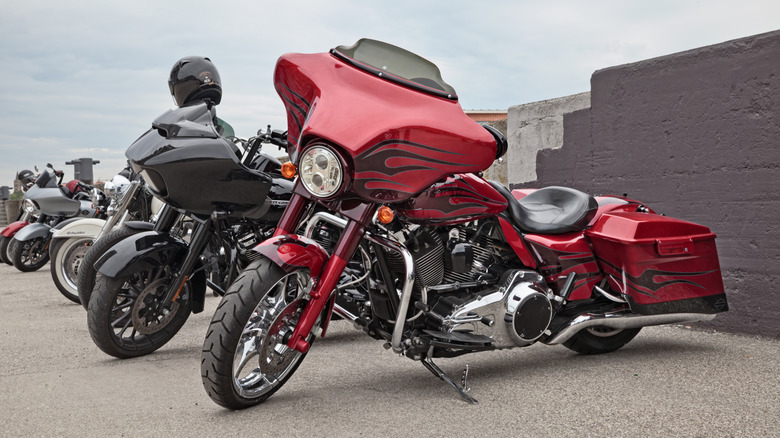
Talk about modern Harley-Davidsons and chances are your mind wanders to either the Street Glide or Road Glide. These two motoring behemoths are quite similar, that is, if you discount their front ends. Both the Street Glide and Road Glide share the same Milwaukee-Eight 117 V-twin engine with identical states of tune. Their frames and wheelbase are identical. Heck, even the price difference between the two is a mere $150. They even handled well, unlike this Harley-Davidson, which is the most difficult to handle. The primary difference between the two, as you can see, is their fairing structures.
The Street Glide has a batwing fairing, while the larger Road Glide features what's called a sharknose fairing, thanks to the way it looks. While these are visual differentiators, the differences between the two go deeper than that. From their intent and focus, to the way the fairing is mounted, to the way they ride.
In Harley speak, the Glide stands for the motorcycle's focus on offering a smooth and comfortable ride, as in to glide on the road, or be a comfortable tourer. The Glide name was first coined for the Harley-Davidson Hydra Glide, which was introduced in 1949. The Hydra Glide debuted a new hydraulic front fork that offered better comfort than the previous springer front suspension on Harley-Davidson motorcycles of that era. Today, you have the Street Glide and Road Glide that take Harley-Davidson's touring mantle forward.
The Street Glide was built for the streets
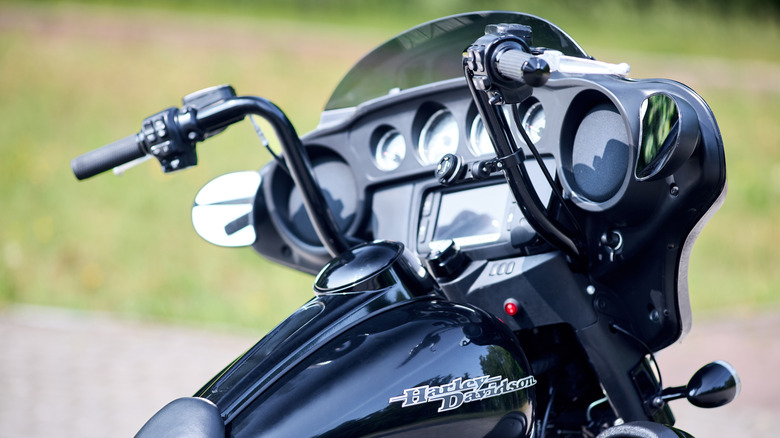
The Harley-Davidson Street Glide was introduced in 2006 as a more accessible alternative to the fully kitted Electra Glide. In comparison, the Street Glide was a stripped-down, sportier bagger, which made it suitable to ride not just on the open highways, but in urban environments. In fact, you could say that the Street Glide was born out of a trend of customers modifying their Electra Glide to a stripped-down, lower riding custom bagger-style motorcycle, making it the first factory custom bagger.
The Street Glide features a distinctive batwing fairing (it's called that because the fairing sides resemble the outstretched wings of a bat). Unlike the Road Glide, the Street Glide's fairing is mounted on the forks. That also means that the motorcycle's headlight, infotainment screen, and speakers are mounted on the forks. A smaller fairing helps the Street Glide gain a 27-pound weight advantage over the Road Glide. On a motorcycle, lighter weight makes a world of difference to its performance and dynamics. Especially a Street Glide Special with a Screamin' Eagle 131 crate engine upgrade.
Compared to the Road Glide, the Street Glide offers a different riding experience as well. The fairing is set higher and closer to the rider's body, while the handlebars, too, are placed further back, closer to the rider. It leads to a more laid-back riding position, while the lower 26.1-inch seat height makes it more accessible.
The open road beckons the Road Glide
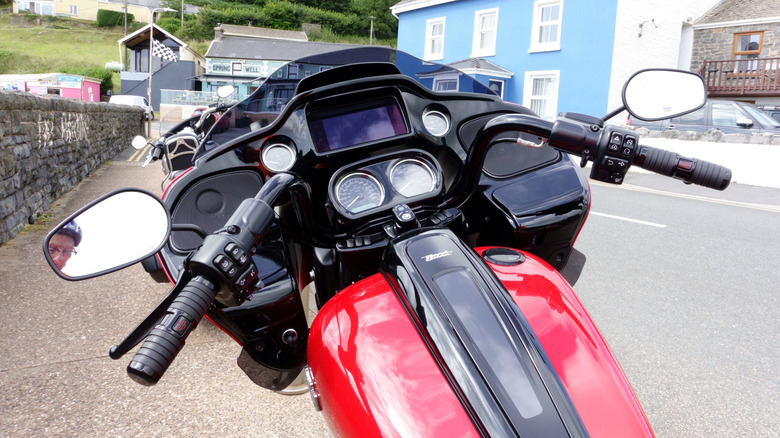
Unlike the Street Glide, the Road Glide has been around since 1998, heavily inspired by the Harley-Davidson Tour Glide. The Road Glide looks larger than the Street Glide thanks to that huge fairing. Dubbed the sharknose due to its distinctive design, the fairing helped the Road Glide stand apart from other Harley-Davidson models while being more aerodynamically superior at the same time.
While the Street Glide gets a fork-mounted fairing, the Road Glide gets a frame-mounted fairing that remains in place even when you turn the handlebars. This also means less weight on the forks as the huge headlight, infotainment system, and speakers are mounted on the fairing, which is mounted directly on the frame. This fixed fairing also helps the Road Glide feel more stable while riding.
Compared to the Street Glide, the Road Glide has a more aggressive riding position, thanks to a slightly higher handlebar. It's not as aggressive, though, as a $110,000 King of the Baggers Race Replica Road Glide. Its seat, too, is set 0.5 inches higher than the Street Glide, at 26.6 inches. These motorcycles might share the same frame and powertrain, but they are different in terms of styling, riding position, and intent and focus.