

Spark Plug Types Explained: Which One Does Your Car Really Need?

Gas-powered internal combustion engines need spark plugs to (literally) ignite and complete the combustion stroke, enabling the motor to produce power. They may seem unusual to the untrained eye, but a reliable and durable set of spark plugs is necessary for a responsive and smooth-running engine. However, the spark plugs won't last forever and will require periodic replacements. Due to age, wear, and deposits, replacing the spark plugs every 80,000 to 100,000 miles is necessary for most cars, but the frequency ultimately depends on the type of spark plugs and the make and model of the vehicle. On that note, check your owner's manual.
Given the relatively lengthy service life of spark plugs, they are one of the things that get neglected the most until problems start cropping up. Spark plugs can begin fouling up due to contaminants and soot, which typically happens if your vehicle's plugs are bathing in dirty oil. The telltale signs of bad spark plugs include poor acceleration, unstable idling, hard starting, excessive vibrations (caused by engine misfires), and mediocre fuel economy. When the plugs are due for replacement, you'd better know what spark plug type your car needs. Unfortunately, the market is brimming with different types of spark plugs, and every brand or type is competing for attention.
Copper spark plugs
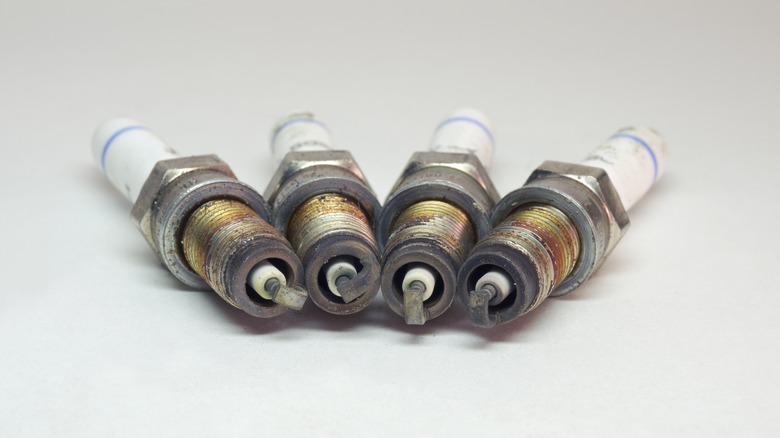
According to Champion, a large majority of spark plugs in the market have a copper-core center electrode, and for good reason. Copper is the best conductor of electricity among all metals that manufacturers use in making spark plugs. Moreover, copper has excellent thermal conductivity to reduce heat, and it's among the cheapest plugs you can buy. Expect to pay around $3 to $5 each for copper plugs, but there are imminent downsides to their bargain low price.
Despite its exceptional thermal and electric conductivity, copper is a soft metal and has a low melting point, making it susceptible to wear and heat stress. Manufacturers would typically weld a nickel alloy tip on top of the copper electrode to extend its lifespan. Speaking of which, engines with copper plugs can last 20,000 miles before needing a replacement. Copper spark plugs are usually standard on older vehicles with a distributor ignition system, or those with turbocharged or high-compression engines.
Platinum spark plugs

Vehicles manufactured from the 1990s to the 2000s equipped with coil packs or electronic ignition (distributor-less ignition) would most likely require platinum spark plugs, a considerable upgrade from traditional copper plugs. Platinum plugs have hardy platinum discs welded to the end of the center electrode, making them more durable than copper plugs. Platinum plugs can last 60,000 to 100,000 miles, which is two to five times the mileage of copper plugs.
The other benefit of platinum plugs is that they operate at higher temperatures than copper, which is a good thing for the plugs to burn off deposits and prevent fouling. Platinum spark plugs are either single or double platinum, with the latter having platinum for the center and side electrodes. The only downside is the cost, which starts at around $6 each for single platinum and $10 each for double platinum. Platinum plugs are worth the price, considering they last two or three times longer than copper.
Iridium spark plugs
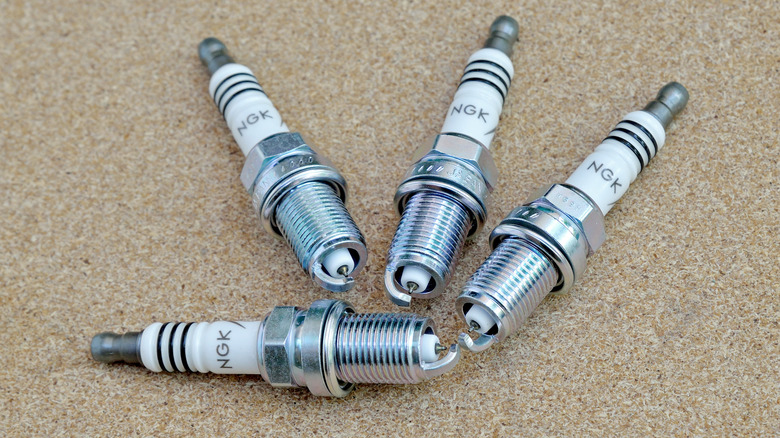
Vehicles made from the early 2010s onward tend to leave the factory with iridium spark plugs. They cost almost twice that of platinum plugs (at around $8 to $15 each), but the benefits outweigh the price. Iridium is about eight times harder than platinum, and the pointed center electrode design conducts electricity better to produce a larger spark. In addition, the 4,400 degrees Fahrenheit melting point of iridium makes it ideal for hotter ignition systems, enabling them to last upwards of 100,000 miles.
Similar to platinum, iridium spark plugs come in single or dual types. Single iridium plugs have an iridium center electrode, while the dual variety has iridium side and center electrodes. Vehicles that have engines designed to run on iridium plugs might not function properly when installed with platinum or copper plugs.
Moreover, using iridium plugs on cars that require platinum plugs won't add significant performance benefits. However, everything changes when dealing with tuned engines. Iridium plugs are typically the best for high-performance applications, but always consult the owner's manual if you're running a stock car.
Ruthenium spark plugs
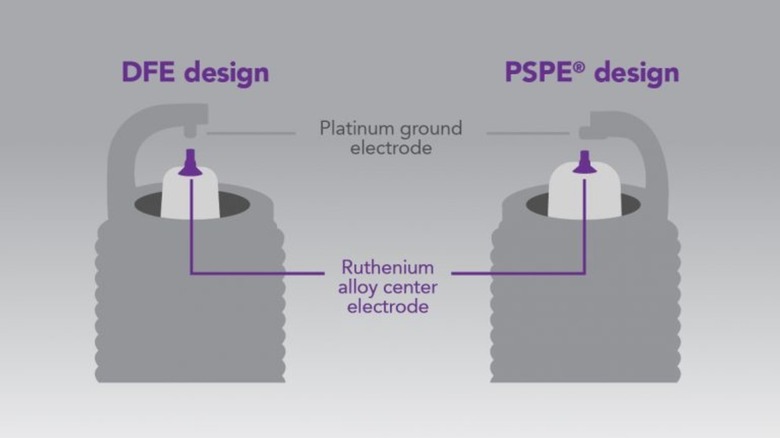
The advent of smaller-displacement, direct-injected, or turbocharged engines has prompted manufacturers like NGK to develop longer-wearing plugs with no compromise in performance. NGK's patented Ruthenium HX spark plugs come in DFE (Double Fine Electrode) type for non-turbocharged engines and a PSPE (Projected Square Platinum Electrode) for supercharged and turbocharged motors.
The benefits include smoother idling, more reliable cold starts, and a snappier throttle response owing to ruthenium's high ignitability. NGK further claims that their ruthenium plugs are more durable at higher temperatures and can deliver more stable performance. Moreover, they can last upwards of 120,000 miles before needing a replacement, but it's good that they can last that long since ruthenium plugs can cost upwards of $16 each.
There's no point in spending more money on a set of expensive spark plugs that are incompatible with your car's engine. It might sound tempting to purchase an upgraded and costlier set of spark plugs, but your stock Ford, Honda, Chevy, or Toyota is better off with OEM plugs, the type of which you'll also find in the owner's manual. Luckily, you can clean and reuse old spark plugs, but replacing them is a smarter option that will bring more benefits in the long run.