

Should You Change Your Transmission Fluid Yourself?
If someone asked you to list a few car maintenance tasks you could do yourself, tire and oil changes may come to mind first (unless you're a project car person, in which case you'd respond with something like "LS-swapping my Suburban"). Are these two tasks stressed in the car community because oil is life for your engine, and knowing how to change your own tire will save you in a pinch? Or because they're considered to be easy? Or because DIY-ing these maintenance items will save you money? Perhaps it's all of the above.
There are other maintenance projects you can do without the help of a mechanic, however, such as changing your transmission fluid. Like oil and tire maintenance, changing your transmission fluid is important for your car's health and lifespan and is also something you can DIY (and save a few bucks on if you do), but whether or not you should depend on a few important conditions. The type of transmission your car has (automatic vs. manual, sealed vs. unsealed), the maintenance needs of your vehicle (full fluid flush vs. partial drain and fill), and the tools you have readily available all factor into how efficient it will be for you to handle transmission maintenance yourself.
What transmission fluid does and why it needs replaced
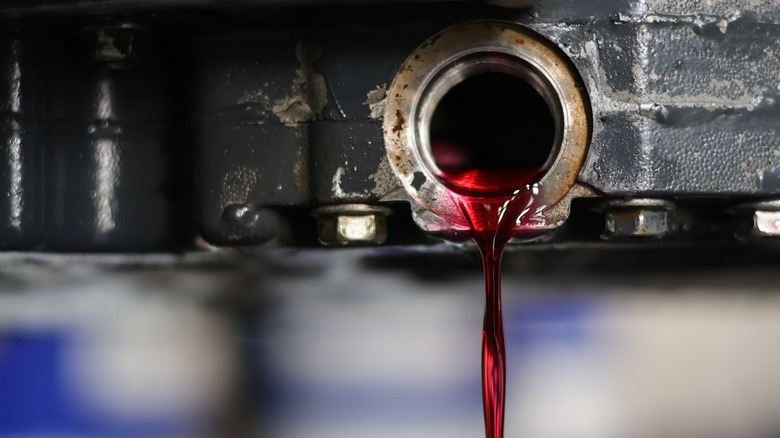
There are several types of transmission fluids, but most modern cars — many manuals included — use automatic transmission fluid (ATF). ATF lubricates your gears, manages clutch and brake band friction, and helps keep the transmission cool in order to facilitate power delivery from your car's engine to its wheels. In automatic transmissions, ATF is responsible for gear switching via pressure changes.
Just like your car's engine oil, over time ATF will break down and become contaminated with use. If your automatic transmission fluid is decaying or low, your car will experience problems with shifting gears and parts that depend on its lubrication could suffer excess wear. Changing your ATF at the recommended intervals can prevent these issues.
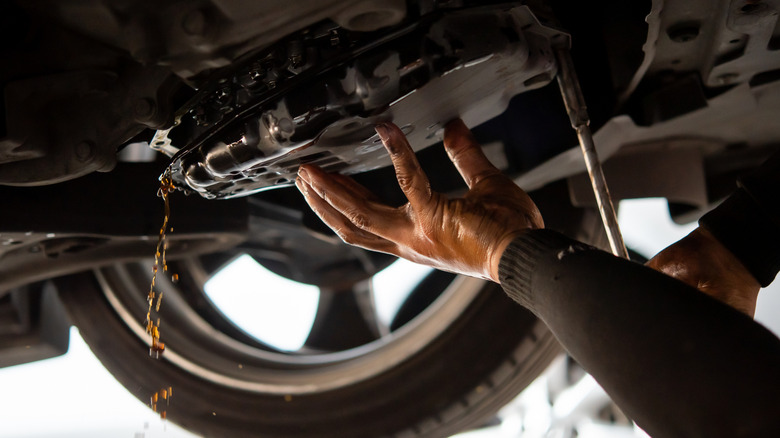
There are two main approaches to ATF changes, which are the full transmission fluid flush and "drop-the-pan" approach (partial fluid change). The former is more comprehensive and involves pumping out all existing transmission fluid in your car with a transmission flusher. Without this professional equipment, a complete transmission flush isn't easily accessible as a DIY project, and you should consider consulting a mechanic if your car is in need of a complete flush. However, a simple fluid change is something that can be done with at-home tools. It typically requires identifying and draining the transmission pan, measuring the volume you removed so you know how much to replace, and then adding new fluid after cleaning the pan and replacing the transmission filter.
Why should you try DIY?
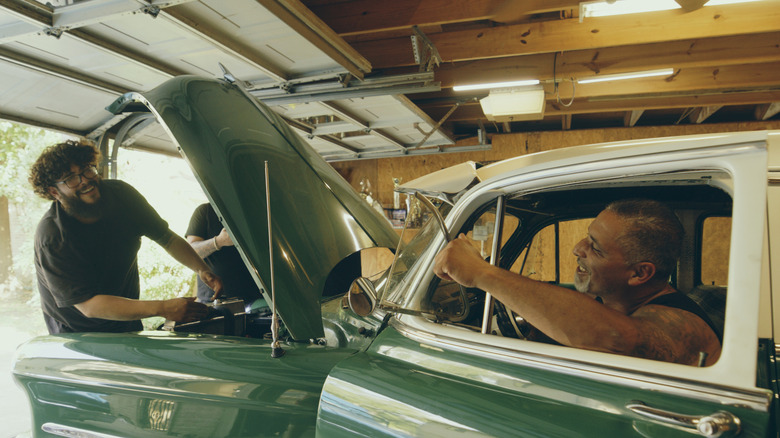
Even though a complete transmission fluid flush isn't well-suited to the DIY process, a partial fluid change can still be beneficial for your car and is feasible at home with some elbow grease. Replacing your own ATF properly is a multi-step process; the overall feasibility of the project and the exact steps you should take depend on a variety of factors such as whether your car's transmission is sealed or unsealed (sealed transmissions make fluids harder to access and don't have a dipstick for you to easily check the fluid level yourself) and the current health of your transmission. These could be limiting factors to the feasibility of a DIY ATF change, so it's important to research and inspect these as well as the recommended replacement schedule for your vehicle before beginning the process. Regarding sealed transmissions, it should also be noted that while some manufacturers claim their fluids won't ever need to be changed, but it's better to be proactive about their maintenance.
On average, you should fully flush your transmission fluids, roughly every 60,000 to 120,000 miles. If your vehicle's fluid-change process is accessible, doing a partial change between those intervals can help prevent transmission wear and preserve effective gear-shifting, extend your transmission's lifespan, and potentially also save you money. If these are priorities for you, tackling this task will benefit your car, your wallet, and maybe even your ego.