

These Common Mods Can Void Your Car's Warranty
For an enthusiast, a stock car is never enough; you get a new car, but you want more. More power, better handling, better exhaust note, better looks. Some mods look good, but they end up making your car slower. However, personalization comes at a cost. Modifying a car can cost you your car's warranty. One wrong step and your warranty is void. A warranty is a contract between you and the carmaker if any manufacturing defect is found in your car, you are entitled to a free replacement or repair of that affected part. The warranty generally covers most of the vehicle except for regular wear items such as brake pads or clutch plates, accidental damage, or not using the car as intended by the manufacturer, like on a racetrack. A warranty is also mostly limited to a certain time frame and specific miles. For example, your car could be covered under warrant for two years or 100,000 miles, whichever comes earlier.
It is easy to over-modify your car, but with that said, a manufacturer can not deny you your warranty claim for simply tinting your car windows, thanks to the Magnuson-Moss Warranty Act. Passed in 1975, the act states that a manufacturer can't arbitrarily deny your warranty claim simply because you modified your car. They have to prove that the modification was the cause of the failure.
This does not completely let you off the hook for modifying the car. You can land in hot warranty soup for ECU remapping your car, or lowering its springs, or even meddling with your car's electronics. Here are some common mods that can void your car's warranty and the reasons behind them.
Engine mods are a big no-no
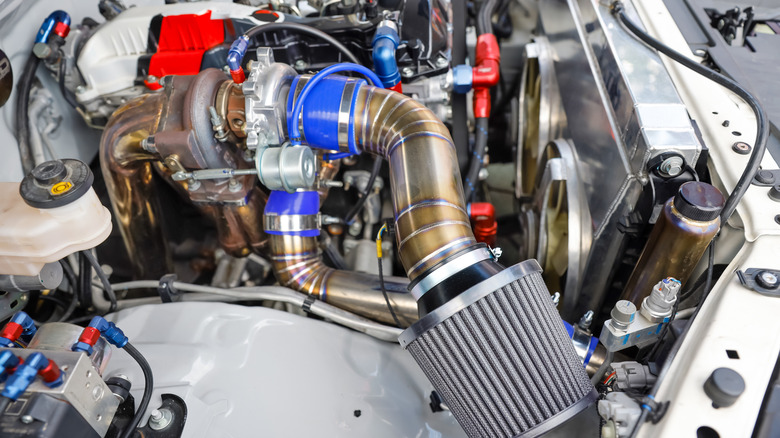
The most effective and easy way to boost your car's performance is an ECU tune. Your car is tuned with a lot of parameters in mind. The factory tune depends on factors such as fuel efficiency, emission norms, and reliability. The consensus is to make the car as fail-safe as possible by leaving a margin of safety. Which means there is performance that can be easily unlocked by simply rewriting a few lines of code, which we know as an ECU remap.
This ECU remap entails changing engine parameters such as the air-fuel ratio, engine timing, and turbocharger boost pressure in the case of a turbocharged car. The potential for significant performance gains comes with significant risks, though. One wrong input parameter could lead to catastrophic engine failure. If you try to avail a warranty, the manufacturer can simply pull ECU logs and find the factory ECU settings being messed with and draw a conclusion pointing to the aftermarket ECU remap as the reason for your blown engine. That's reason enough to void your warranty.
While the ECU remap would be you playing with fire, even a simple modification like an aftermarket air filter, cold air intake, or exhaust system could have your manufacturer voiding your car's warranty. While these are considered safe mods, a manufacturer or dealer could easily say that the aftermarket air filter threw the car's Mass Air Flow sensor out of whack or the free-flow exhaust messed up the O2 sensor, causing engine damage. While a manufacturer might not pin your power steering pump failure to you fitting a new music system, they can, and will find ways to void your warranty, especially when it saves them money.
Suspension and electrical mods are a risky business, too

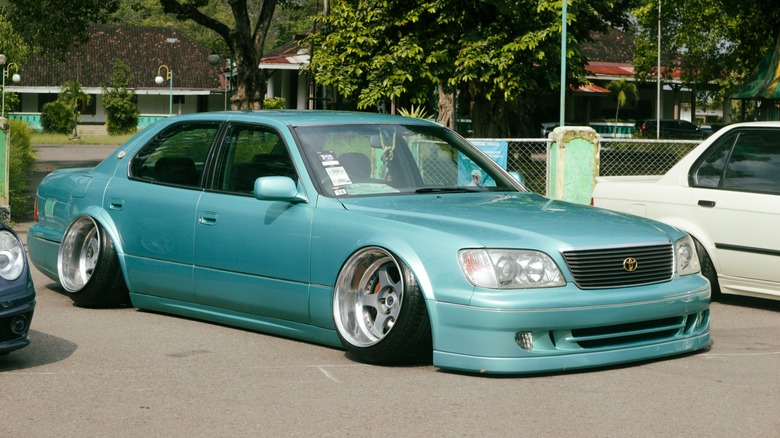
While you may think that lowering your car with aftermarket springs shouldn't mess with your warranty, think again. It's not the part, but its potential to do damage that affects your warranty. In the case of aftermarket suspension, a high lift kit, lower springs, or even aftermarket wheels and tyres can mess with the suspension geometry of your car. This can put unnecessary strain on components like suspension bushes, steering rods, driveshafts, tie rods, and the drivetrain, which were never designed to handle these kinds of stresses. So if your still under warranty stanced car or lifted truck runs into suspension or drivetrain failure, it's highly likely that you end up footing the bill from your own pocket.
Electrical modifications are another big no-no. A more powerful aftermarket headlight conversion could just blow your fuses if you're lucky. Or it could melt your headlight wires. Splicing the factory wiring harness to fit a new, louder sound system is literally playing with fire. A shoddy job means you'll forever be having electrical trouble, like the instrument console going kaput or the central locking not locking anymore. It's a warranty nightmare you don't want.
Should you modify your car? If it's out of warranty, go bonkers. In fact, here are some cool Jalopnik reader-approved styles of modification. If anything goes wrong, you'll end up paying for it anyway. If it's under warranty, do your research. Get your modifications done from reputed aftermarket specialists who back their products with a warranty, or better still, go for manufacturer-backed performance parts, if they offer them.