

Studded Tires Are Illegal In These US States
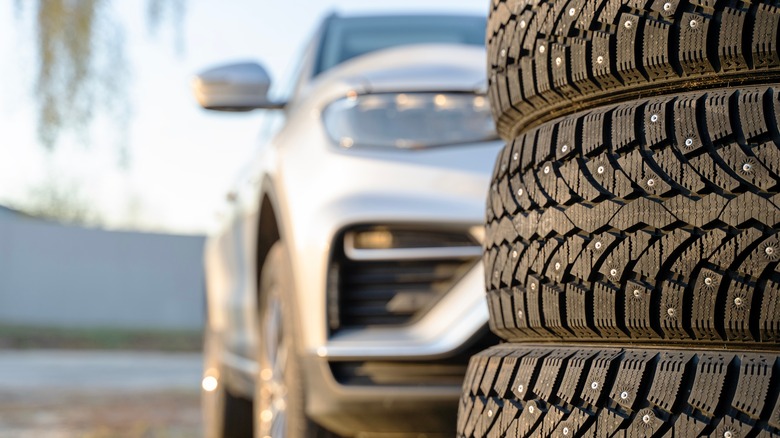
One of the unbreakable rules of winter driving is changing your ride's shoes when the cold is coming. And if you've ever tried to stop on black ice and felt your antilock brakes go into a full-blown panic attack, studded tires make perfect sense. They've got small metal studs embedded in the tread that dig into frozen surfaces, giving drivers extra traction when normal rubber just slides. In parts of frigid northern states, they can feel like the difference between white-knuckling every commute and making it home in one piece.
The problem? Those same little metal studs don't just bite into ice. They chew up asphalt and concrete, too. When thousands of cars run them over a season, the result isn't just wear — it's deep grooves, or "rutting," in the roadway. Those ruts collect water, increase hydroplaning risk, and cost states millions in repairs every year. The damage is severe enough that many state agencies, like Alaska's Department of Transportation and Public Facilities, view studded tires as an infrastructure liability as well as a safety tool.
That leaves lawmakers stuck in the middle. On one hand, they don't want to ban a technology that genuinely helps drivers in icy climates. On the other, they're responsible for road maintenance budgets that can't keep pace with the destruction studs cause. That tension has shaped a patchwork of laws across the country, where what's legal in Alaska can earn you a ticket in Florida.
Where studded tires are illegal (and where they're not)
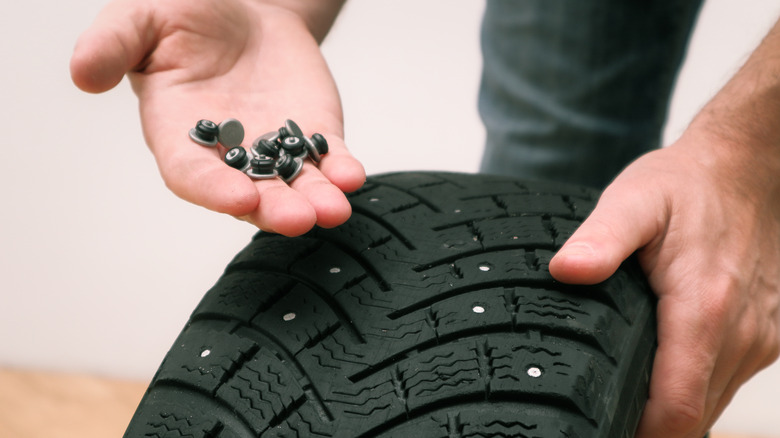
If you think the U.S. has a uniform approach to studded tires, think again. The rules look more like a messy family reunion than a national traffic code. Some states say yes, some say no, and many say "only if it's winter, and only for a few months."
Outright bans come mostly from warm-weather states that never deal with ice in the first place. Hawaii, Mississippi, Louisiana, Texas, and Florida prohibit studded tires year-round. There's simply no justification when icy roads are a once-in-a-generation event. (Though often-frigid Michigan also bans them.)
At the other end of the spectrum, Wyoming, Colorado, New Mexico, and Kentucky allow them with far fewer restrictions, acknowledging that ice isn't just an occasional problem — it's the entire season. North Carolina, Vermont and New Hampshire have similar rules.
Then there's the middle ground: seasonal allowances. Washington, Oregon, and New York, for instance, all permit studs, but only from late fall to early spring. Once the calendar flips past March or April, keeping them on can get you ticketed. The dates vary by state, but the principle is the same — studs are for when it's icy, not just because you forgot to swap back to summer tires.
Drive across state lines with studded tires in March, and you might be legal in one jurisdiction and fineable in the next. It's a case study in how regional climate and infrastructure budgets dictate what's acceptable rubber to roll on.
The tradeoff: safety vs. road damage
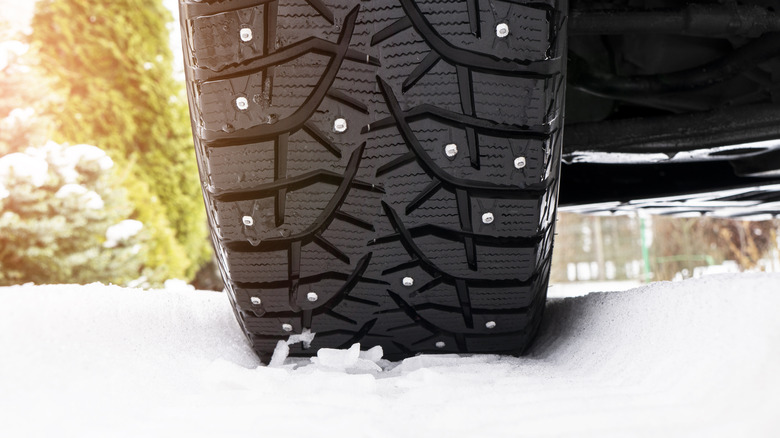
The appeal of studded tires is simple: traction you can trust when the road turns into a path to Winterfell. On icy back roads, they reduce accidents and give drivers confidence where even premium winter tires might feel sketchy. Lots of rural drivers and truck owners swear by them, especially in places where snowplows can't keep up or black ice lurks under powder. Studs can shorten braking distances dramatically on frozen pavement, which means fewer cars in ditches and fewer insurance claims.
But that extra grip comes at a cost, and everyone pays it. Alaska's transportation department estimated $13.7 million in annual damage due to studded tires in 2019 — costs taxpayers cover even if they've never bolted studs onto their wheels. Because those grooves can become dangerous for non-studded drivers, funneling water in ways that increase hydroplaning risk, alternatives like newer and better winter tires are getting attention. Studless winter tires use advanced rubber compounds and patterns of tiny slits called sipes to mimic some of studs' benefits without chewing up asphalt. Temporary solutions like tire chains also give drivers grip without months of road abuse.
In the end, studded tires can be lifesavers, sparing you some of your worst winter driving experiences — but depending on where you live, they might also be illegal. The laws reflect a balancing act: one driver's safety versus everyone else's pavement.