

5th Wheel Or Gooseneck Trailer? Pros, Cons, And How To Choose
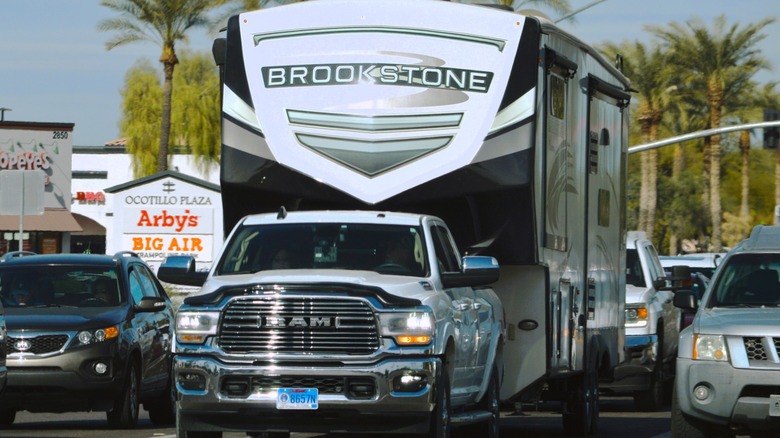
So, you've decided to get into the RV lifestyle, and now you've got some decisions to make. You already have your tow vehicle — a heavy-duty pickup, maybe a 1-ton dually. Now you've got to find an RV trailer. But should you go with a 5th wheel trailer or a harder-to-find gooseneck RV trailer? If you've ever spent any time at a campground, you may have noticed that most of the large RV trailers there were 5th wheels. Why do so many RVers seem to go with 5th wheels over goosenecks?
It turns out there are lots of reasons why 5th wheel RV trailers are more common and easier to find than gooseneck RV trailers. If you're looking for a smoother, stabler, more comfortable ride to the next campground, 5th wheel trailers are the way to go. They're also easier to hitch and unhitch than a gooseneck, which is important to a lot of campers. In most cases when you want to tow an RV that's bigger than a travel trailer, 5th wheel trailers are your best option, unless you're towing your RV with a vintage VW Beetle.
But what if you're not looking for an RV but want to tow heavy farm equipment or maybe a bunch of ATVs? If you need to tow some other kind of trailer, like a toy hauler, a livestock trailer, or a flatbed construction trailer, then a gooseneck hitch and trailer combination is the better choice. Goosenecks can haul more weight and are more durable, making them much better suited for hauling heavy equipment. They're also the better choice for winding mountain back roads and constructions sites with rough terrain due to their flexibility. Gooseneck hitches tend to be more affordable, as well.
How do 5th wheel trailers and hitches work?
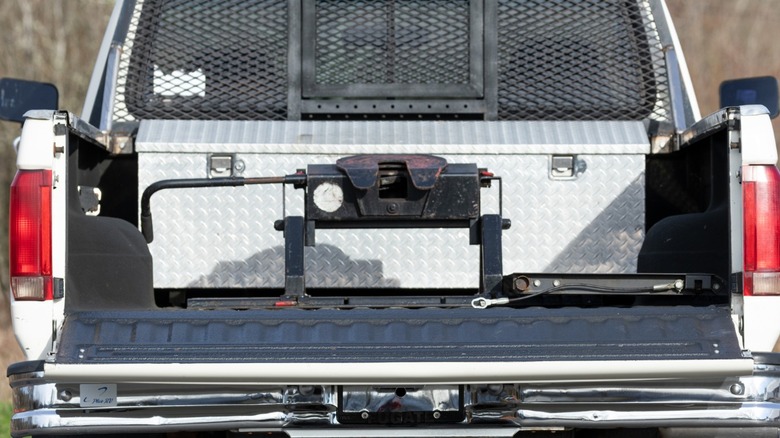
You probably know what a 5th wheel hitch is, especially if you're here trying to decide between the two. But for those who aren't sure, you've no doubt seen semi-trucks without their trailers. The big quasi-round metal plate on the back of the truck, sitting on the frame above the wheels, is the 5th wheel. A semi-truck trailer has a kingpin that sticks down from the front of the trailer and slides into the 5th wheel, locking in place.
The version of 5th wheels that fit in the back of pickup trucks are smaller than the semi-truck version but work the same way. This hitch sits conspicuously on top of the bed, and is installed near the rear axle to evenly distribute weight. The plate can pivot, allowing the driver to maneuver the trailer.
5th wheel trailers extend over the bed of the truck and have a kingpin which slides into the hitch. This makes hooking the trailer up to the truck fairly simple, and there is enough room in the hitch for the pin to swivel, allowing the trailer to turn. In the case of a 5th wheel RV trailer, this design allows for an overhang compartment that sits above the pickup bed. Most campers use this compartment as a bedroom or for storage. That's one reason, along with the smooth ride, that makes the 5th wheel design ideal for large RV trailers.
Pros and cons of 5th wheel trailers
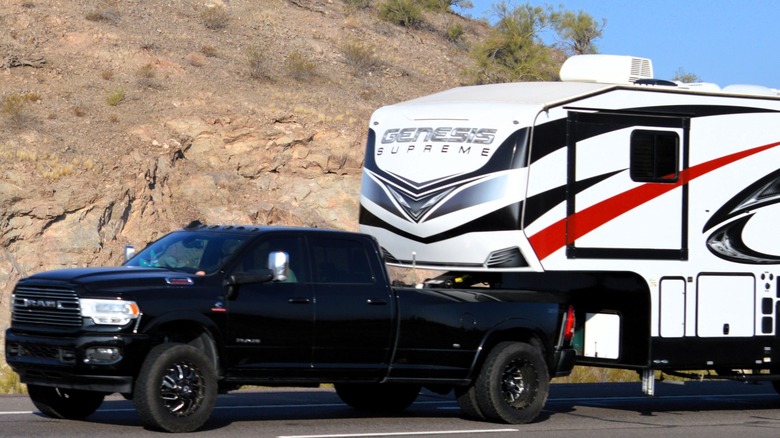
Comfort is a big deal on family vacation road trips. One of the pros of towing a 5th wheel trailer is the stable ride. The large connection where the 5th wheel and trailer join brings your truck and trailer together as one unit and absorbs more of the bounce in the road, making for a smoother, more comfortable ride. Most 5th wheels are better at preventing trailer sway for this reason, making the ride safer as well. Setting up and breaking down camp is always a chore, and any way to simplify the process is usually a good thing. This is another pro for 5th wheels; they hitch and unhitch very easily. They don't even need safety chains.
5th wheel RV trailers tend to be taller and more spacious than gooseneck trailers, as well. That's thanks in part to the front-end nose that goes over the truck bed. This extra room is part of the reason why 5th wheel trailers are popular among full-time RVers.
There are downsides to 5th wheels, of course. For example, the load capacity of a 5th wheel rig normally caps out at 30,000 pounds, though the 5th wheel towing capacity of newer Ford Super Duty trucks of can surpass that. That should be more than enough for an RV, but may not be enough if you're pulling a long flatbed loaded with heavy farm or construction equipment. 5th wheel trailers are not great on rough terrain, either. That solid connection the trailer keeps with the tow vehicle makes for a rigid ride that doesn't have the kind of flexibility you need on a backcountry road or trail. If you're soft roading or going up some rough mountain roads, you might need to look at another kind of trailer.
How do gooseneck trailers and hitches work?
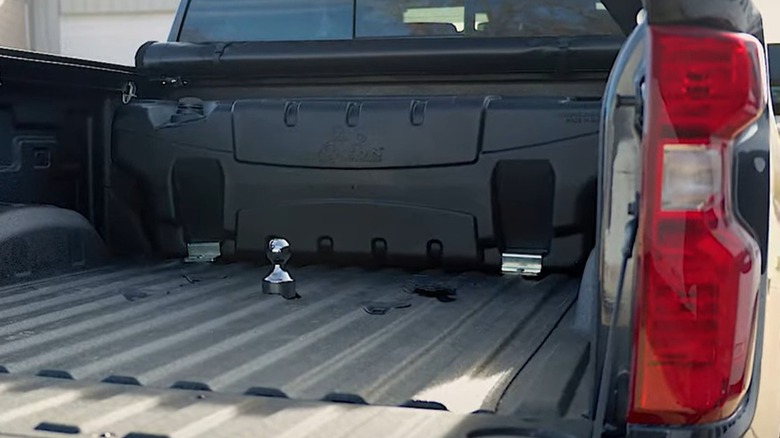
Gooseneck trailers and hitches work and look a little differently from 5th wheel trailers and hitches. Gooseneck hitches are very simple in comparison. Instead of a large plate like a 5th wheel, a gooseneck hitch consists of a ball hitch, similar to the one that may already be attached under the bumper of your truck. A gooseneck hitch, on the other hand, is installed in your truck's bed instead of under the bumper, usually above the rear axle.
The hitch itself takes up very little room in the bed of the truck, which makes it easier to haul other things when you are not towing a trailer. Installing an aftermarket gooseneck hitch can be a chore, however, since it is usually mounted to brackets that have to be installed under the truck bed. Though to be fair, you'll likely be drilling fewer holes in your bed to install a gooseneck trailer than you would to install a 5th wheel.
A gooseneck trailer has an arm that extends over the cab to connect to the hitch. But instead of having a pin that slides into a plate like a 5th wheel, the gooseneck has a coupler that drops over the ball hitch. The gooseneck design allows for greater towing capacity and maneuverability. Typical gooseneck trailers include livestock trailers, flatbeds, and commercial trailers.
Pros and cons of Gooseneck Trailers
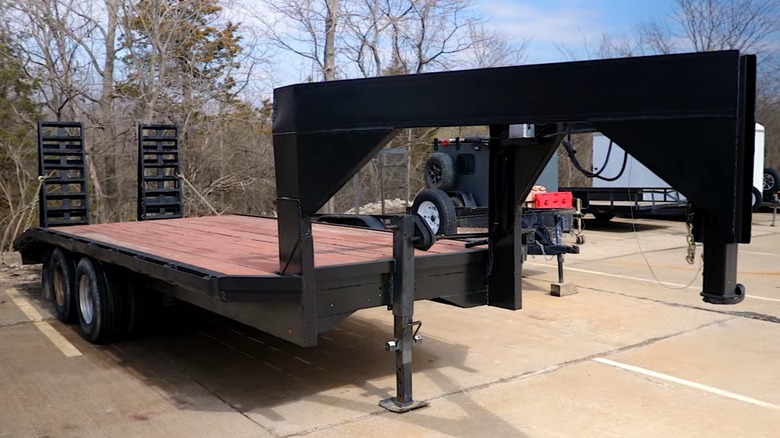
Gooseneck trailers have been around for over a century, and are ideal for hauling heavy farm or construction equipment, often having a load capacity of 38,000 pounds. The design of the hitch allows the weight to be distributed across your truck's chassis, allowing it to pull heavier loads. That's why you often see farmers using gooseneck trailers to haul enormous bales of hay. Gooseneck trailers are great for rough terrain, as well. That's because gooseneck hitches provide the flexibility needed to traverse bumpy fields or torn-up construction sites with lots of ruts in the ground. They're not bad on winding trails, either, which is why even some outdoors folks use gooseneck camper trailers, especially if it's a summer road trip that takes them far away from paved roads.
Then there are hitches to consider. 5th wheel hitches can run well over $1,000 brand new, while Goosenecks often cost half that much, or even less. Gooseneck hitches also take up less space in a truck bed than a 5th wheel, since they consist mainly of just the hitch ball. And, Gooseneck hitches can be fitted to pull 5th wheel trailers. Gooseneck trailers have their limitations, as well. They don't provide a very smooth ride, so they're not ideal for long road trips with the family. They are more prone to sway than 5th wheel trailers and are harder to hitch and unhitch, which can be inconvenient if you're in a rush to break camp in the morning.
Whether to go with a gooseneck or 5th wheel trailer really depends on what kind of trailer you need. If you're looking to tow an RV mostly on paved roads, then a 5th wheel trailer should be well-suited for your needs. For construction, farming, toy hauling, and off-roading, you'll want a gooseneck.