

5 Signs Your Car's Automatic Transmission Might Be Failing

Generally speaking, most automatic transmissions can take a beating, and will last many hundreds of thousands of miles, but that doesn't mean they are invincible. Much like any other part of your car, transmissions will give up the ghost at some point, but fortunately this doesn't typically happen overnight. Instead, an automatic transmission will hint that it's on the way out. Perhaps it will refuse to go into gear, start shifting slowly or with a jerky nature, or even begin slipping, and sending the revs sky-high.
Some signs evoke the other senses too, like burning smells, and red puddles of fluid on the driveway. Whatever symptoms you spot, they hint at an issue that needs addressing, not ignoring. If you do ignore the following signs of a failing transmission, you might just end up with a blown unit and a big bill, so keep an eye out for any of these five signs.
Struggling to get into gear
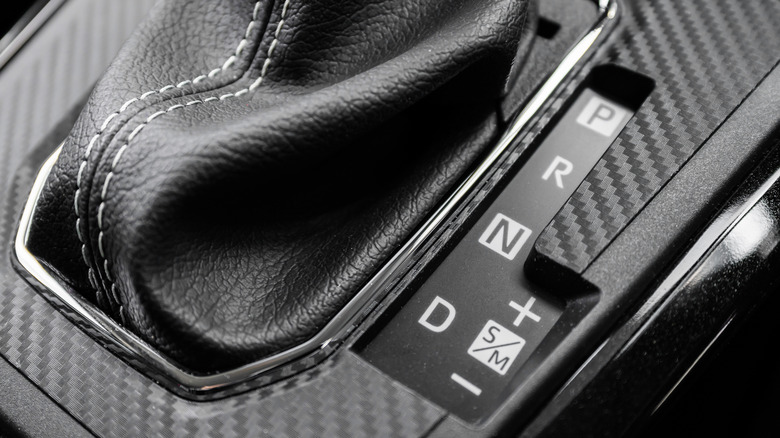
This one is pretty hard to miss, as there is little else more unsettling than your car not going into gear, or jumping back out of gear when driving. This is often to be considered a serious red flag for your transmission health, although sometimes the culprit can be simple – perhaps it's simply down to low transmission fluid –which could be due to a leak. Without enough fluid in the system, the transmission will struggle to build the pressure required to move your car into action. It's worth remembering that automatic transmission fluid doesn't last forever, and does need replacing at regular intervals. It's not always down to fluid levels, though, as trouble staying in gear could also be down to problems with your shifter cables, or the valve body.
In newer cars, your fault might not lie within the transmission at all, but rather with the ECU. If it fails to tell the transmission when to engage, you'll wind up with exactly the same issue. Either way, whether it's down to just topping up the fluid or hunting down electrical issues, if your transmission is jumping out of or struggling to go into gear, it's definitely time to have it checked out.
Missed or delayed shifts

When a transmission is running smoothly, you hardly notice it shifting gears. However, if the changes start taking forever, or are missed altogether, it'll be immediately noticeable — and it'll be very frustrating too. A delayed shift will feel like your car is hesitating before picking up the next gear, while missing a shift entirely can feel like your car is just giving up while accelerating.
Symptoms like this are more often than not linked to low or dirty transmission fluid, as contaminated fluid loses its ability to work as effectively. Running with low fluid levels is a mistake that could be destroying your transmission, but it's also true that engine-related problems can prevent the transmission from shifting at the right moment, as the computer might not allow higher gears if it senses something's off. Ultimately, this is a serious warning sign, and not one to be overlooked. If it's just down to contaminated transmission fluid, then fine, change it out, but you'll also need to consider how it got contaminated in the first place — perhaps water is getting in somehow? If it's down to engine issues, then diagnosis and repair could get a whole load more complicated, and expensive.
Slipping transmissions are a sign of trouble
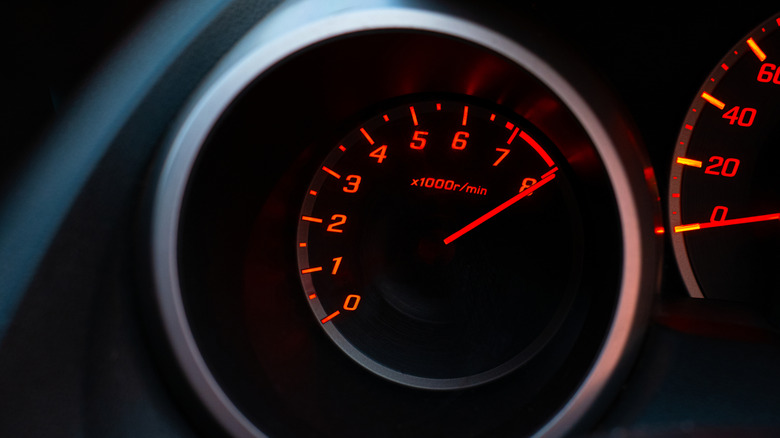
A slipping transmission is easily picked up on. You'll plant your foot, the revs will climb, but yet there will be little to no acceleration. This is a classic sign of transmission trouble, and it can happen with a manual-transmission car too, when the clutch is on its last legs. In an auto, once again, low or contaminated fluid is a usual suspect, since dirty or insufficient fluid can't create the right hydraulic pressure. Internal wear and tear is another big one, with clutches having the same effect here as they do in manual-equipped cars, or it could also be a failing torque converter.
Once they start to fail, the transmission struggles to hold gears, and the slipping gets worse. While annoying, slipping gears can also be dangerous too, as it means you don't have reliable control over speed and acceleration. This can spell big trouble when merging onto highways or passing other cars, and it's unlikely to fix itself, so best get to a mechanic sooner rather than later with this one.
Watch out for a leaking transmission

Seeing a puddle under your can is never fun, but at least it's easier diagnosed than some of the other aforementioned issues. Leaking transmission fluid can look red, pinkish, or even brown. If it is brown, it might be old, and you should consider changing your transmission fluid. And that's a problem you shouldn't ignore, as you've already seen, low fluid levels are the cause for many other more serious transmission issues. It lubricates, cools, and keeps the system running smoothly, so when it starts disappearing, you should act quick.
If you notice a leak, then checking your transmission fluid level should be the first step. Some cars have a dipstick, but not all do, with some more modern cars requiring specialist tools to check the level. While you can just keep topping it up, the cost of this will add up over time, and if it's a leaking gasket or seal, the chances are it'll only get worse. At the very least, have it diagnosed and quoted, rather than just ignoring the issue.
A burning smell is a typical sign of trouble

Transmission fluid has a distinct odor when it overheats, and it's often the result of a fluid leak, low fluid levels, or worn-out clutches creating friction and heat inside the transmission, and none are good news. There are two main dangers to consider here. First, overheated fluid loses its ability to cool and lubricate, which means the transmission's internals will be more susceptible to wear.
Second, if the fluid is leaking onto hot engine components, you're looking at a potential fire hazard, hence the burning smell. Ignoring that burnt-toast smell is not wise, as it's a sign that something is seriously upset with your transmission. Acting quick might save you from needing a replacement transmission or complete rebuild, but once again, the solution could simply be curing a leak from a seal or gasket. However, ignoring it might leave you being stranded down the road when it packs up altogether.