

Formula 1 Steering Wheels Probably Cost More Than Your Daily Driver
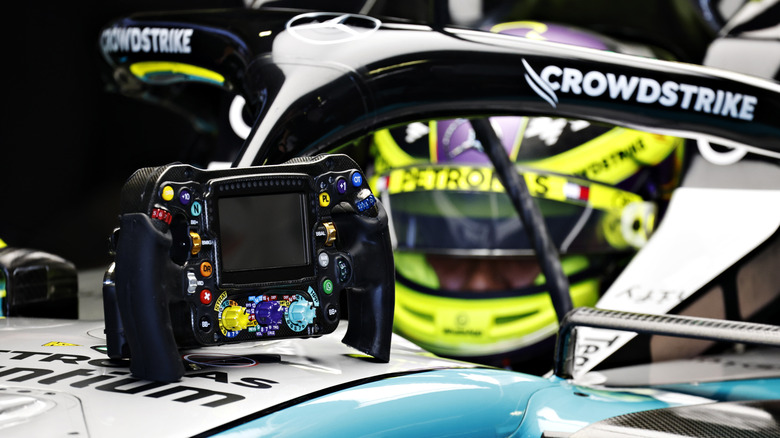
While Formula 1 teams are required to operate within a $140 million budget cap, the components being fitted to their cutting-edge cars aren't where teams put the financial squeeze. For example, the steering wheel on an F1 car is estimated to cost up to $100,000. When the average price of a new car is just under $50,000, the chances are your daily driver is less valuable than a wheel angrily tossed into a gravel trap after a first-turn crash.
F1's handheld computers make our steering wheels look like stone age devices. Every modern Grand Prix steering wheel is a carbon fiber enclosure housing multiple circuit boards, a few silicon processors and a bird's nest of copper wiring. The intricate internal electronics are the medium between the car and the driver. The Mercedes F1 team noted that its 2019 steering wheel featured 25 buttons, switches and paddles. These tools are used to do everything from simply changing gears to changing energy regeneration settings on the hybrid power unit.
F1's clampdown on automated tech led to today's steering wheels
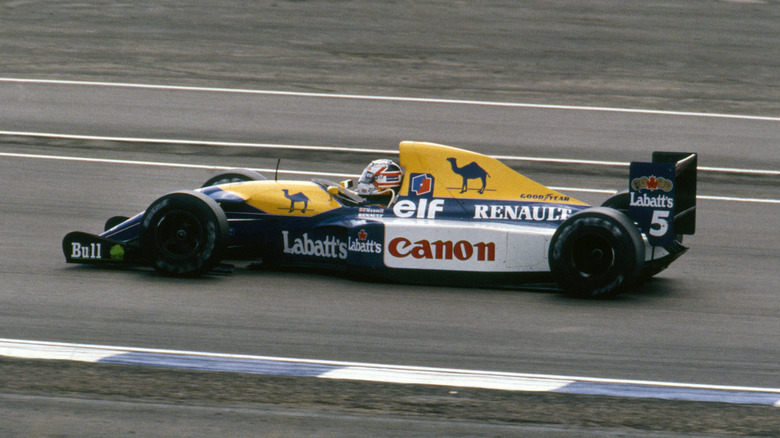
Formula 1's computerized revolution skyrocketed in the early 1990s with the adoption of active suspension systems. As rival teams struggled to keep up with the all-conquering Williams FW14B in 1992, they lobbied to legislate away the technology to limit the runaway arms race from the championship in every season going forward. The teams got their wish in 1994, but fears lingered that the cars were literally driving themselves. The sport's pundits theorized that teams could use GPS data to automatically shift gears based on the car's relative location on track.
The FIA banned two-way telemetry in Formula 1 ahead of the 2003 season. The ban meant that the team could only receive live data from the cars on track, but not transmit data to running cars. The driver became the sole vector to adjust settings, necessitating steering wheels to sprout even more buttons, dials and paddles. This led to steering wheels becoming bespoke devices with button layouts that can differ from driver to driver within the same team. Ferrari adapted its current design used by Lewis Hamilton to mimic the wheel he used at Mercedes. The seven-time champion moved to Maranello this season, and he undoubtedly developed muscle memory with his wheel after a 12-year stint with the German factory team.